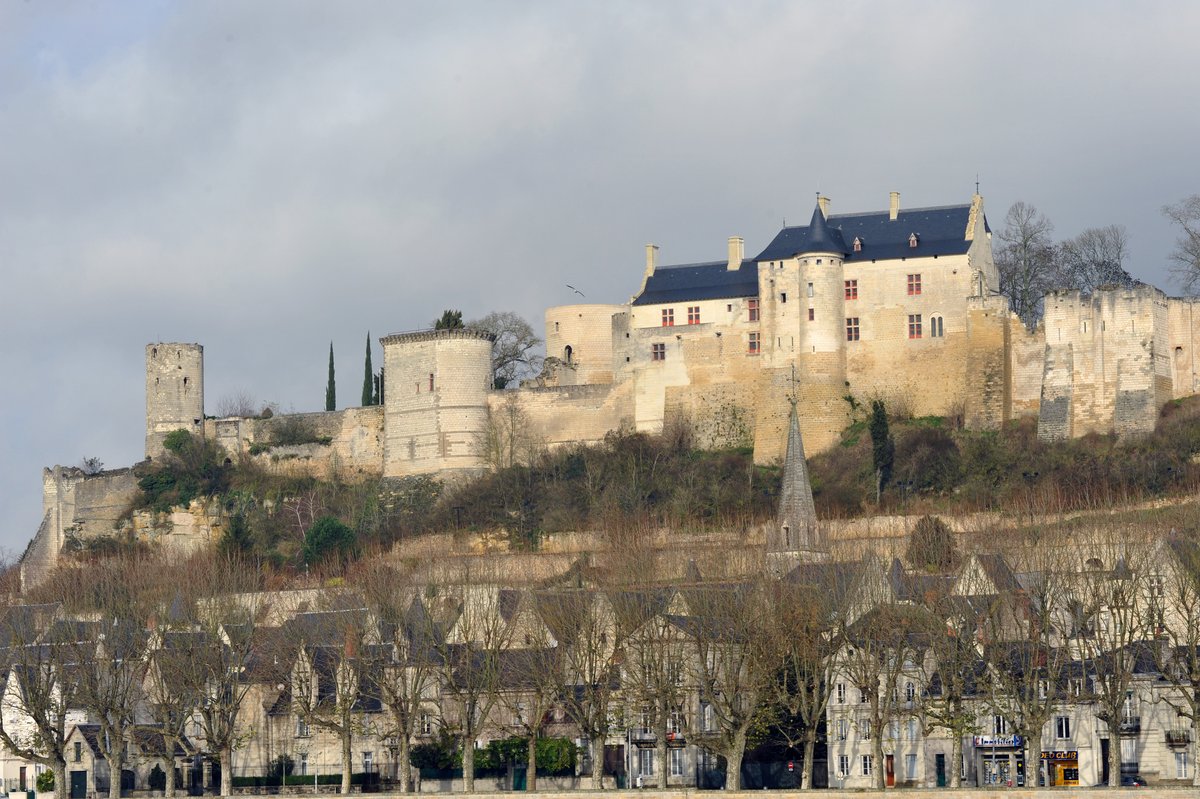

Henry II of England favoured the Château de Chinon as a residence and built almost all of its massive standing structure during his reign. He took control of the site in 1156 after it was held by his brother, Geoffrey, Count of Nantes, who had rebelled against him. The castle served as a significant stronghold, housing one of Henry's main arsenals and a treasury.
Conflict arose among Henry's sons over the land. In 1173, Henry II betrothed his youngest son, Prince John, to the daughter of Umberto III, Count of Savoy, and promised John the castles of Chinon, Loudun, and Mirebeau. This angered his eldest son, also named Henry, who demanded the land be handed over. While Henry II was traveling to Normandy to prepare for potential conflict, the Young King escaped the castle under the cover of darkness to join the court of King Louis VII of France.
The tensions between Henry II and his sons continued for years. In 1187, after the Young King's death, Richard traveled to Chinon and raided the castle's treasury. He took the funds to pay for the repair of his own castles in Aquitaine.
Today, the Château de Chinon is a major tourist attraction managed by the Indre-et-Loire General Council. It was recognized as a monument historique in 1840 and underwent a 14.5 million euro restoration in the early 21st century. The site now houses a museum, preserving the history of the fortress from its 11th-century history to the present day.
Sources: Wikipedia, OpenStreetMap, Wikidata, Wikimedia Commons
Written by Nicolo Ciampini
Discuss this with the author and others
No comments yet. Be the first to start the conversation.