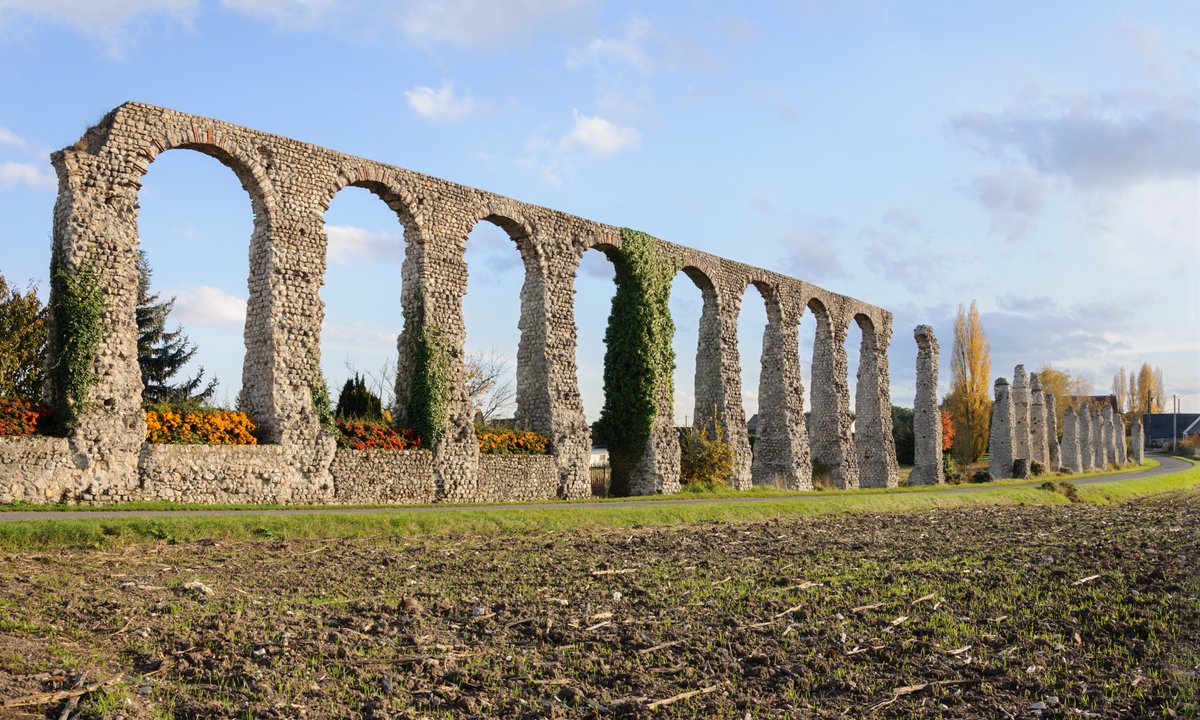

The Aqueduct of Luynes, a Gallo-Roman bridge aqueduct, is believed to have supplied water to ancient Luynes or even Caesarodunum. Originally, it ran 1,825 metres down from the town, with a height of 8.90 metres, and its underground portion passed the hamlet of Villeronde. This aqueduct was in use until the 10th century, and was classified as a historical monument in 1862. Despite the abandonment of the seaside resort of Sainte-Roselle, the aqueduct remains in use today, serving the town of Luynes.
Sources: Wikipedia, OpenStreetMap, Wikidata, Wikimedia Commons
Written by Nicolo Ciampini
Discuss this with the author and others
No comments yet. Be the first to start the conversation.