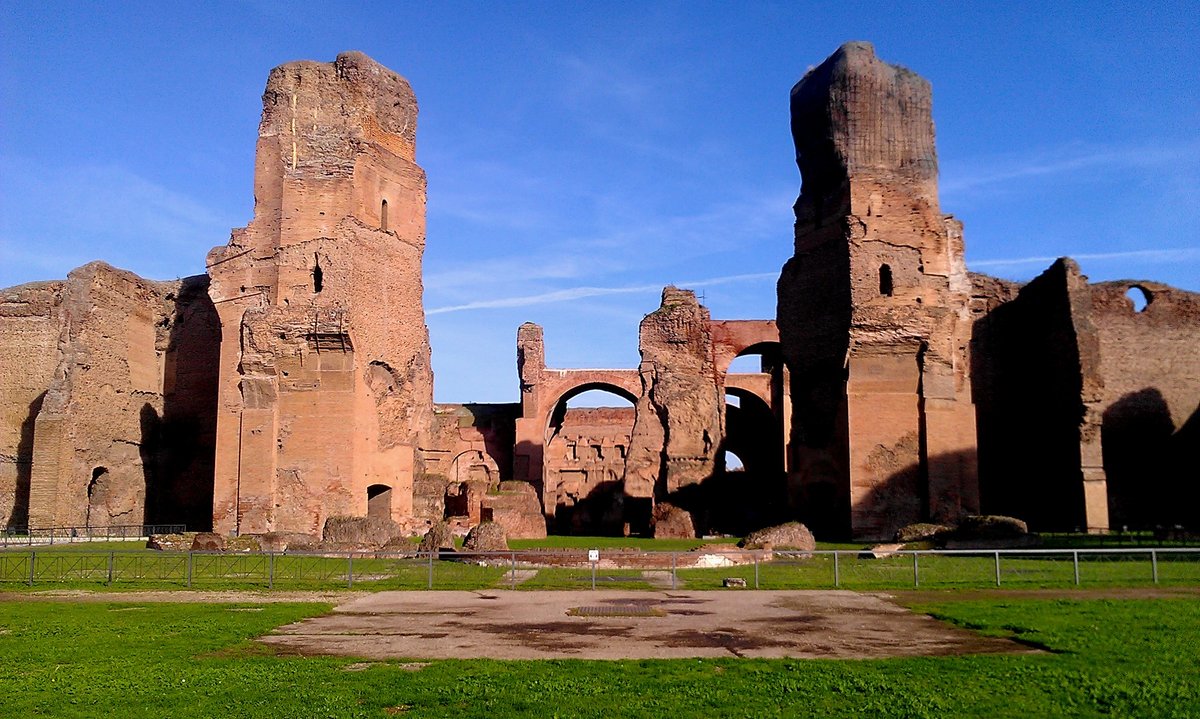

To finish the Baths of Caracalla by AD 216, the workforce had to perform a logistical feat involving the installation of over 2,000 tonnes of material every single day for six years. The project was initiated by Emperor Septimius Severus and completed during the reign of his son, Caracalla. The complex was located in the southern area of the city, Regio XII Piscina Publica, on a site that formerly belonged to a vast garden estate known as the horti Asiniani. Caracalla appropriated the estate of Pollio to build the baths, demolishing existing structures to their ground floors and filling them with earth to incorporate them into the new foundations.
The building was heated by a hypocaust, a system of burning coal and wood underneath the ground to heat water provided by a dedicated aqueduct. The baths were free and open to the public. They were considered one of the seven wonders of Rome in the 5th century, with a daily capacity thought to have been 6,000 to 8,000 bathers. The baths remained in use until the 6th century. In 537, during the Gothic War, King Vitiges of the Ostrogoths laid siege to Rome and severed the city's water supply, shortly after which the baths were abandoned.
At least since the 12th century, the baths were used as a quarry for construction materials and decorative pieces for churches and palaces. By the 16th century, the site was still being excavated for stone and marble. Today, the Baths of Caracalla are a tourist attraction. Visitors can still see remains of the complex, including a two-storey domus built in 134–138 during the reign of Hadrian, which was partially demolished in 206 and now reveals lavishly decorated frescoed ceilings and a lararium.
Sources: Wikipedia, OpenStreetMap, Wikidata, Wikimedia Commons


Written by Nicolo Ciampini
Discuss this with the author and others
No comments yet. Be the first to start the conversation.