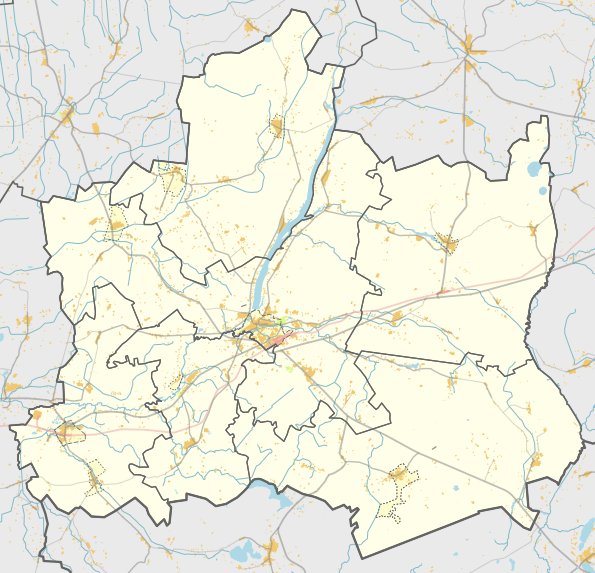

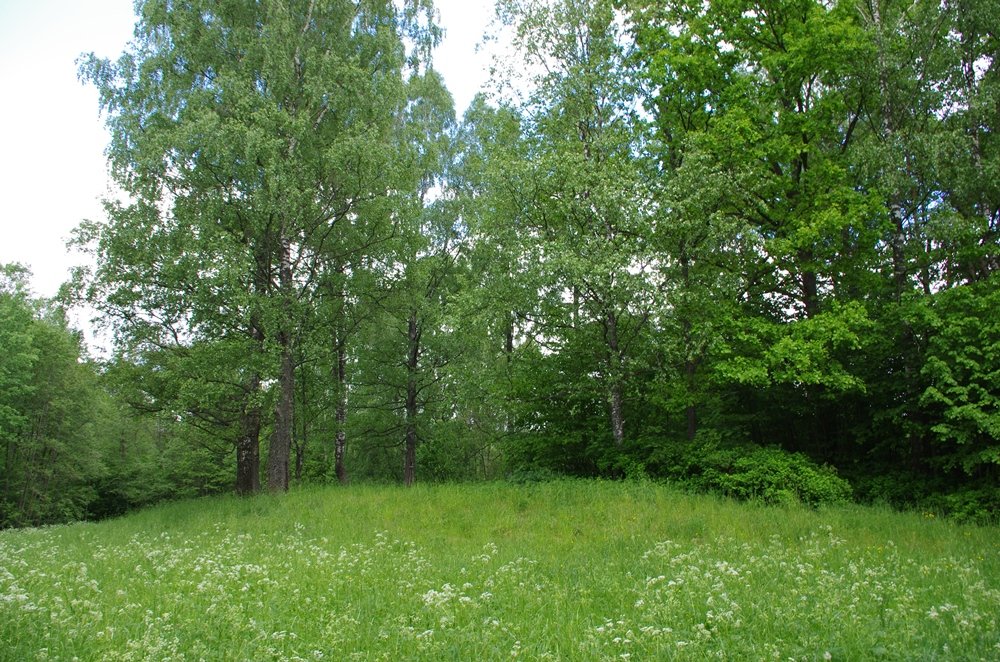
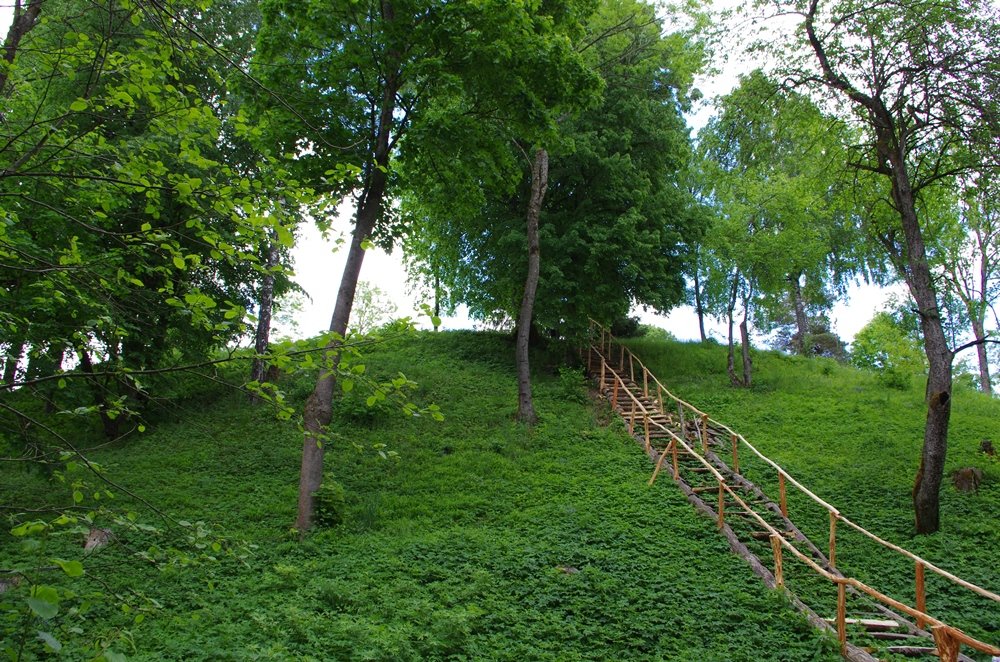
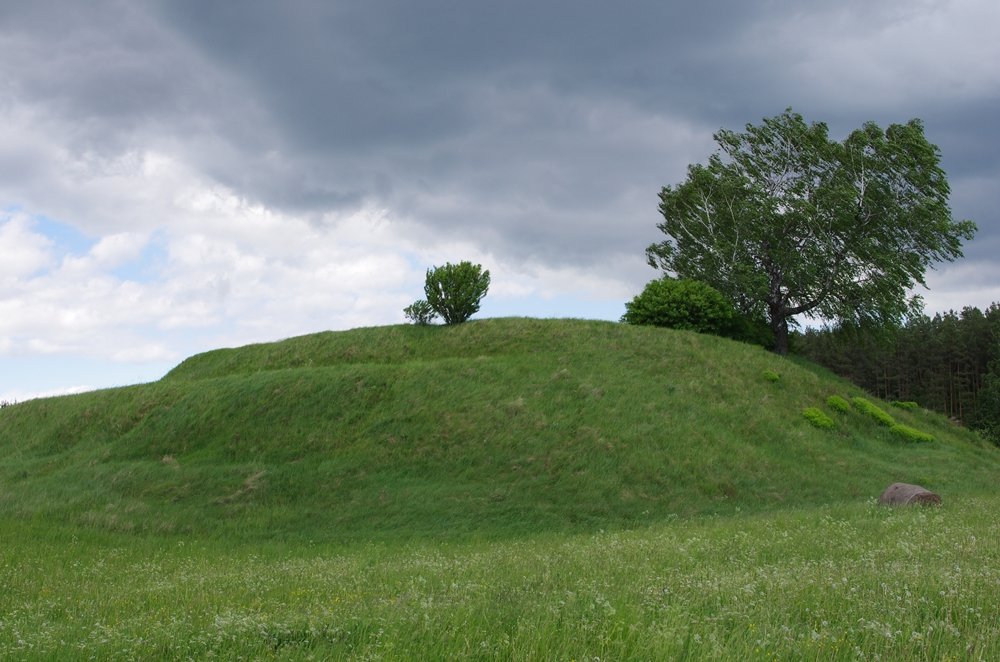
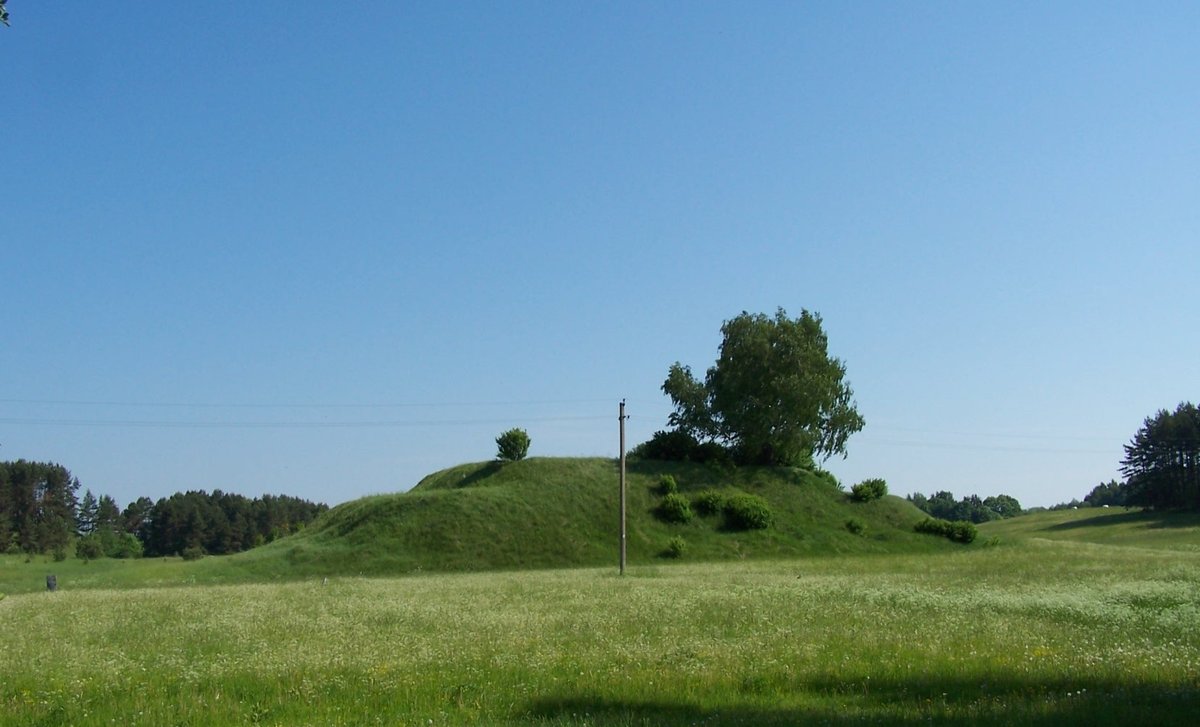
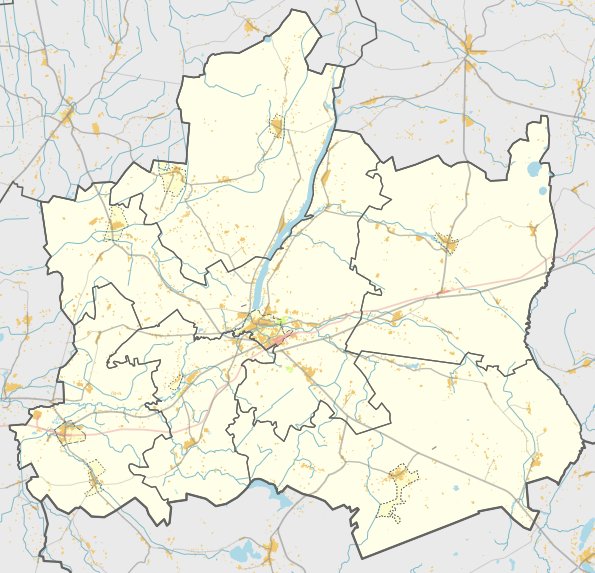
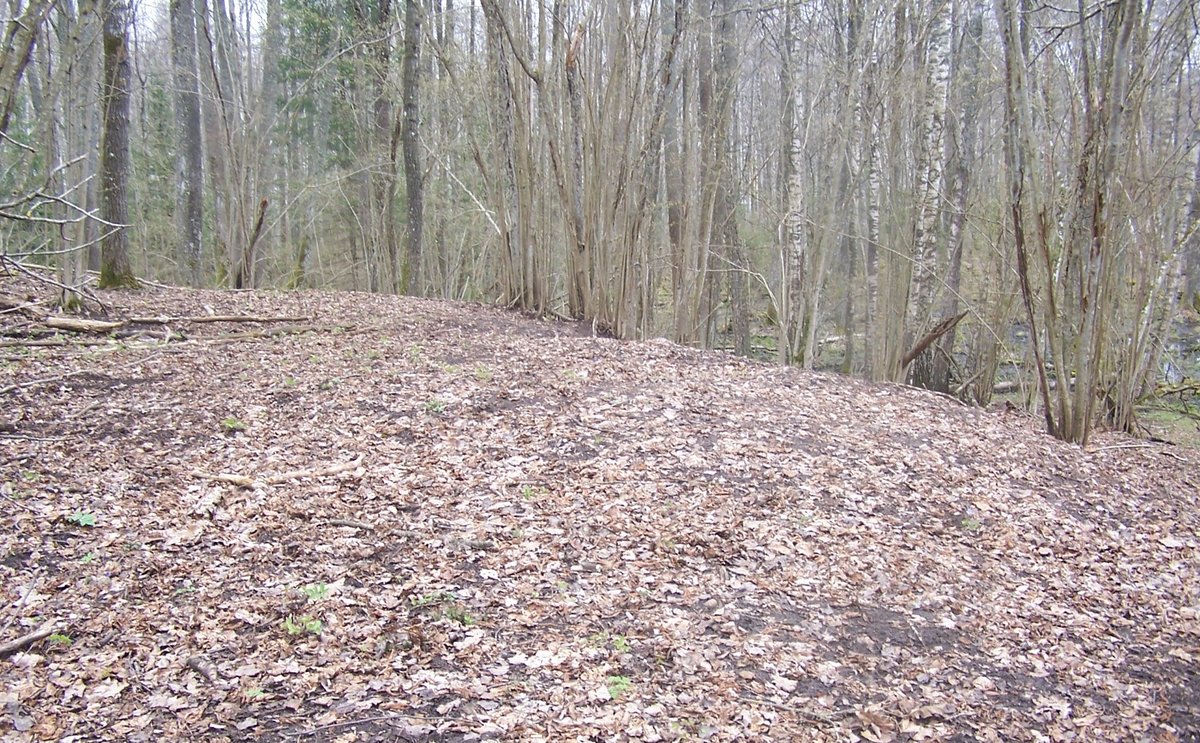
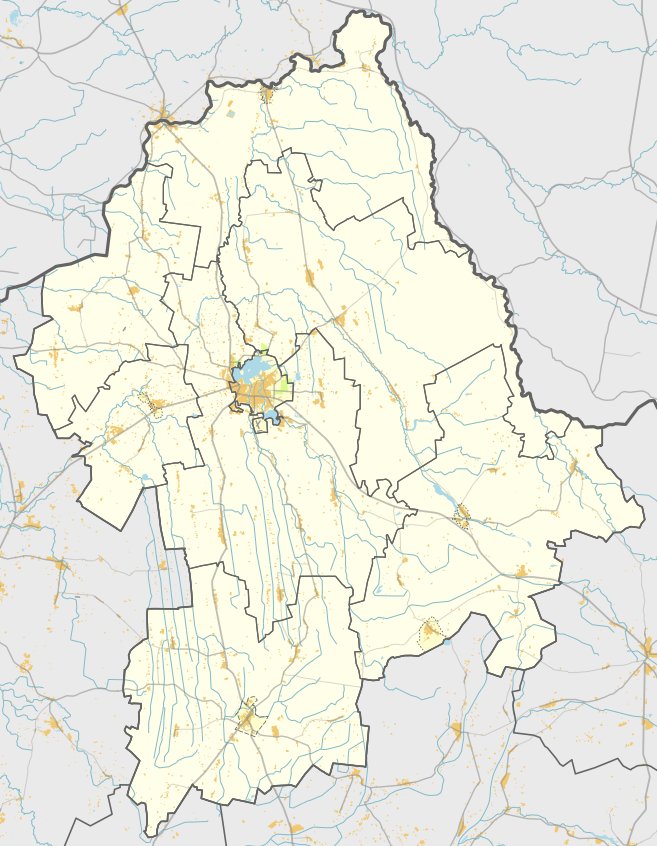
The Bakšėnų piliakalnis is a fortification located in the Kupiškis district, near the village of Bakšėnai. It sits on a height on the right bank of the Pyvesa river. The river valley protects the site from the south, while the east and west are bounded by daubos - wooded hills.
The oval clearing measures approximately 30 by 26 meters and is dated between the 1st millennium BC and the 1st century AD. The site features a higher eastern edge, while the northern edge once held a filled-in mound and a destroyed trench. Located near a half-hectare settlement, the site has been known for a long time and was described by Jurgis Elisonas, Petras Tarasenka, and Jonas Puzinas.
During archaeological excavations in 1968–1969 and 1990, researchers found bronze jewelry, two stone-trimmed vessels, a bone tip shaped like a rib, and ceramics with both smooth and grooved surfaces. A nearby site, the Nodiejiškių pilkapynas, dates from the 2nd to the 5th centuries but has been destroyed.
Today, the hillfort remains a protected cultural site. It was included in the list of cultural monuments in 1973 and officially recognized as a state-protected cultural value in 2005.
Sources: Wikipedia, OpenStreetMap, Wikidata, Wikimedia Commons

Written by Nicolo Ciampini
Discuss this with the author and others
No comments yet. Be the first to start the conversation.