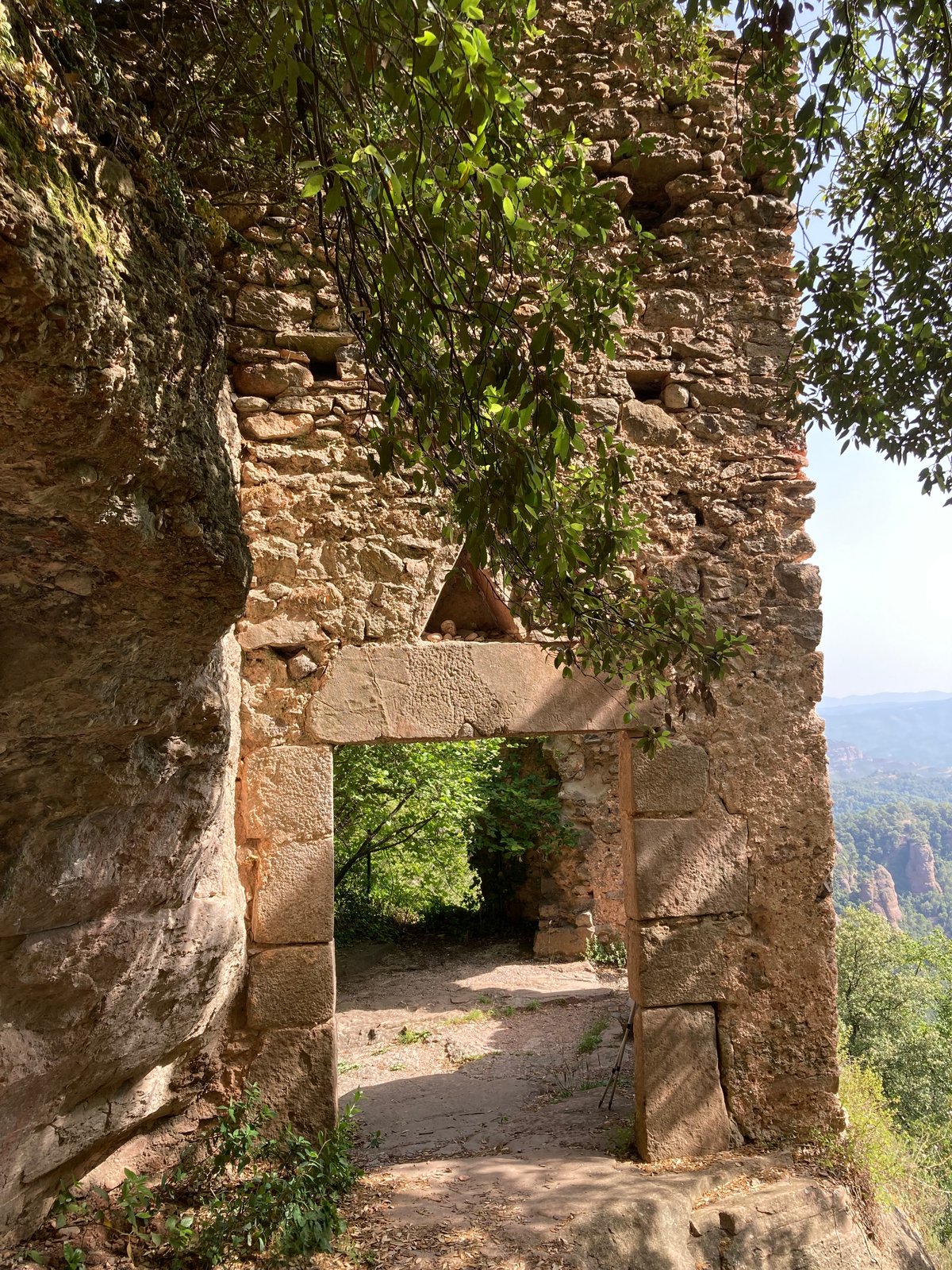

Nestled amidst the cliffs of Mount Mola, the Ermita de Santa Agnès, a 14th-century chapel, remains a fascinating enigma. Various theories suggest that this elusive sanctuary may have been constructed by a secluded community. Interestingly, it is located beside the canal of Santa Agnès, at an altitude of 825 meters, on the north face of Mount Mola. It hosts a diminutive, rectangular nave, characterized by a pointed vault and flanked by two intercolumnar arches.
Notably, the initial altar was housed in a cave hewn from the mountain itself. The Ermita de Santa Agnès, dating back to the 14th century, saw the conduct of rituals up until the late 18th century. Remarkably, it provided shelter to revered hermits, such as Brother Bonaventura Grau. Structures from the 16th and 17th centuries can also be found within the chapel. From the 18th century, the Ermita de Santa Agnès came under the watch of ermitans. However, it was abandoned around 1809 due to the chaos of the Napoleonic Wars. The chapel surprisingly houses stones known as pikes, which have served as a font and a cistern since ancient times.
Sources: Wikipedia, OpenStreetMap, Wikidata, Wikimedia Commons
Written by Nik Frost
Discuss this with the author and others
No comments yet. Be the first to start the conversation.