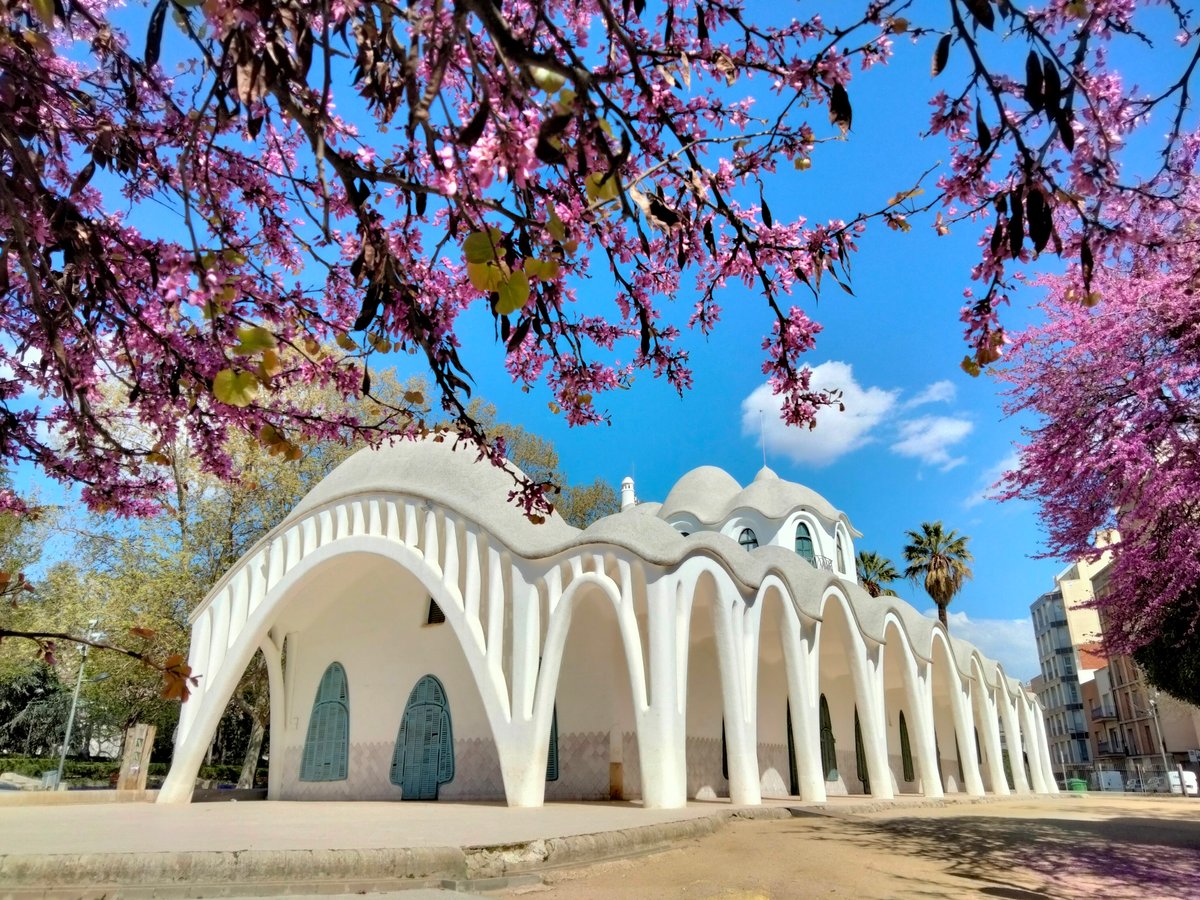

Masia Freixa, named for the Freixa family who lived there over a century ago, is a modernisme building in the center of Parc de Sant Jordi in Terrassa, Catalonia, Spain. Its creator, Lluís Muncunill, followed the wave of industrialists seeking to display their wealth through the large buildings that Modernisme fans had come to expect. However, Joseph Freixa, the owner of the building, took a different route. Their creation, while richly decorated, is a space that needs no artificial light, and it is designed for a specific, practical purpose: to make and sell textiles.
This may sound plain, but the long hours workers faced manning the machines demanded a building meant to avoid waste of time or effort.
The elements handed down from Muncunill still stand, many of them unchanged by the passage of time. The highest parts of the building were designed to hold the spinning machines, their spindles polished and gleaming as the light reflects off them. The walls, white and unadorned, still have the pieces of glass in the mortar that keep them shining in the sun, and the rotunda, an extension to the main house, gives off the sense of a jewellery box opened for the first time.
But it is the garden that makes Masia Freixa unique among modernisme buildings.
Joaquim Vancells, a fellow Catalan architect, planned this external space. His vision sought to channel the elegance of French gardens he had seen, brought into the heart of Masia Freixa through a set of Romantic features. A column grids the garden, balancing a balcony suspended in the air, a staircase leads up to a terrace, and the irregular shape of the garden suggests moss and vines growing over stone.
One detail of the garden has remained true to Vancells' training, common to all workers in design in the late nineteenth century: a rejection of any trees.
Sources: Wikipedia, OpenStreetMap, Wikidata, Wikimedia Commons
Written by Nik Frost
Discuss this with the author and others
No comments yet. Be the first to start the conversation.