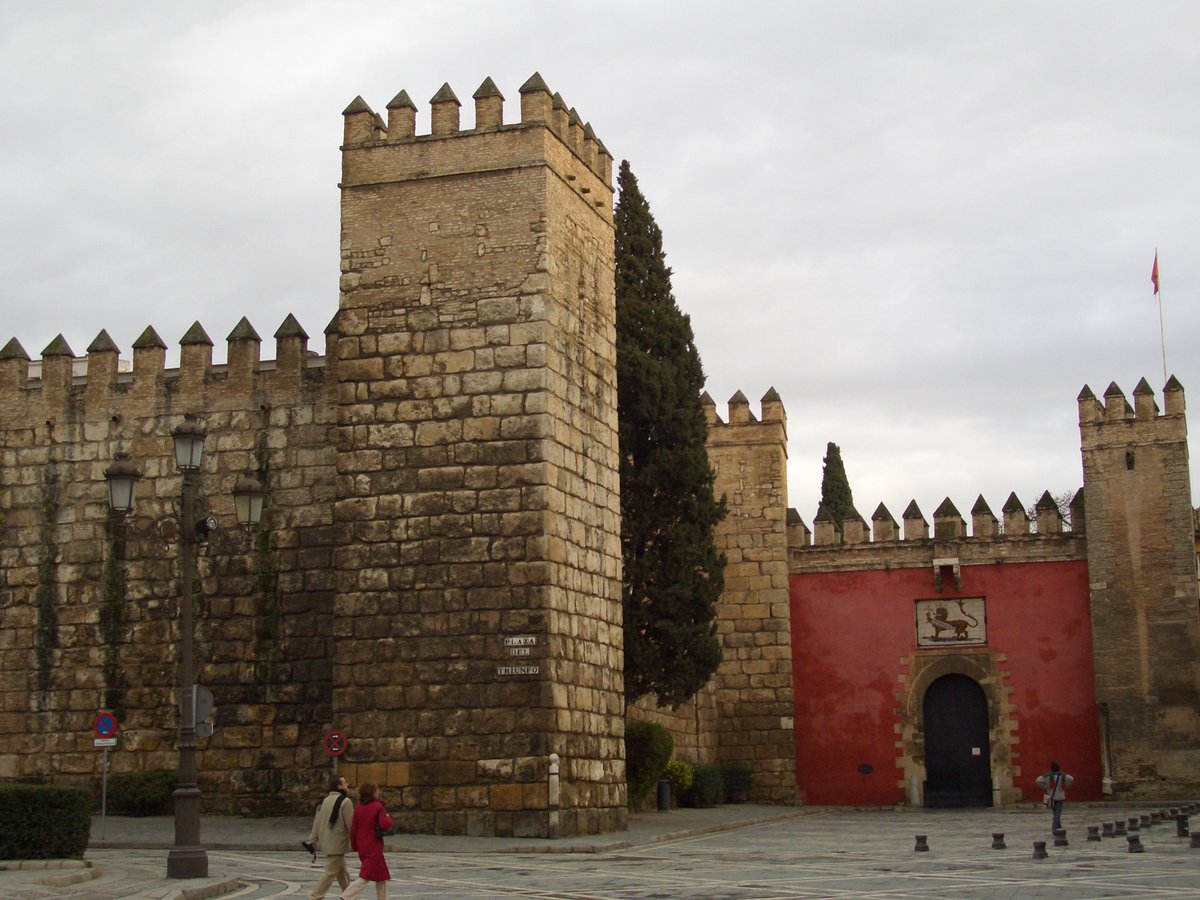

For a significant portion of history, the entrance to the Real Alcázar was recognized as the Puerta de la Montería. This title originated from the courtyard it serves, a place that likely featured hunting scenes. We must acknowledge that the precise origin of that specific name continues to puzzle historians today.
Standing 8.50 metres tall, the gate reflects the Almohad architectural style. It functions as the main threshold to the patio del León and the palace of King Pedro I. While the physical structure is ancient, its identity shifted during the 19th century. During that era, Romantic literary circles began to prefer the name Lion Gate.
This modern name highlights a specific decorative tile panel depicting a lion. This ceramic work was produced in 1892 by the Mensaque factory based on a design by the historian José Gestoso y Pérez. It represents a deliberate addition to a much older defensive fortification.
Passing through this gate reveals a complex series of spaces including the Sala de la Justicia. Beyond that point, three arches from a former Almohad wall remain visible. These were rearranged after the construction of the palace of King Pedro to provide a direct view into the Patio de la Montería.
Sources: Wikipedia, OpenStreetMap, Wikidata, Wikimedia Commons
Written by Nik Frost
Discuss this with the author and others
No comments yet. Be the first to start the conversation.