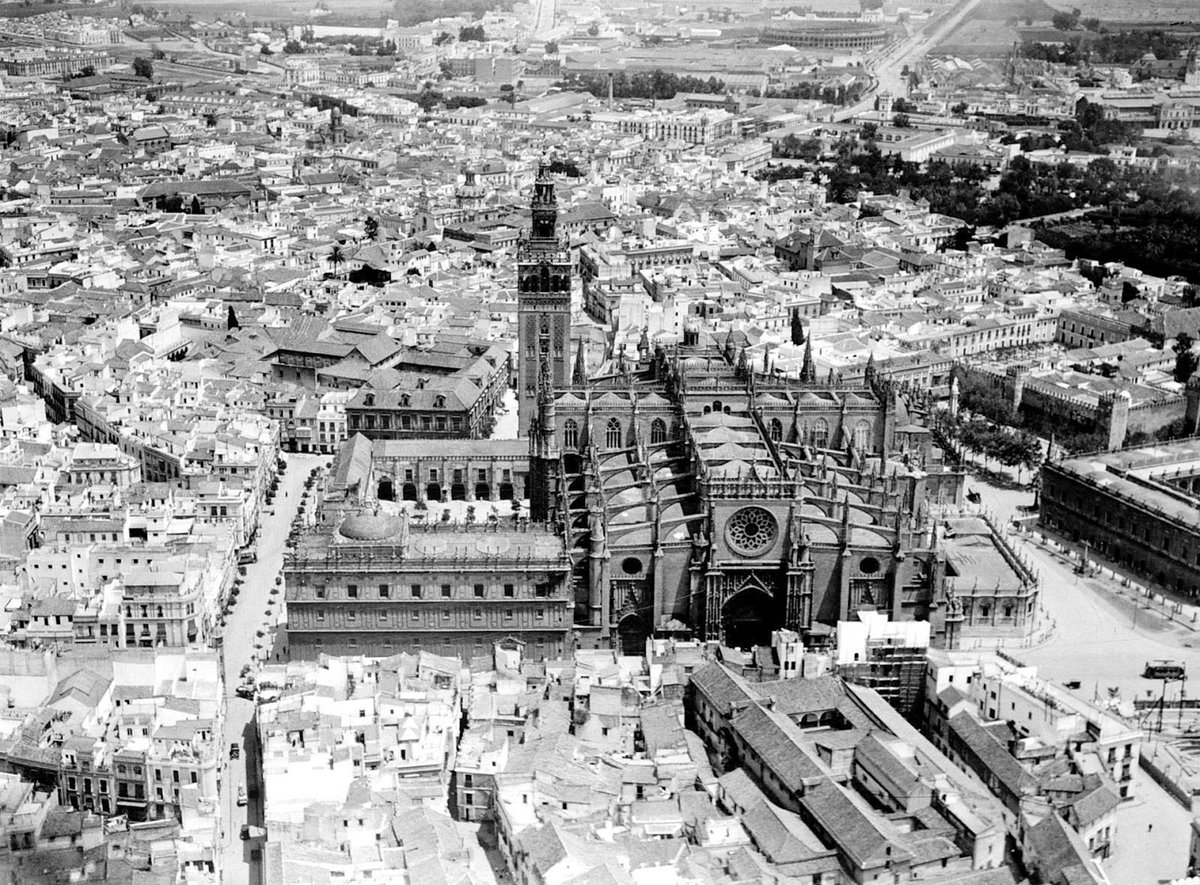

The Cathedral of Santa Maria de la Sede, more famously known as Seville Cathedral, is a Catholic cathedral in Seville, Spain. Largely recognized as one of the largest churches in the world, its history delves into intriguing transformations. Originally constructed in 1172 as the Almohad Mosque, it served as Seville's significant religious site under the Almohad Caliphate. The mosque was designed by architect Ahmad ben Basso, boasting a rectangular structure of 113-by-135 meters.
Following Seville’s conquest by Ferdinand III, the Almohad mosque underwent a profound shift, transforming into a cathedral. The internal space was gradually subdivided into chapels, with the eastern half predominantly occupied by the royal chapel. The Almohad mosque's orientation was altered, while its spaces were partitioned and adorned to accommodate Christian worship practices.
Sources: Wikipedia, OpenStreetMap, Wikidata, Wikimedia Commons
Written by Nicolo Ciampini
Discuss this with the author and others
No comments yet. Be the first to start the conversation.