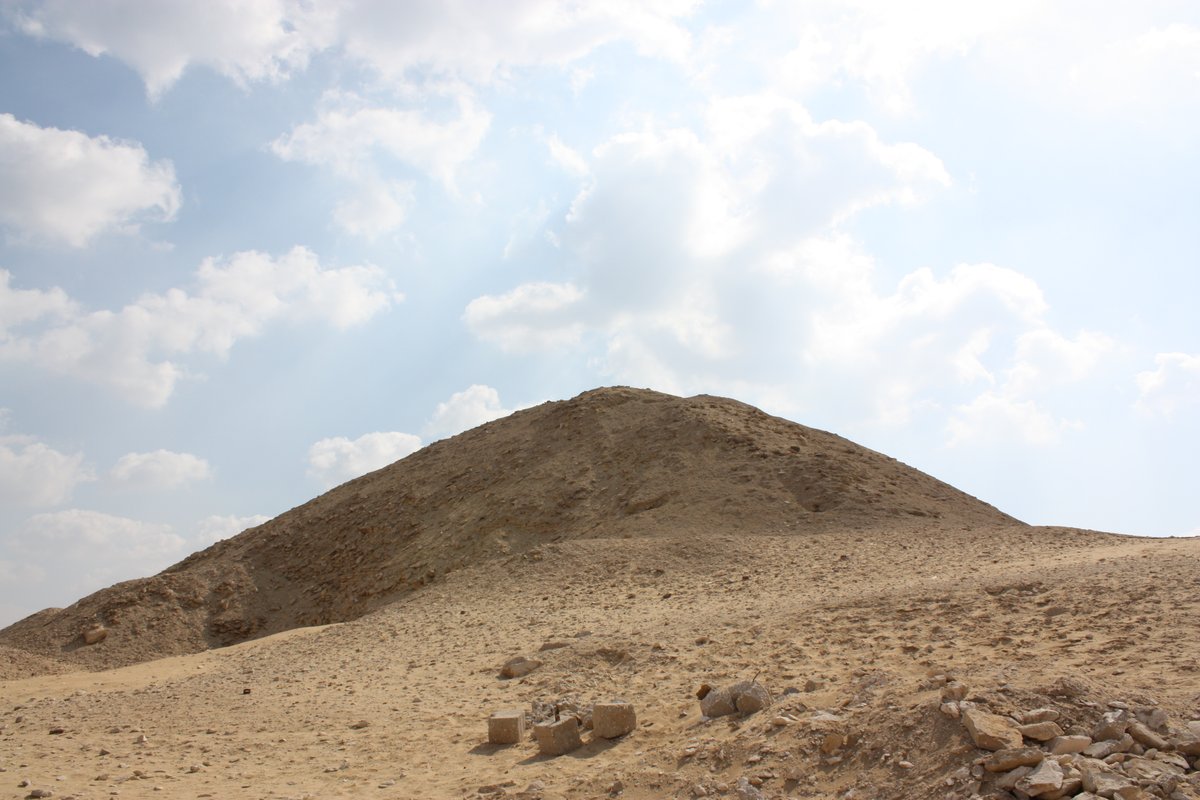

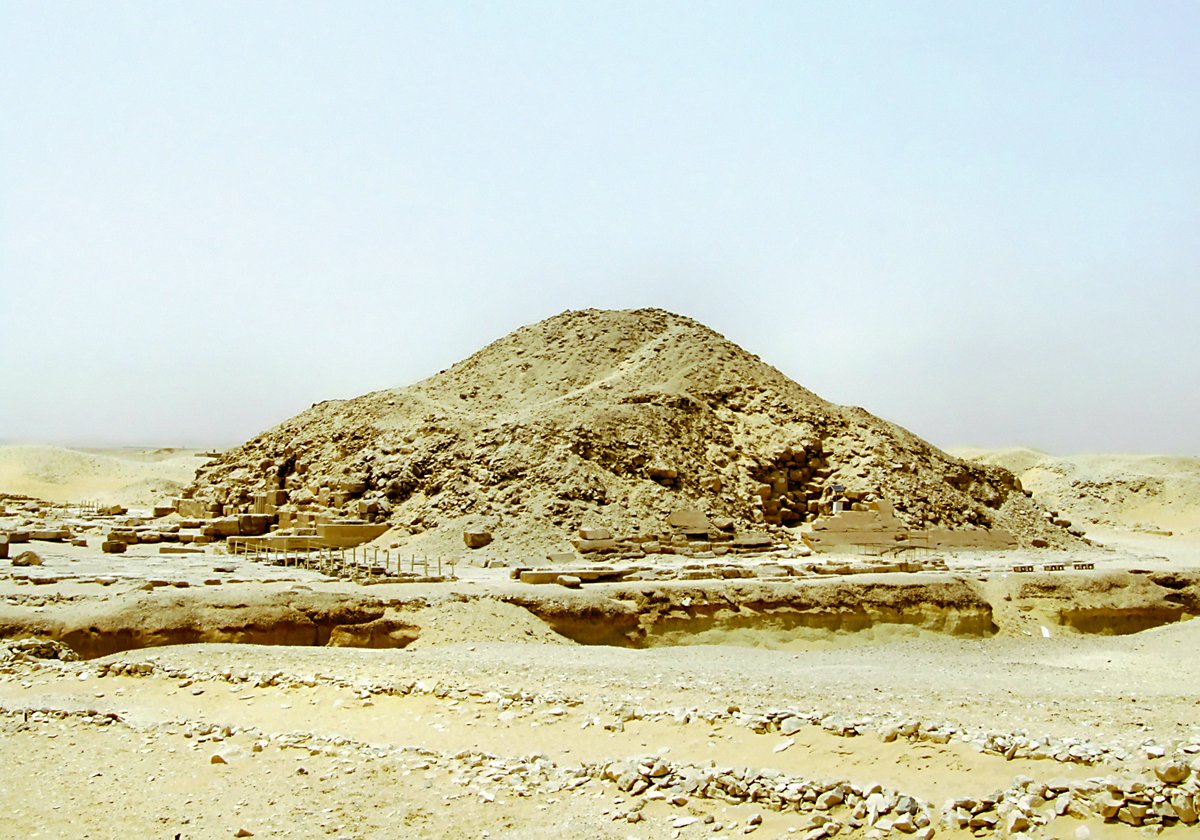
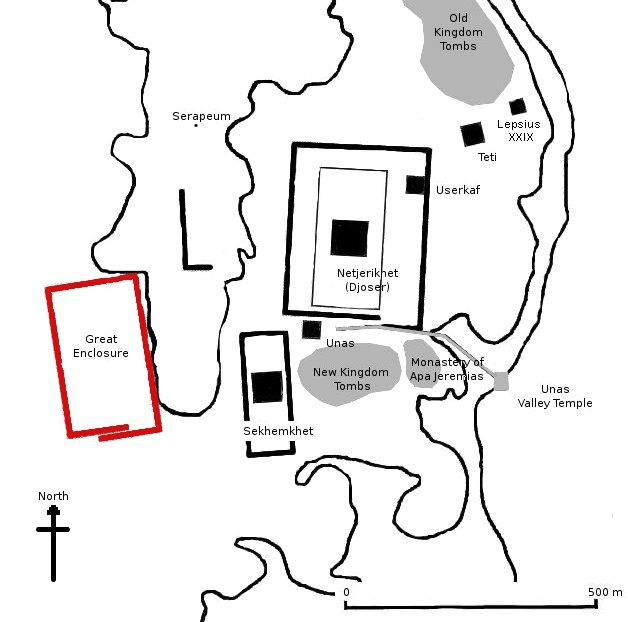
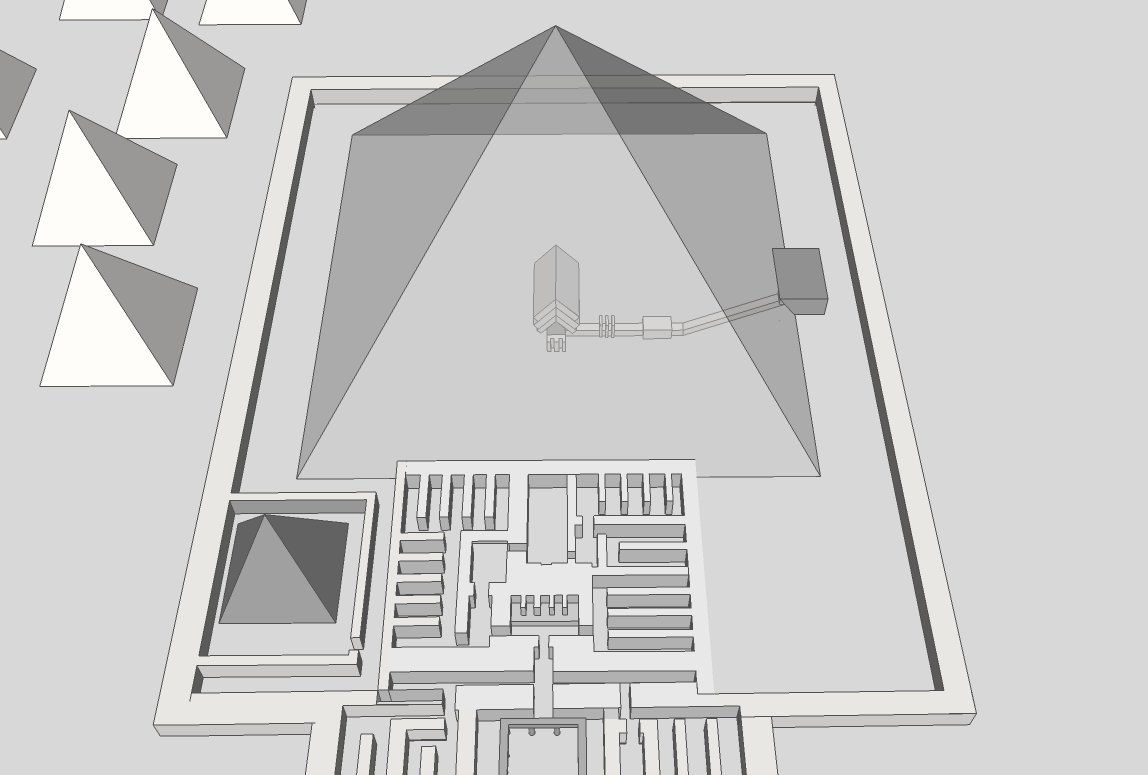
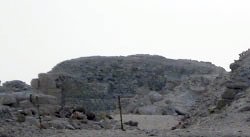
The pyramid of Teti is a smooth-sided structure in the pyramid field at Saqqara in Egypt. It belonged to Teti, the founder of the sixth dynasty. While the preservation above ground is very poor and it now resembles a small hill, the chambers and corridors below ground are very well preserved. The complex follows a model established during the reign of Djedkare Isesi, featuring a funerary temple, a causeway, and a valley temple that was likely destroyed in antiquity.
The temple of Teti features a unique floor plan where the floor is moved south of the traditional axis. This layout provides access to a hall with thick walls, likely the Room of the Greats, where the royal family and influential court members were to be represented to assist the sovereign's journey. This hall opened into a courtyard surrounded by colonnades for daily offerings. Further inside, a sacred area called the Peribolos contained a chapel with five statues of the King appearing as five principal deities, as well as a private room with a false door stela.
The burial chambers are reached via a long descent of several hundred metres, which was once blocked by a granite plug and later clogged with limestone blocks broken by thieves. The passage leads to a horizontal hallway, a vestibule, a bedroom with harrows, and finally the funerary apartments. The burial chamber's walls are covered with hieroglyphic inscriptions called the Pyramid Texts, a theological corpus designed to support the rebirth of the king.
Though tomb robbers ripped out the north and south walls of the burial chamber to search for treasure, the walls have since been reconstructed with small masonry. The original fragments were sent to separate museums. Inside the burial chamber, archaeologists found an unfinished greywacke sarcophagus, along with a fragment of a lid and a canopic container.
Sources: Wikipedia, OpenStreetMap, Wikidata, Wikimedia Commons
Written by Mutabor
Discuss this with the author and others
No comments yet. Be the first to start the conversation.