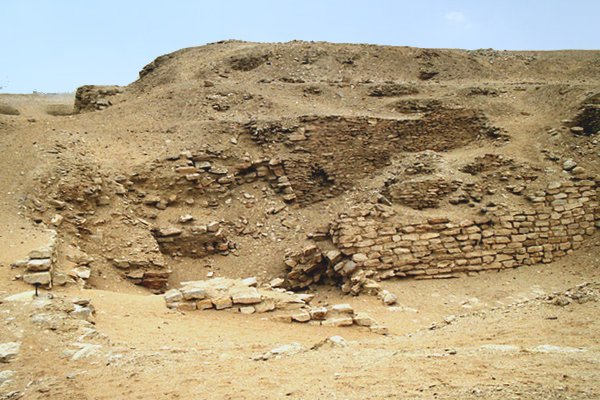

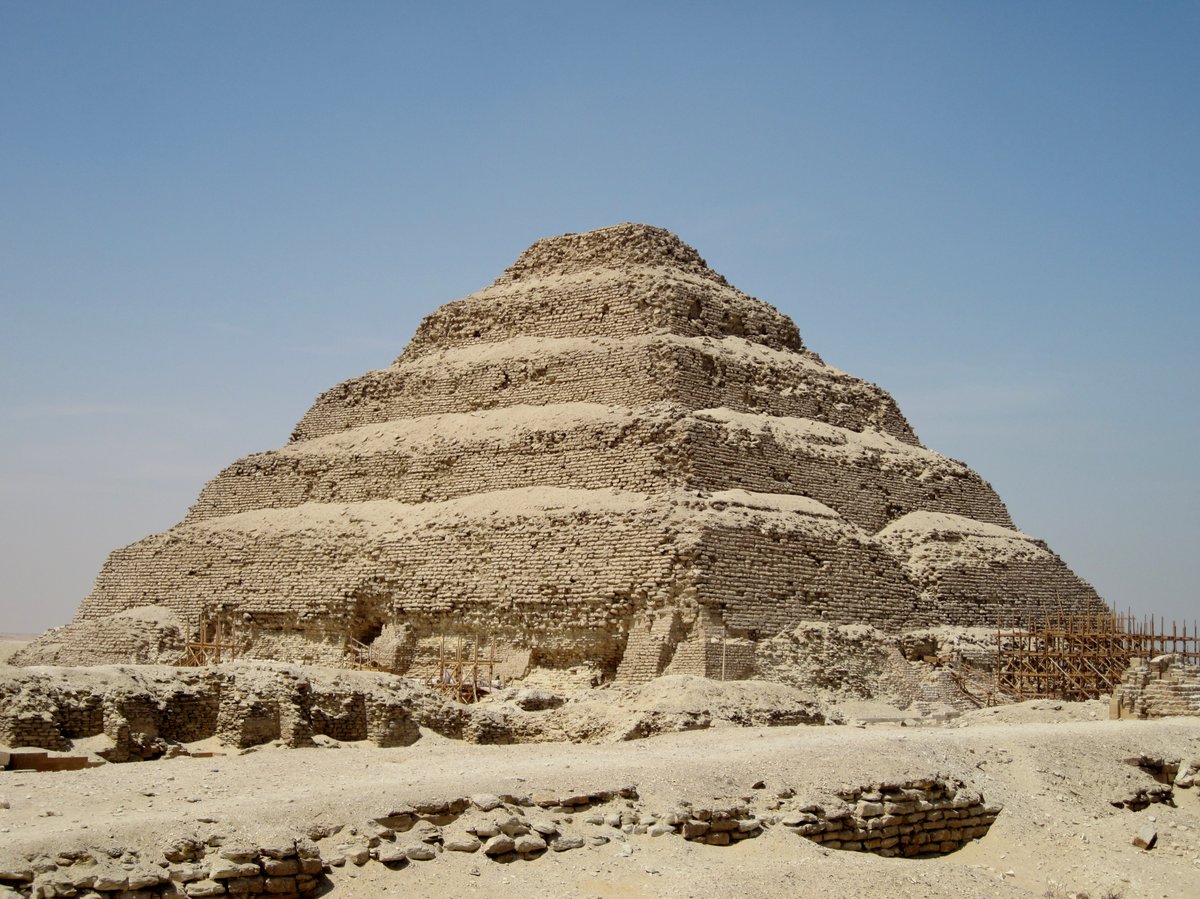
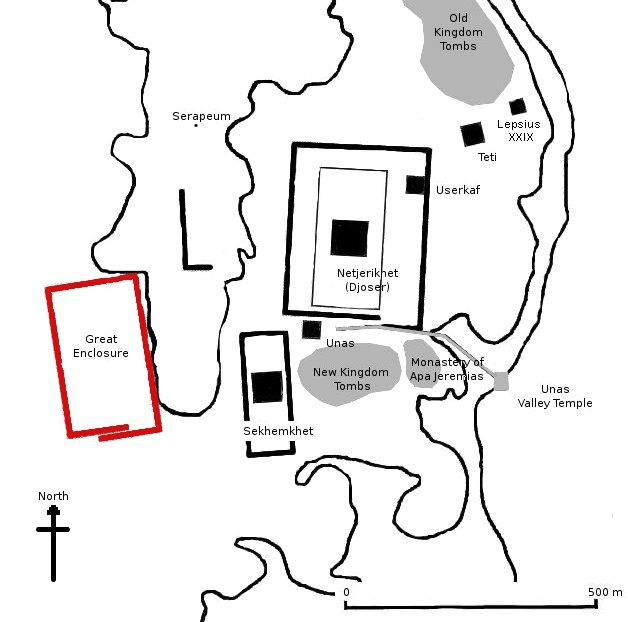
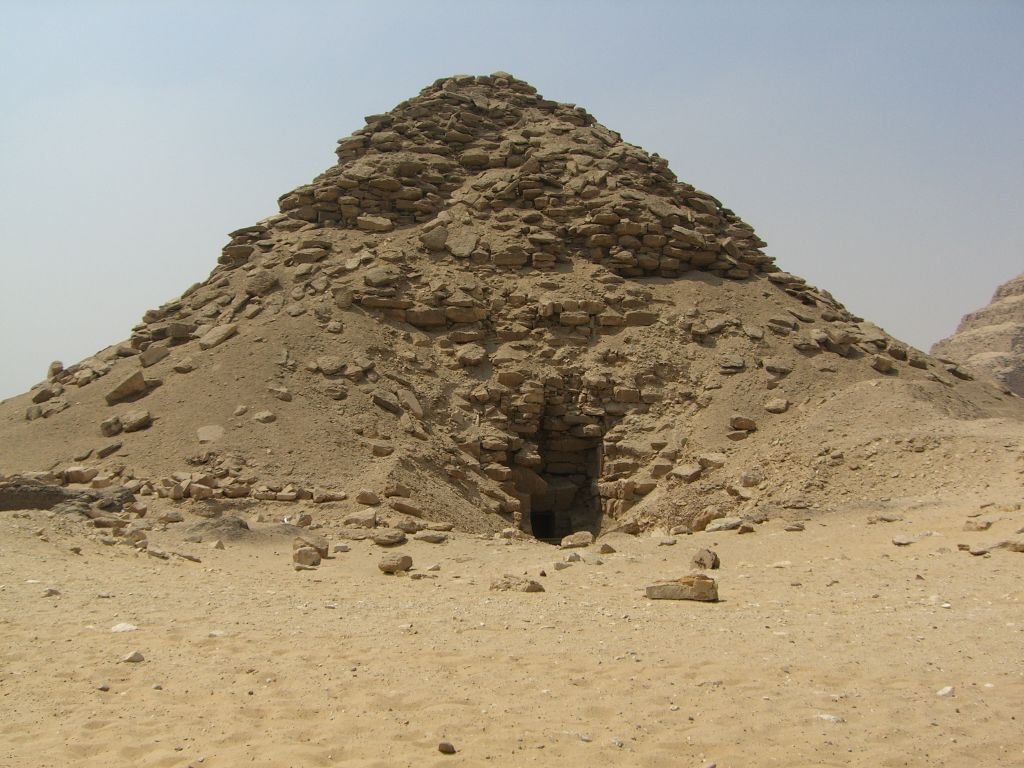
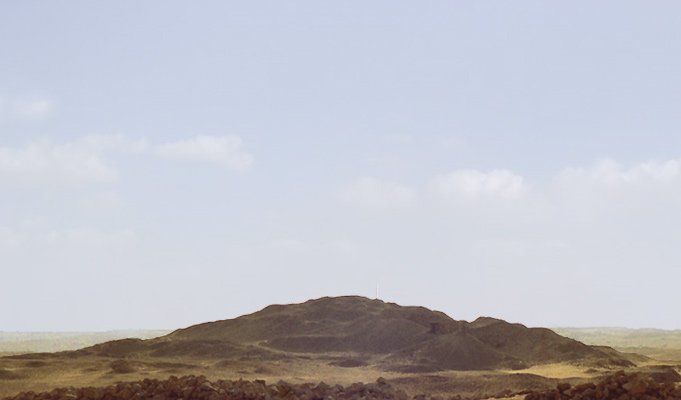
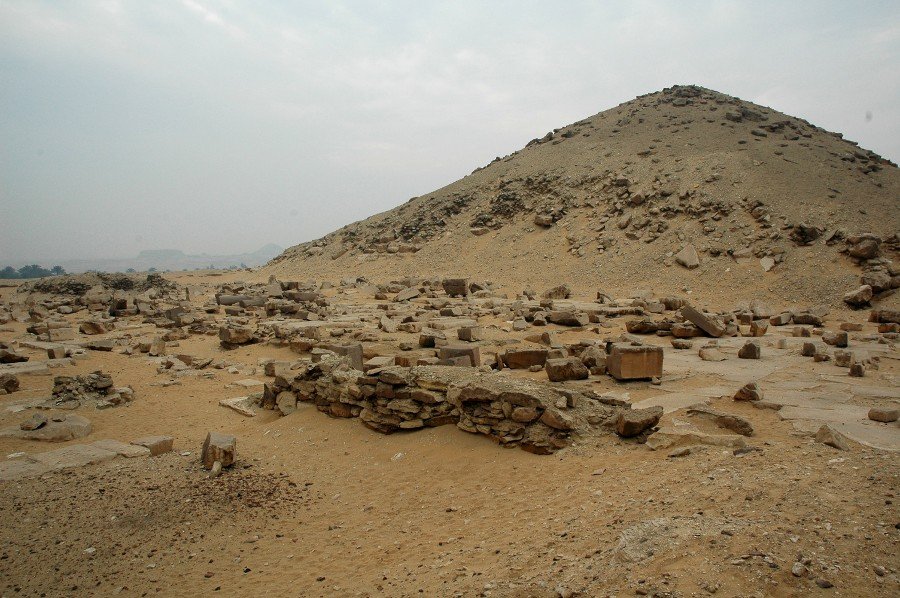
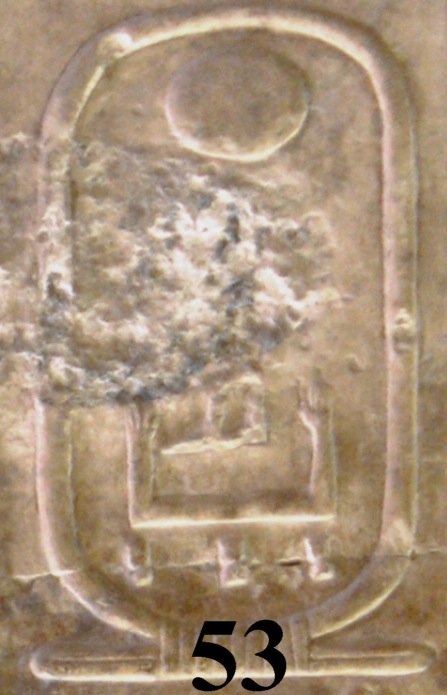
The Step Pyramid of Sekhemkhet, also known as the Buried Pyramid, was constructed around 2645 BC. Sekhemkhet was the second king of the Third Dynasty, a period that marked the transition from Egypt's Early Dynastic Period to the Age of the Pyramids. Located several hundred metres southwest of the famous step pyramid of Djoser at Saqqara, this structure was modeled after Djoser's work. It is believed the pyramid was designed to surpass its neighbor in scale, but it barely rose above ground level, leading to its common name.
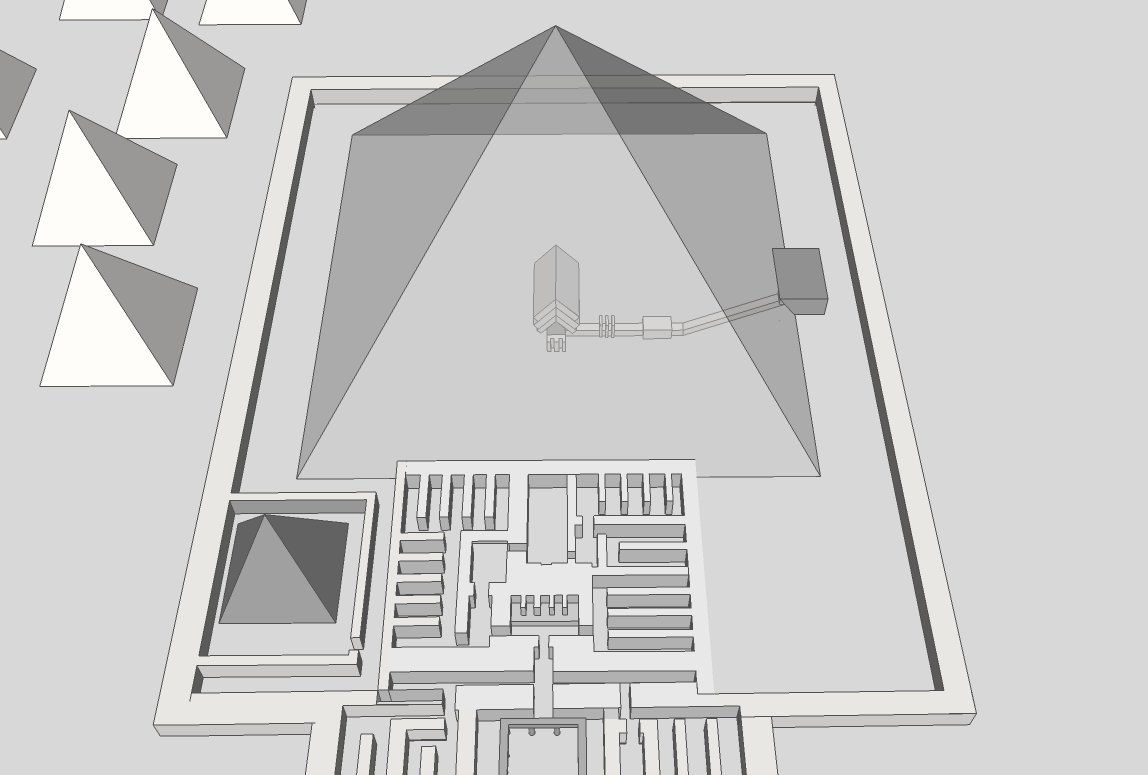
Excavations began in 1951 when Egyptologist Zakaria Goneim noticed a rectangular shape in the desert. He discovered a rubble-coursed enclosure wall, 5.2 metres tall and 18 metres thick, which extended to dimensions of 520 metres in the north-south axis. At the center sat the pyramid itself, which had a base length of 115 metres. Because it reached only 8 metres in height and had only one step, it was initially mistaken for a mastaba. However, a descending passage leading to a gallery of chambers proved it was a pyramid. The construction technique involved limestone blocks inclined inward by 15 degrees.
The pyramid's incompletion is thought to have been due to Sekhemkhet's short reign of approximately six years. Beneath the structure lies a subterranean complex featuring a narrow passage that descends about 61 metres to a gallery of 136 unfinished magazine chambers. Further along, a burial chamber measuring 8.8 metres by 5.18 metres was found. It contained a sarcophagus cut from a single block of fine alabaster. In 1954, explorers opened the vertical lid of the sarcophagus and found it empty. A nearby tomb, looted by robbers, was later found containing the remains of a two-year-old child and fragments of gold leaf.
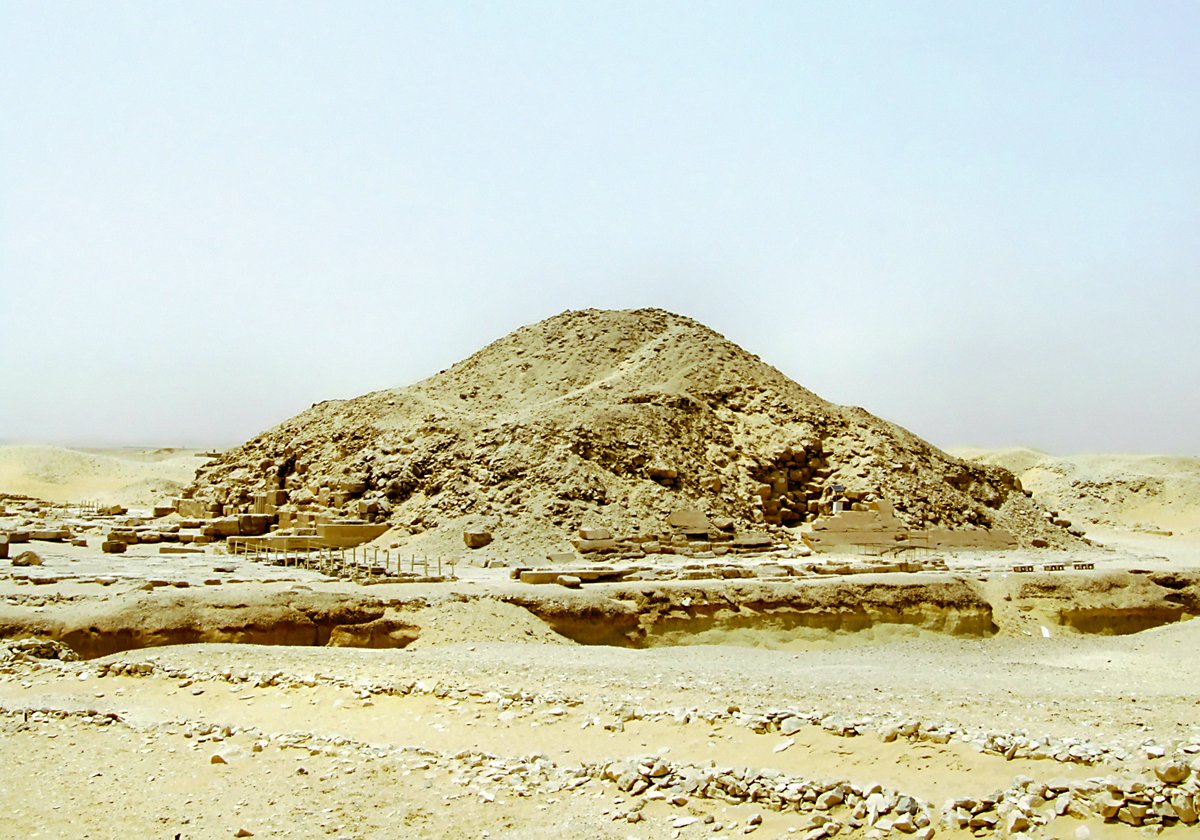
Today, the pyramid complex includes the pyramid, the subterranean structure, and a necropolis. The name Imhotep appears on a section of the enclosure wall, suggesting a possible connection to the architect of Djoser's pyramid. While the pyramid can be visited, the public is not allowed access to the base and substructures.
Sources: Wikipedia, OpenStreetMap, Wikidata, Wikimedia Commons
Written by Mutabor
Discuss this with the author and others
No comments yet. Be the first to start the conversation.