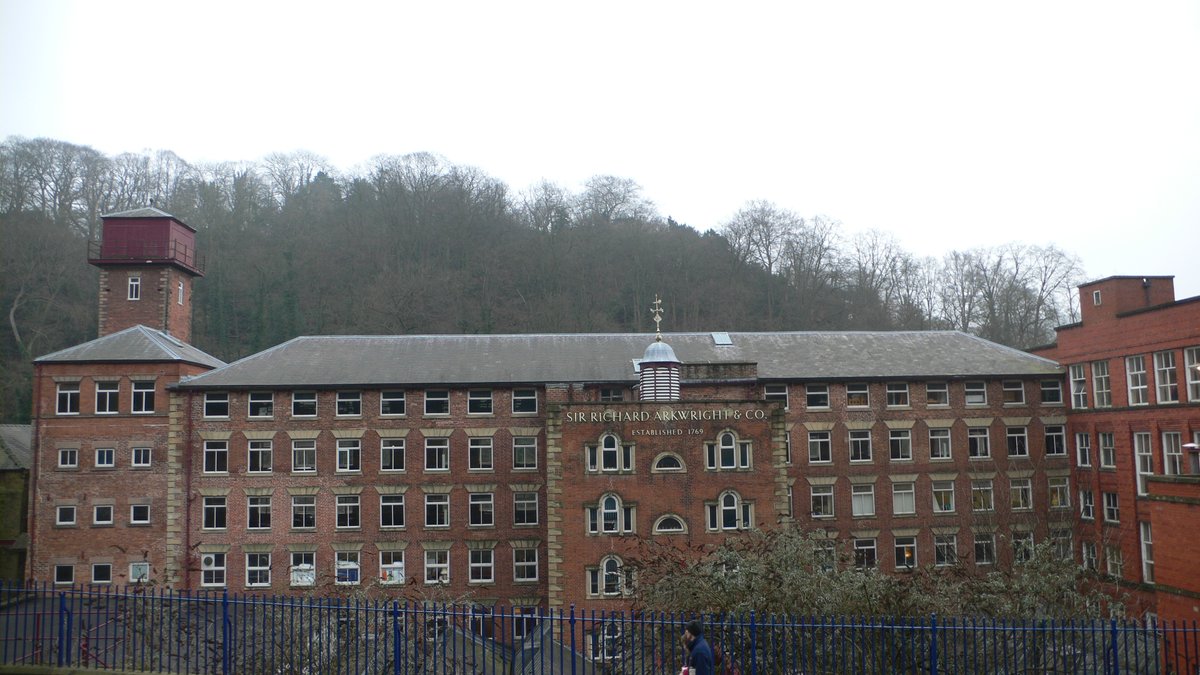
The Derwent Valley Mills, sprawled across a 24 km stretch of the Derwent Valley in Derbyshire, England, was designated as a World Heritage Site in 2001. It was the birthplace of the modern factory system and its water-powered cotton spinning mills, a revolution pioneered by Richard Arkwright. However, the story of its inception is as intriguing as its impact.
John Lombe, an Englishman working in Derby in the late 17th century, amassed a collection of Italian secrets, obtained through espionage, concerning the design of their water-powered machines. He built a five-storey mill in an attempt to increase the production of silk.
Fast-forward to the early 18th century, and Arkwright took the stage. Armed with Lombe's findings, he developed the water frame for spinning cotton in 1769. This innovation, a game-changer for the textile industry, allowed cotton to be spun continuously, opening up the possibility for unskilled workers to operate the machines.
Cromford Mill, Arkwright's first mill, was operational by 1774. The rapid adoption of this new technology throughout the valley led to the establishment of new settlements like Cromford village, to house the mill workers. Transport infrastructure was built to open new markets for the mills' produce, with mills and workers' settlements springing up at Belper, Darley Abbey, and Milford.
To ensure a labour force, it was necessary to construct housing for the mill workers. This marked the beginning of a pattern that was replicated across the valley and even beyond its borders.
The cotton industry in the Derwent Valley faced a decline in the early 19th century, but many of the buildings within the World Heritage Site are still in use today. Some have been converted into museums and are open to the public.
Sources: Wikipedia, OpenStreetMap, Wikidata, Wikimedia Commons
Written by Nicolo Ciampini
Discuss this with the author and others
No comments yet. Be the first to start the conversation.