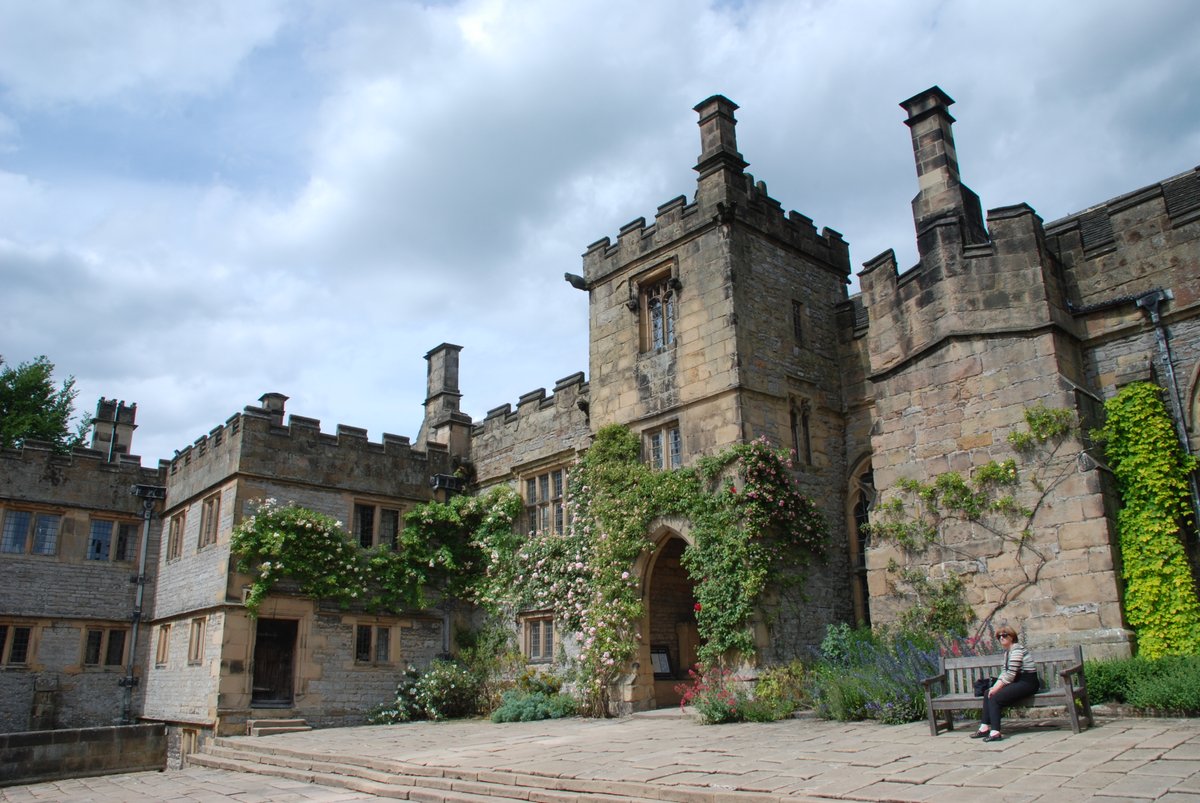
Haddon Hall, a medieval manor house near Bakewell, Derbyshire, is a remarkably preserved relic from antiquity, with roots reaching back to the 11th century. Willhelm Peverel, holding the manor of Haddon in 1087, was the first to lay claim to this structure. Though it was never a castle, a licence was granted to construct a wall around the manor in 1194. The Vernon family, through a 12th-century marriage in 1170 between Richard de Vernon and Alice Avenell, acquired the Manor of Haddon and constructed most of the structure we see today, except for the Peveril Tower and part of the Chapel of St.
Nicholas, which were built preceding them, and the Long Gallery, which was built in the 16th century. Haddon Hall served as the residence of the Dukes of Rutland for centuries until Dorothy Vernon, the daughter and heiress of Sir George Vernon, eloped with John Manners, the second son of Thomas Manners, 1st Earl of Rutland, in 1563. This elopement sparked a centuries-long tale of forbidden love and family intrigue. Haddon Hall remains in the Manners family to this day, and is structured around two courtyards, with the Peverel or Eagle Tower in the upper (north-east) courtyard, the Long Gallery in the same courtyard, the chapel in the lower (south-west) courtyard, and the Great Hall lying between the two courtyards.
Sources: Wikipedia, OpenStreetMap, Wikidata, Wikimedia Commons
Written by Nicolo Ciampini
Discuss this with the author and others
No comments yet. Be the first to start the conversation.