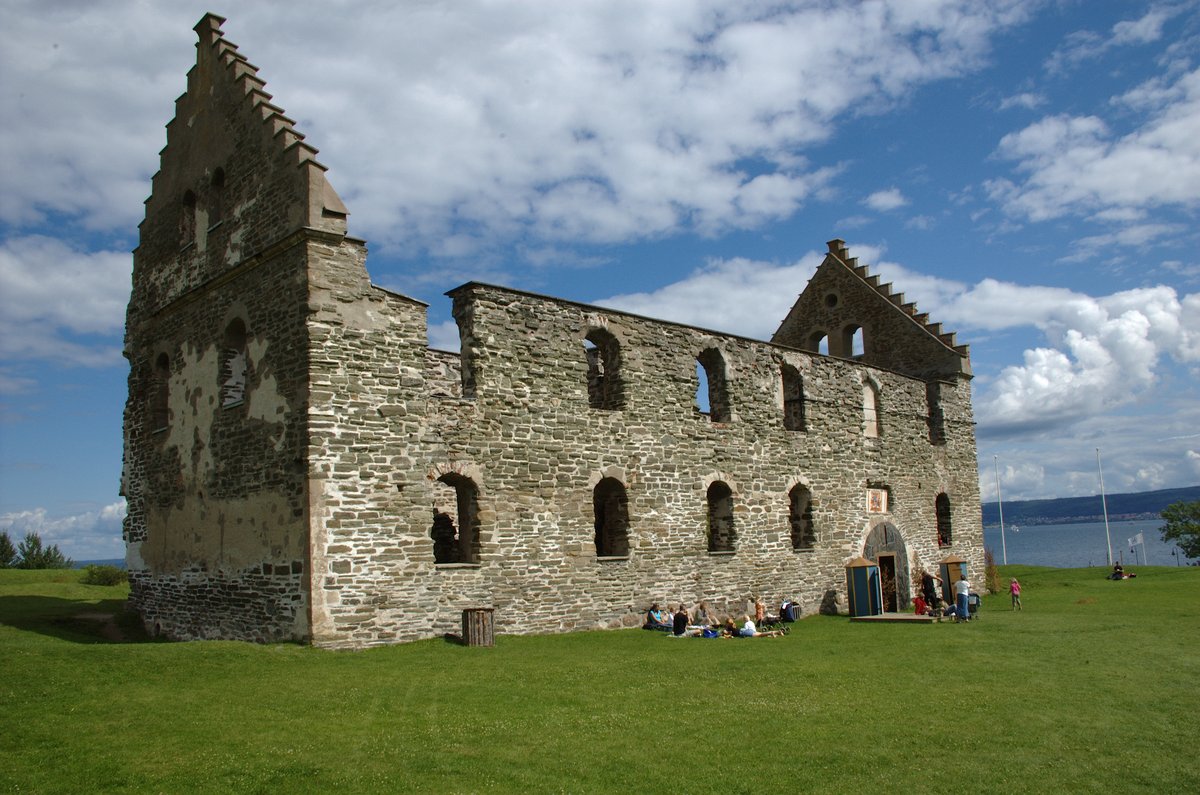

Visingsborg, a castle on Visingsö island, has a history as fascinating as it is unexpected. Built in the 1570s by the Brahe family, it was initially a four-towered castle with a moat. The bricks used to build the first part of the castle were taken from the monastic buildings at Alvastra and a newly-established tegel (brick) factory in Gränna.
Over the years, the castle underwent various renovations, and was expanded by the Brahe family members. By the 1660s, it was completed, its four towers adorned with gilded spires shining above the rooftops of Visingsö.
In 1654, Grev Per Brahe d.y. received judicial powers over those living on Visingsö. However, the castle was abandoned in 1680 when the Swedish crown took it. From then until 1715, the castle was in ruins.
But, in 1715, the castle was given a new purpose: it became a prison for prisoners of war from the Great Northern War, primarily Russians.
Thousands of prisoners were held there under the guard of local farmers who were compensated for food and clothing.
The prisoners suffered from food shortages, particularly in the spring of 1717, leading to a revolt. A few hundred prisoners broke through the guards and escaped from the island.
King Karl XII took action against the responsible landshövding, Generalmajor Georg Reinhold Patkul, who was later tried and convicted for his negligence in not providing adequate food and lodging to the prisoners and informing the king about their suffering.
In 1718, a devastating fire destroyed Visingsborg. The Russian prisoners were relocated to Jönköping, Eksjö, Gränna, and Växjö. The peace of Nystad in 1721 marked the end of prison life at Visingsborg.
Today, the remaining castle ruins primarily consist of the walls from the southern castle range. Per Brahe the Elder built the western range, while Magnus Brahe, Per Brahe's son, built the southern range, including its salons and living quarters, as well as the eastern range. The eastern range housed kitchen and economic spaces.
Sources: Wikipedia, OpenStreetMap, Wikidata, Wikimedia Commons
Written by Nik Frost
Discuss this with the author and others
No comments yet. Be the first to start the conversation.