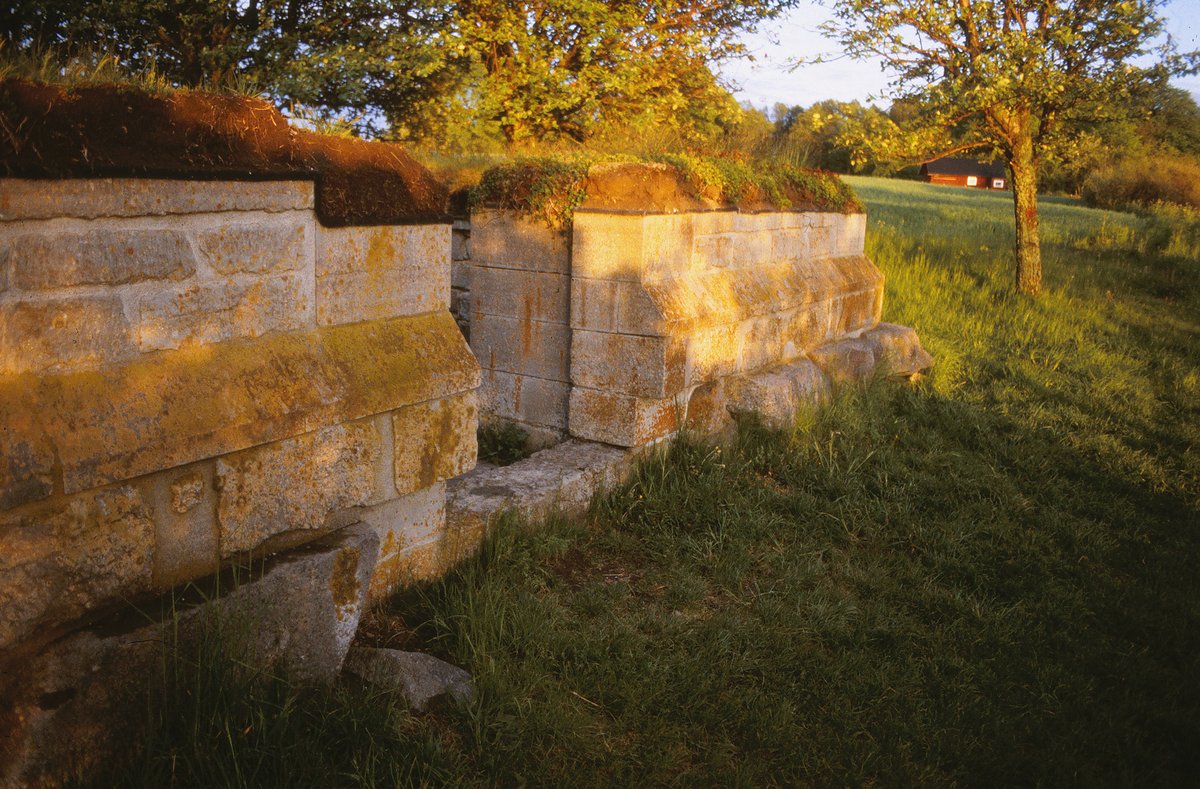

Inside the northeastern corner of the Sverkerskapellet ruins, a stone chest made of finely carved limestone was found during excavations. When archaeologists opened this vessel in the early 20th century, they found it filled with debris from the time the building was demolished. However, at the bottom of the chest, they uncovered a small lead roll measuring 27 millimeters high and 13 millimeters wide.
This small artifact contains a Latin prayer dedicated to a woman named Benedikta. The text seeks divine intervention for her to be cured from a terrible illness. One interpretation of the writing suggests that this Benedikta could be the first wife of King Sverker who died around 1200. While the building is called Sverkerskapellet because a King Sverker was killed in the area in 1156, newer research suggests a different primary function for the structure.
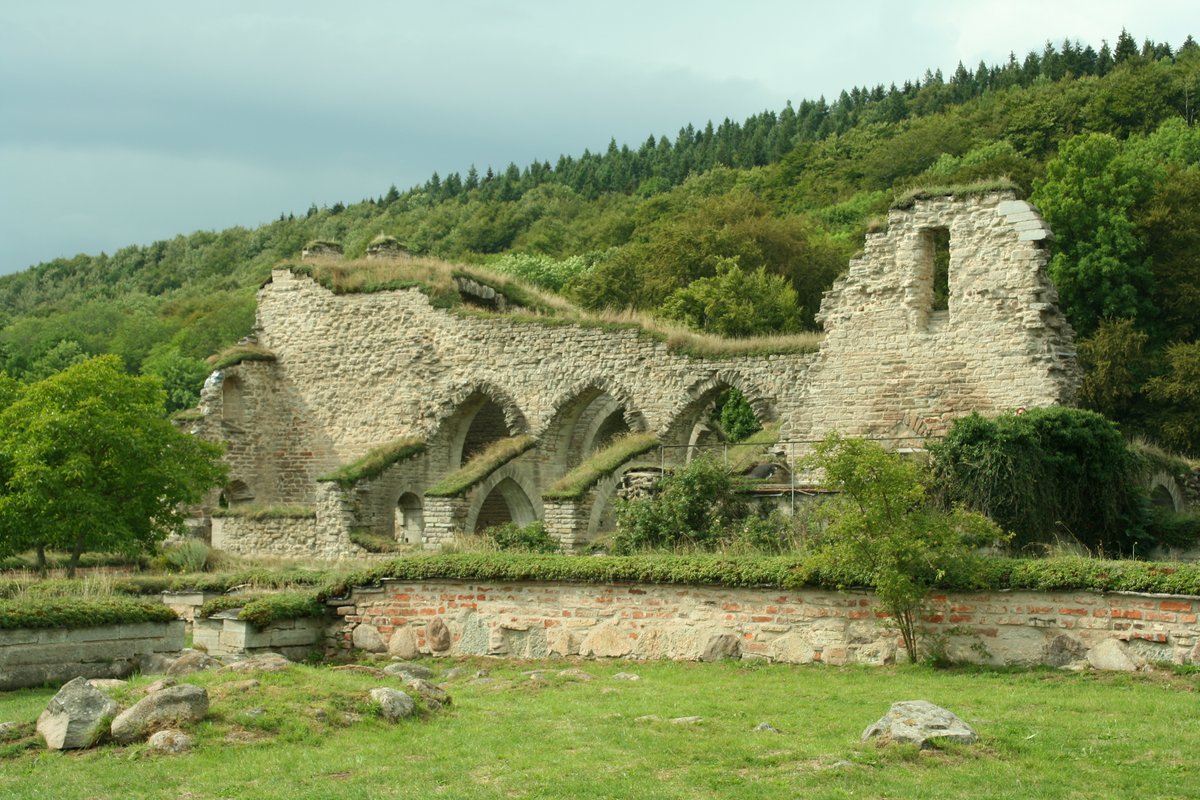
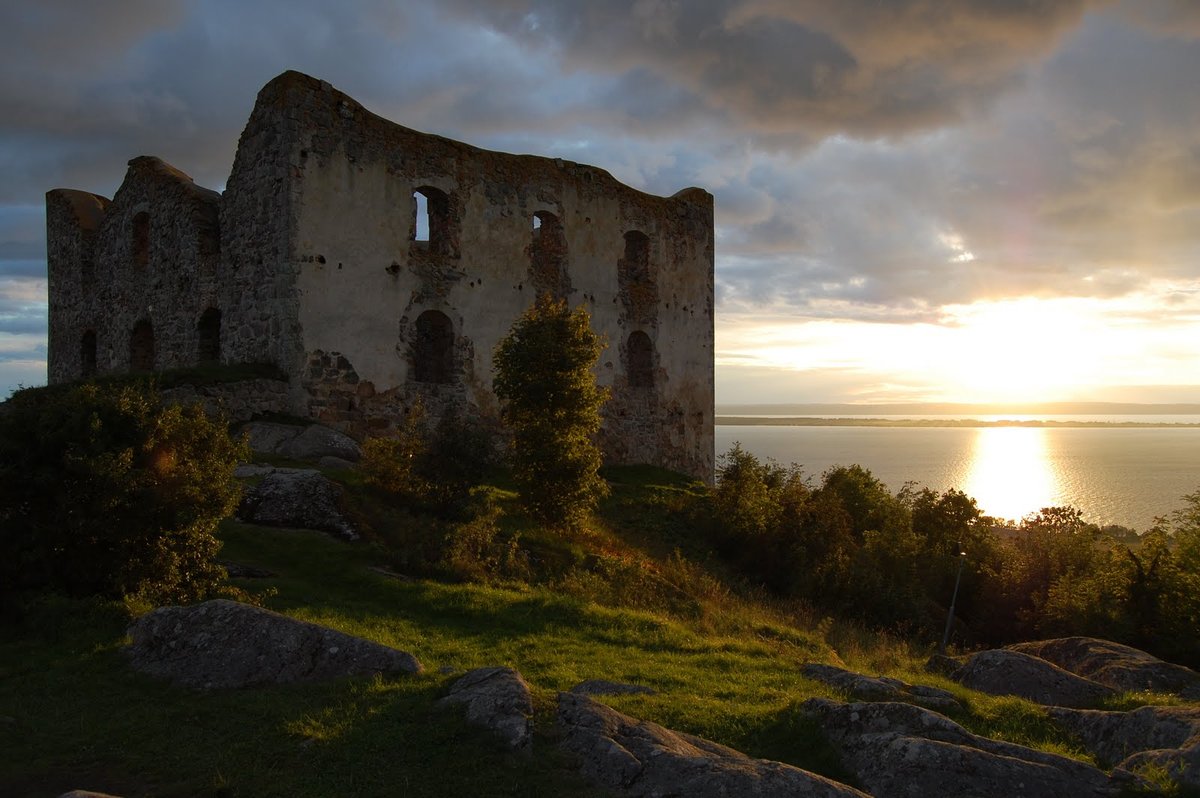
The masonry uses the same fine stonework used by the Cistercian monks of Alvastra kloster about one kilometer away. Because the nearby area includes remains of a kiln, a mill, and a harbor, researchers believe the building likely functioned as a production unit, or grange, belonging to the monastery. Such units were used for various types of crafts, livestock management, and fishing. This context explains the common tools found at the site, such as hammers, knives, and horse-shoe nails.
Located in Ödeshögs kommun on the shore of Vättern, the ruins still show limestone window frames and other architectural details. One specific block even retains a beautifully carved ship image from a Bronze Age rock carving, preserving a piece of history from the area's ancient past.
Sources: Wikipedia, OpenStreetMap, Wikidata, Wikimedia Commons
Written by Nik Frost
Discuss this with the author and others
No comments yet. Be the first to start the conversation.