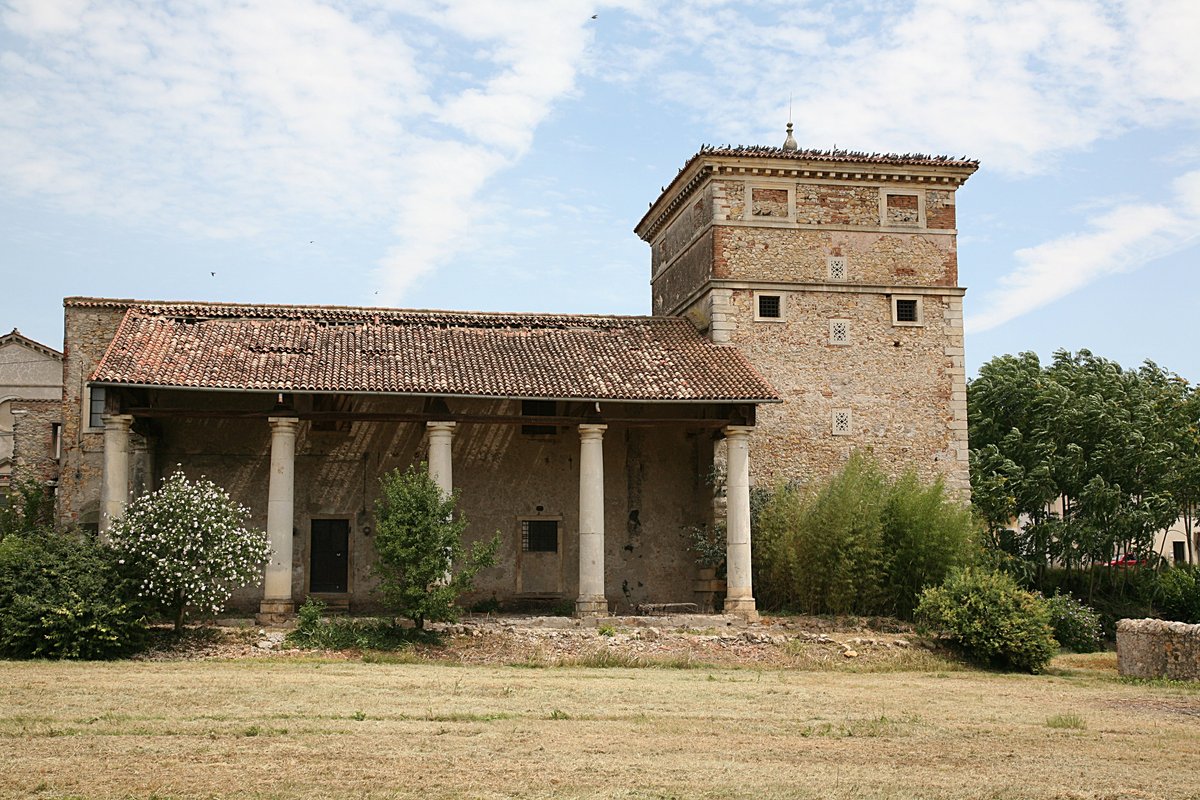

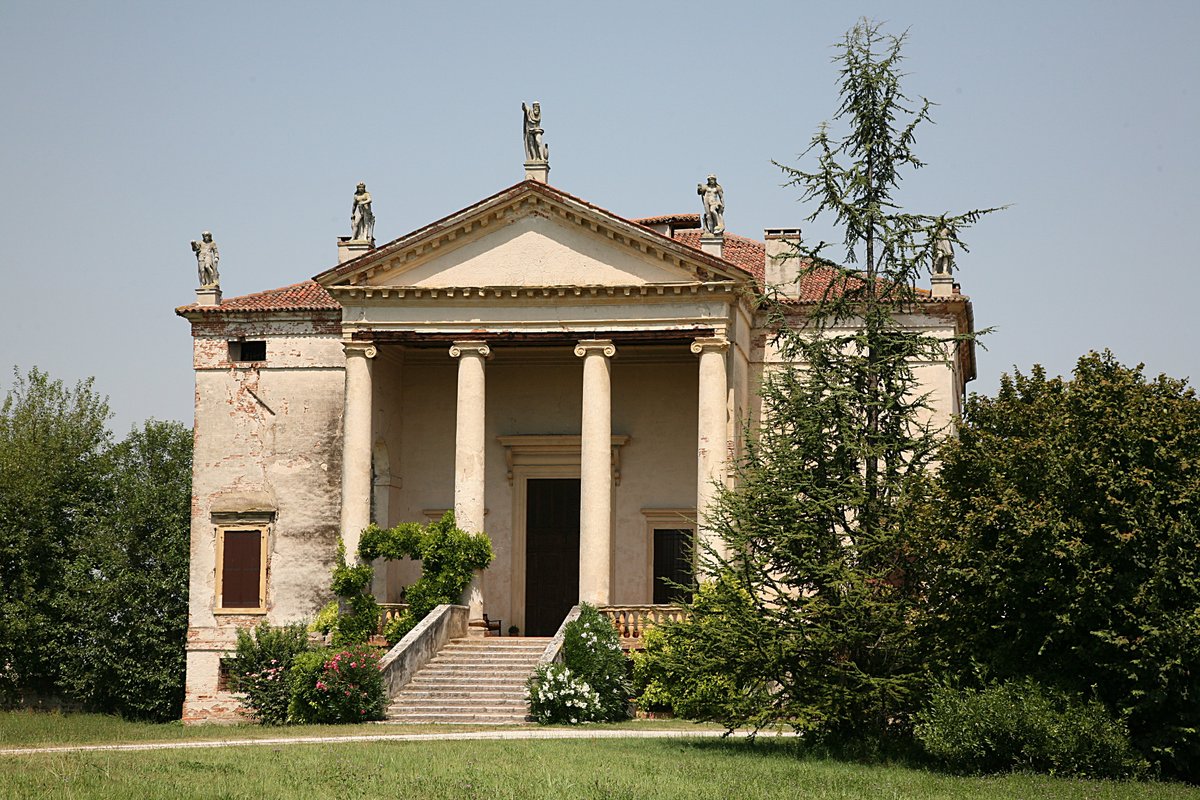
Villa Trissino, found in the hamlet of Meledo, Sarego, Veneto, Italy, was an incomplete patrician villa designed by Italian Renaissance architect Andrea Palladio. Originated for the brothers Ludovico and Francesco Trissino, the project was included in book two of the I quattro libri dell'architettura, published in Venice in 1570. The grounds, however, exhibit only a small portion of the design, a testament to the plan that never fully materialized. Palladio acknowledged the building as having been begun, yet it is uncertain how much of the multi-level design illustrated in the book was ever attempted.
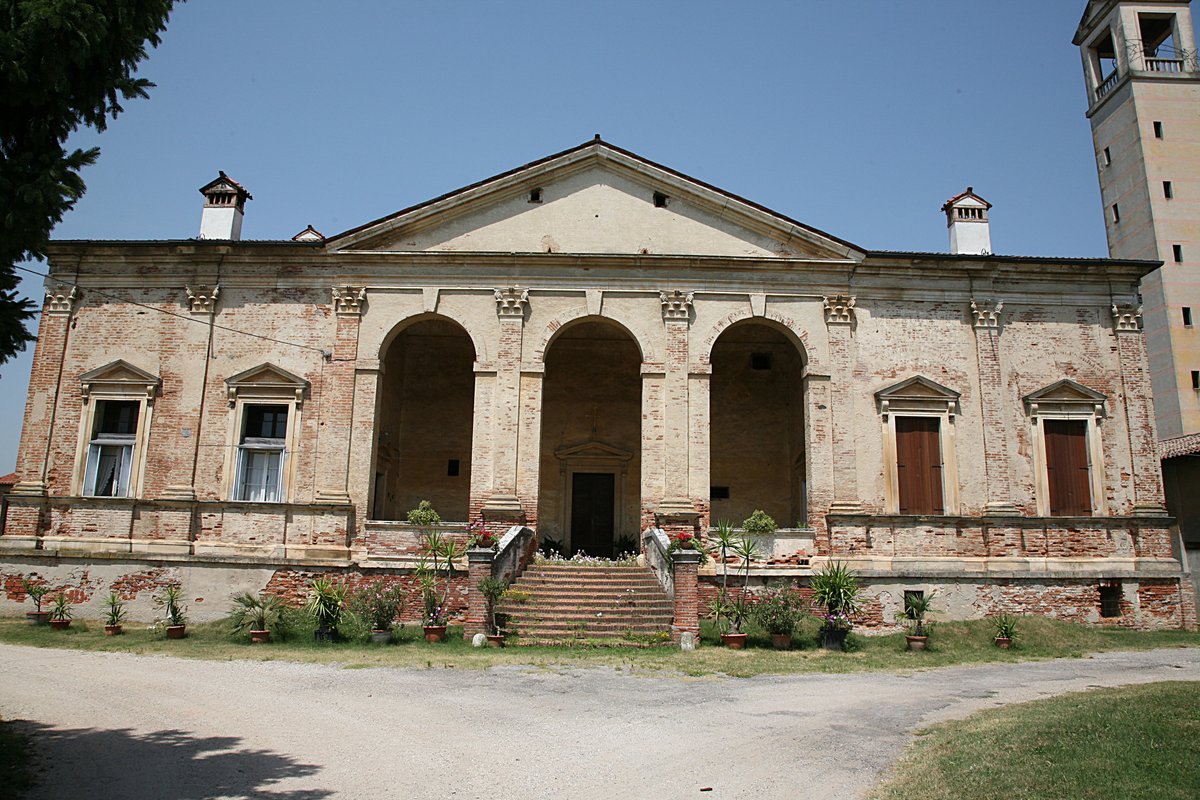
Villa Trissino exhibits the inception of a project, with remnants of the origins still discernible in the imposing stone foundations and the two barchesse with Tuscan columns of fine workmanship. The villa, as incomplete as it is, has had an impact on subsequent architectural designs, such as Thomas Jefferson's University of Virginia. What remains unfinished, however, is a fully realized Palladian house, as the site currently lacks one.
Visitors will find no Palladian house at Villa Trissino, only the start of the two extending wings. A small rusticated gateway also recalls the Villa Serego, another incomplete Palladian project. The dovecote, complete with frescoes, serves as a sign that the building's function was not just utilitarian. The dovecote tower was decorated with grotesques by Eliodoro Forbicini, a Veronese painter who also worked on Palladio's Palazzo Chiericati and Palazzo Thiene.
Although only parts of Villa Trissino were built, it remains an example of Palladian architecture, a reminder of the plans left unfinished but still influential. The site, which includes a small hill, was intended to be the centre of an agricultural estate for an aristocratic family.
Sources: Wikipedia, OpenStreetMap, Wikidata, Wikimedia Commons
Written by Nicolo Ciampini
Discuss this with the author and others
No comments yet. Be the first to start the conversation.