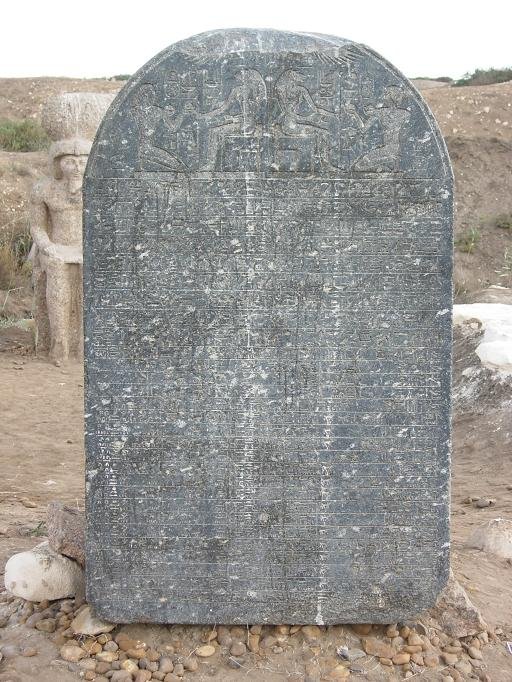

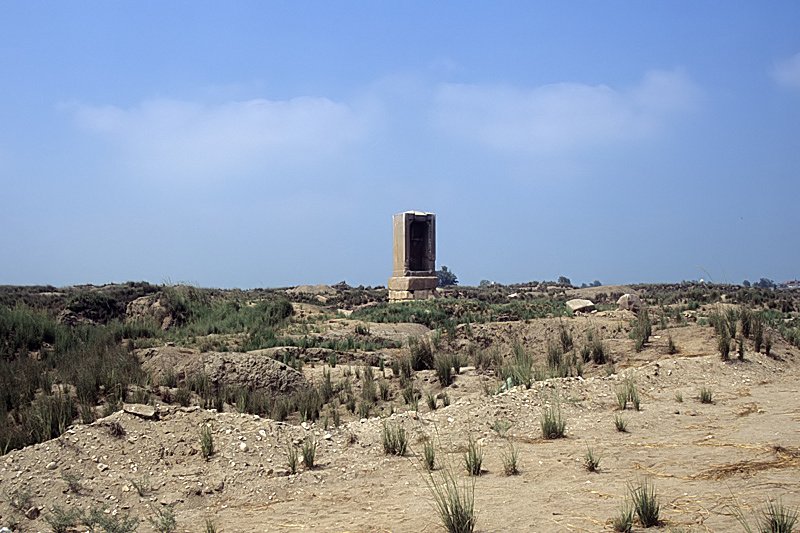
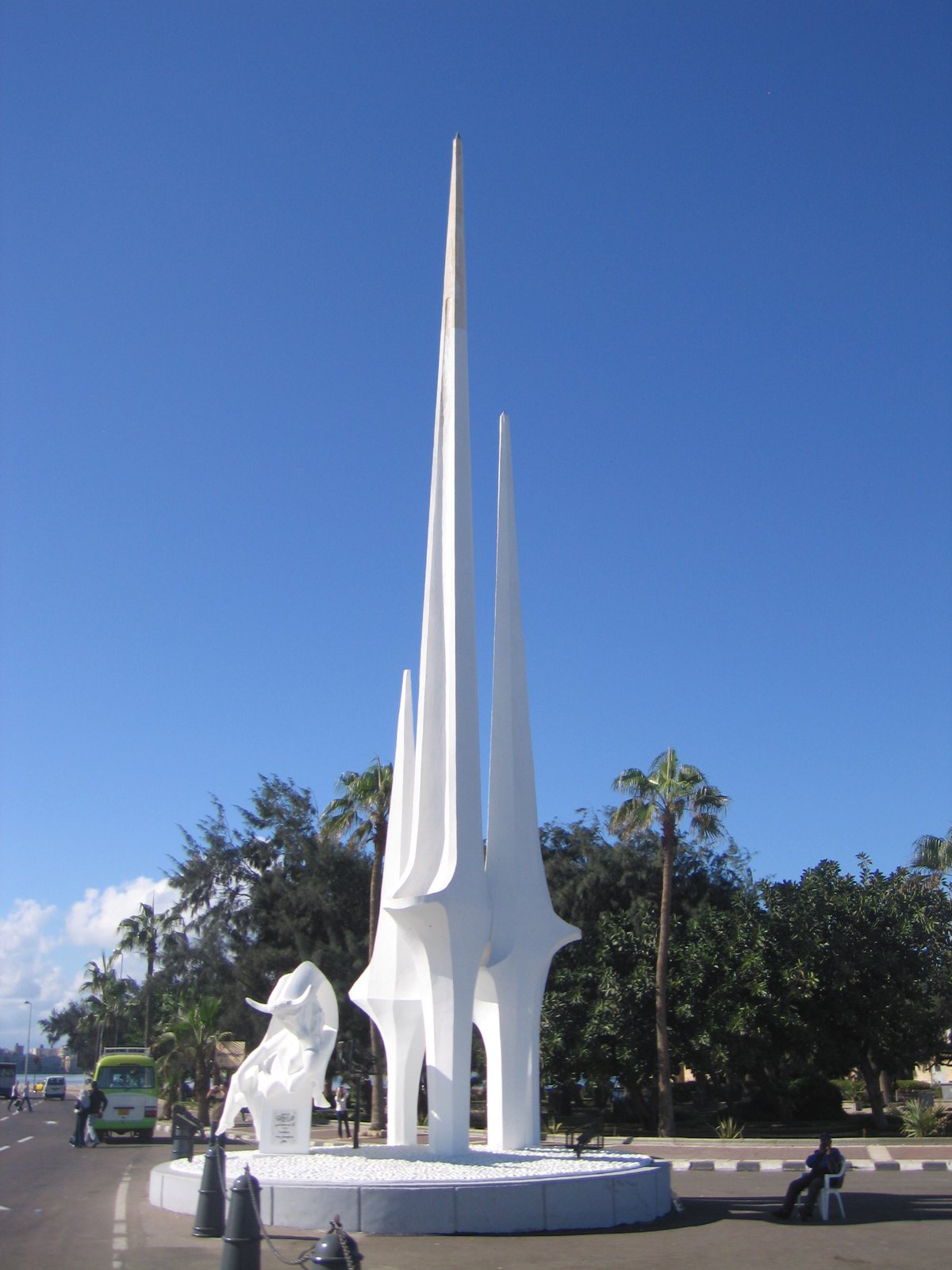
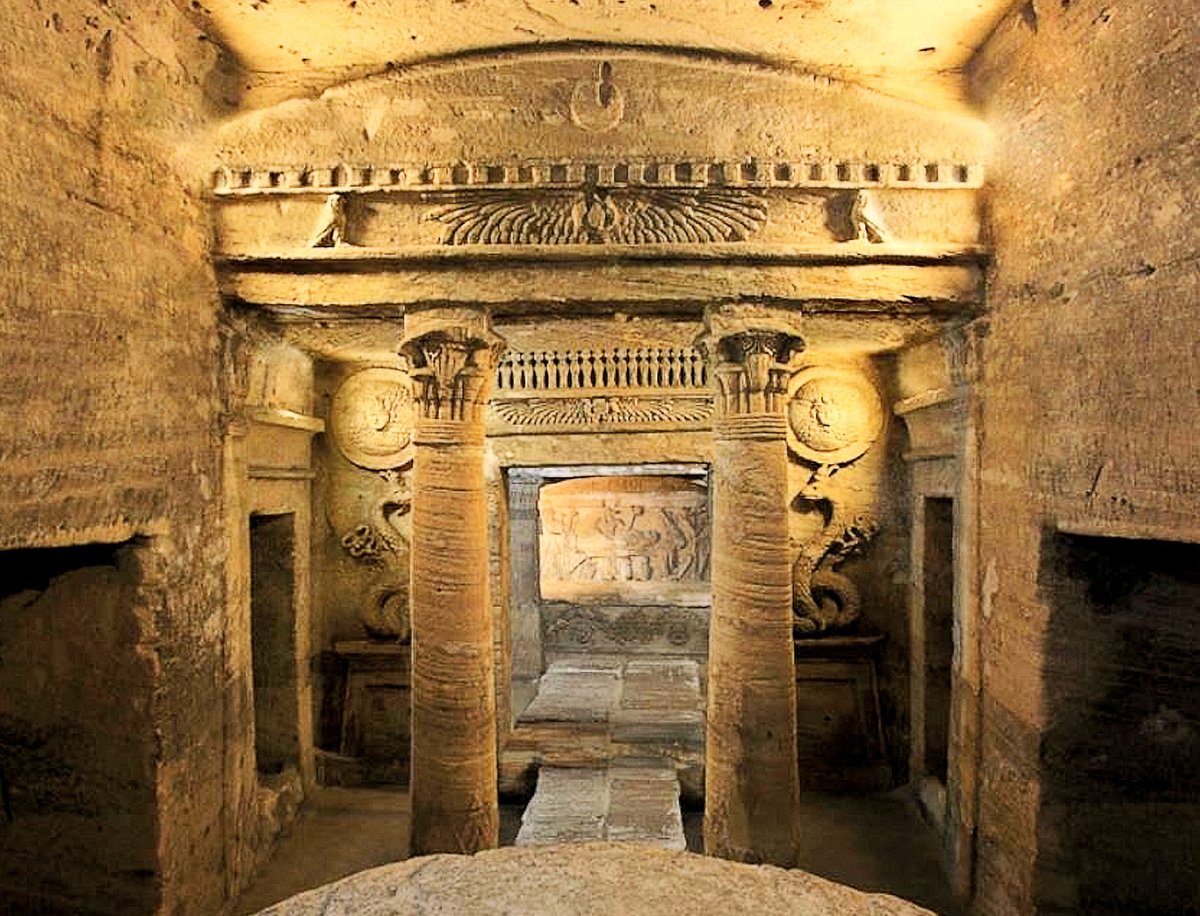
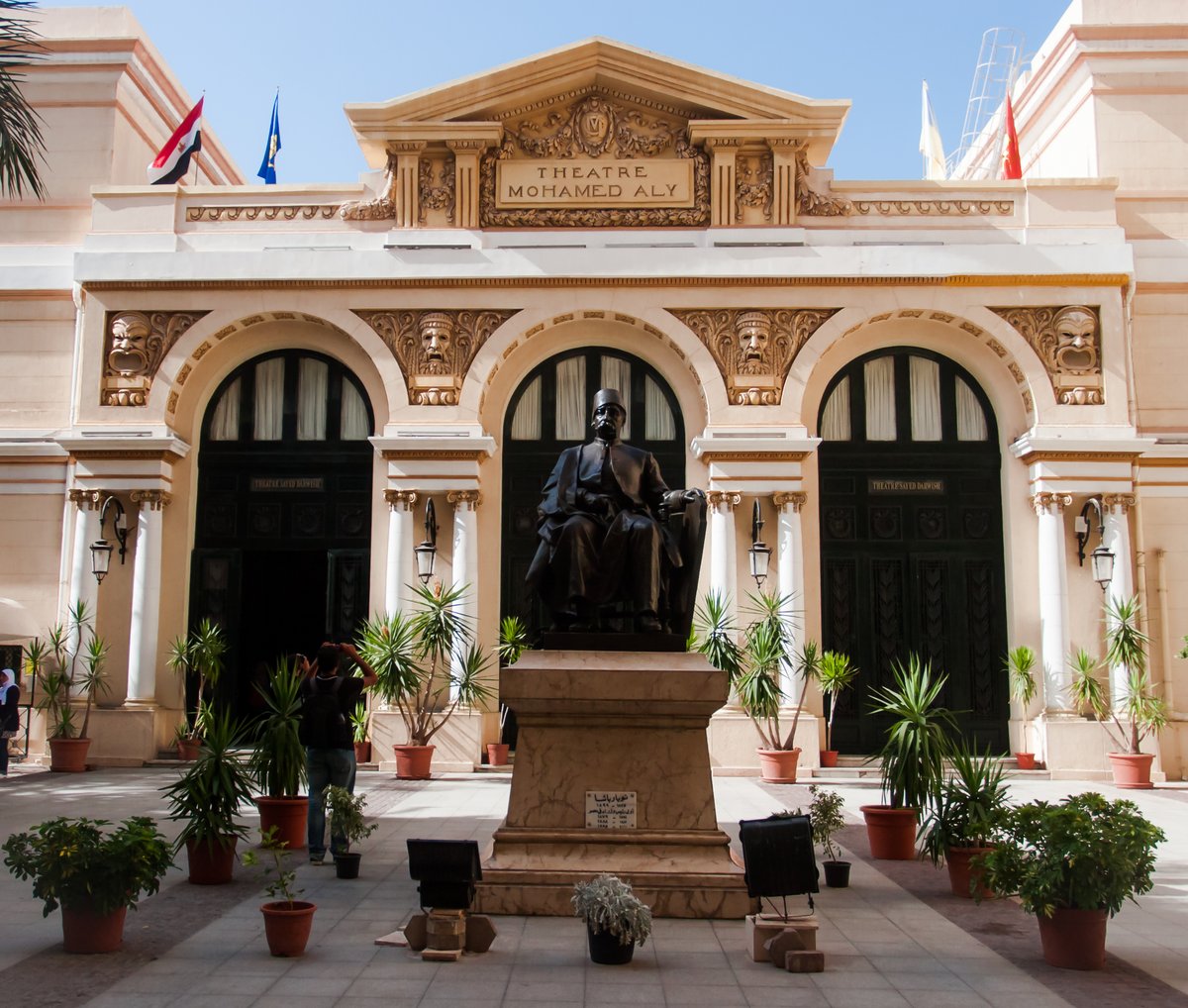
Buto, which the Ancient Egyptians called Per-Wadjet, was located 95 km east of Alexandria in the Nile Delta. It stood midway between the Taly and Thermuthiac branches of the Nile, a few kilometers north of the Butic River. Today, the area is known as Tell El Fara'in, or "Hill of the Pharaohs," near the city of Desouk.
The site was a sacred place dedicated to the goddess Wadjet, the patron deity of Lower Egypt. It was an important cultural site during prehistoric Egypt, notably during the Buto-Maadi culture from 4000–3500 BC. This culture was marked by development in architecture and technology, and was strongly marked by Levantine influences, in particular in the area of ceramics. Decorative fired clay cones from Buto were used to make mosaics and were similar to those found in Mesopotamia at Uruk.
Archaeological excavations have uncovered a palace building dating to the Second Dynasty and six Greek bathhouses. In 2022, excavations uncovered the remains of an ancient hall lined with pillars within the larger temple structure, containing three surviving columns and stone fragments decorated with engravings. These findings sit within a region where the two goddesses Wadjet and Nekhbet became known as the Two Ladies, remaining patrons of unified Egypt throughout its ancient history.
Sources: Wikipedia, OpenStreetMap, Wikidata, Wikimedia Commons

Written by Friendly Jane
Discuss this with the author and others
No comments yet. Be the first to start the conversation.