
In ancient times, the ram of Mendes was a central figure in religious life. The Greeks told tales of how Zeus donned the hide of a slaughtered ram to shroud his true likeness from a weeping Heracles. Within the province of Mendes, people honored the festival of Zeus by slaughtering a single ram, stripping its skin, and burying it in a sacred tomb. Meanwhile, the local inhabitants spared their goats from the blade, using sheep as their primary sacrificial animals.
This land was once a kingdom of fragrance, famous for a rare oil called Mendesium unguentum. It flourished as a seat of power until the waters of the river and the lake began to encroach upon the city. As the canals fell into neglect under the Macedonian kings, the water flow changed, and when they were repaired by Augustus, the neighboring town of Thmuis attracted the trade and population of Mendes, causing the city to decline.
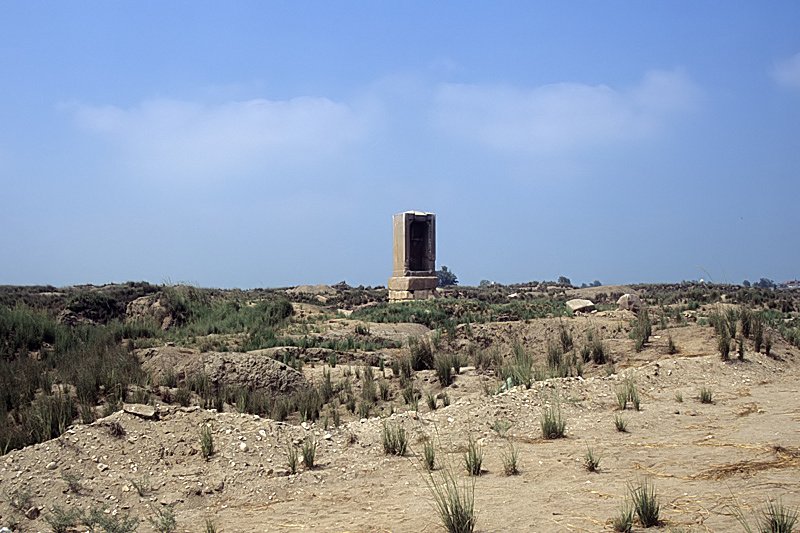
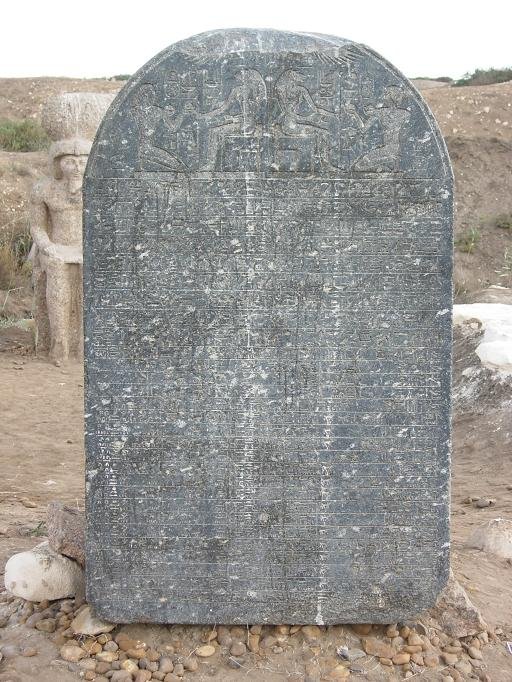
Deep beneath the mound of Tell El-Ruba, an Old Kingdom necropolis is estimated to contain over 9,000 interments. Workers have uncovered foundation deposits of Merenptah and monuments of Ramesses II, Merneptah, and Ramesses III from the sand. In the northwest corner, they discovered a cemetery of sacred rams. A temple attested by its foundation deposits was built by Amasis II.
Sources: Wikipedia, OpenStreetMap, Wikidata, Wikimedia Commons
Written by Mutabor
Discuss this with the author and others
No comments yet. Be the first to start the conversation.