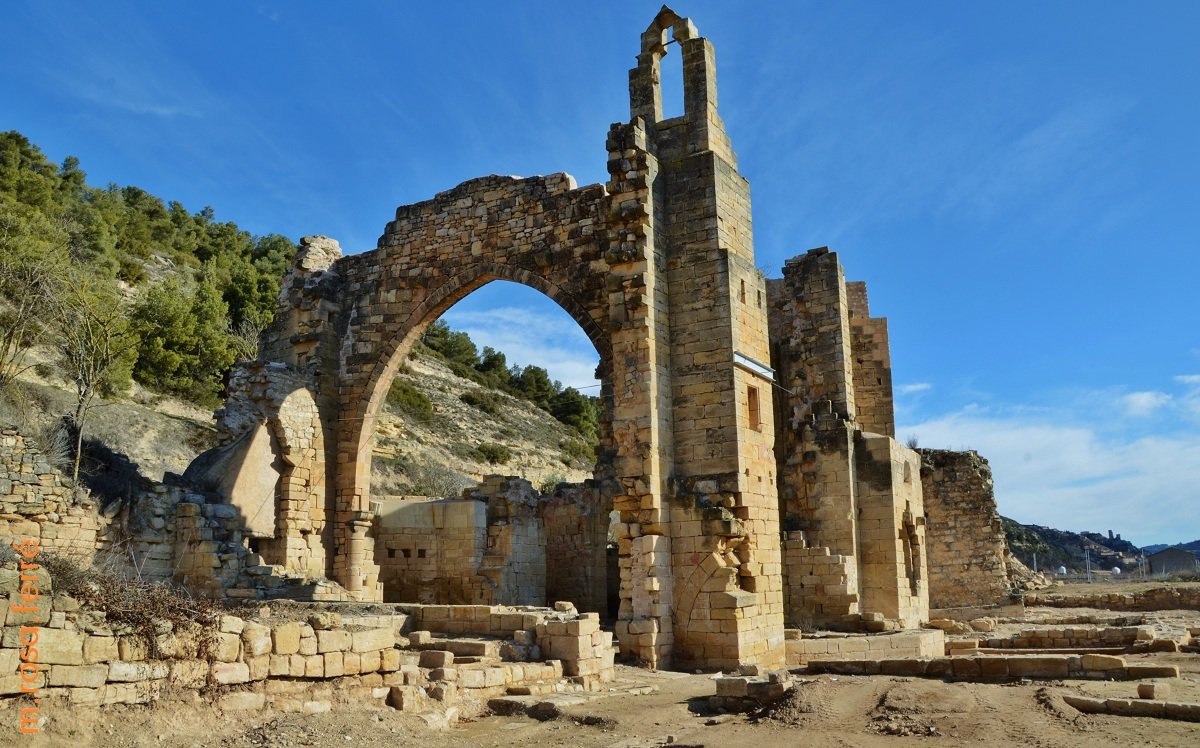

Nestled in rural Catalonia, the 13th-century monastery of Santa Maria de Vallsanta represents a beacon of resilience. Established in 1235, under the leadership of Abbess Agnès de Guimerà and thirty-one Cistercian nuns, it was built with the aid of King Jaume I, replacing the abandoned Santa Maria de la Bovera due to water scarcity. The construction was completed in 1267, fostering a prosperous community for the next century. However, the 14th century brought a series of misfortunes. In 1348, the community was ravaged by the plague, losing everyone. By 1403, another plague struck, followed by an order in 1589 for the nuns to relocate by a new abbot. Today, only remnants of the church stand to symbolize this steadfast community that overcame various hardships.
Sources: Wikipedia, OpenStreetMap, Wikidata, Wikimedia Commons
Written by Nik Frost
Discuss this with the author and others
No comments yet. Be the first to start the conversation.