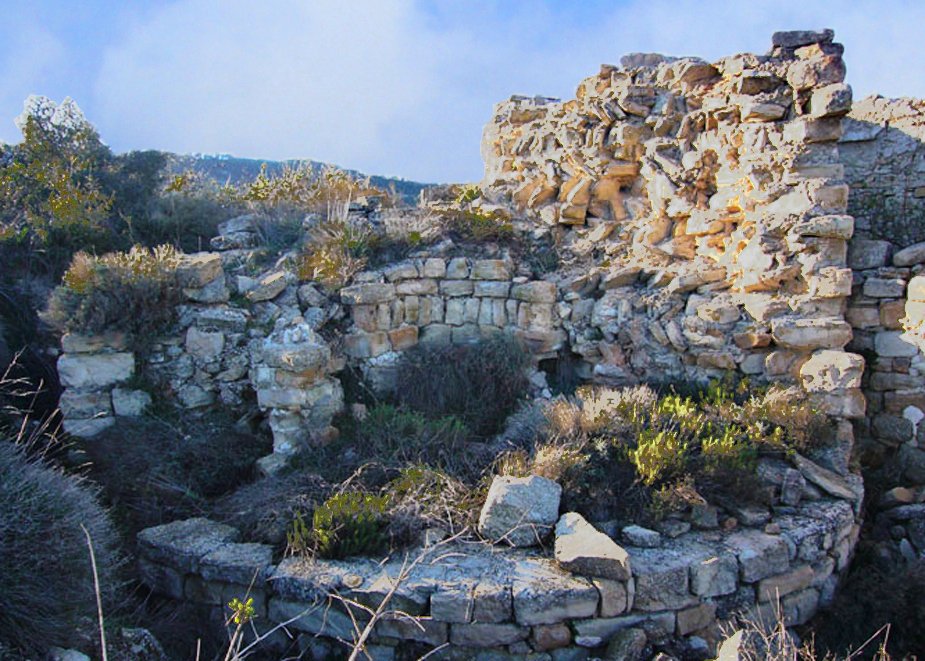

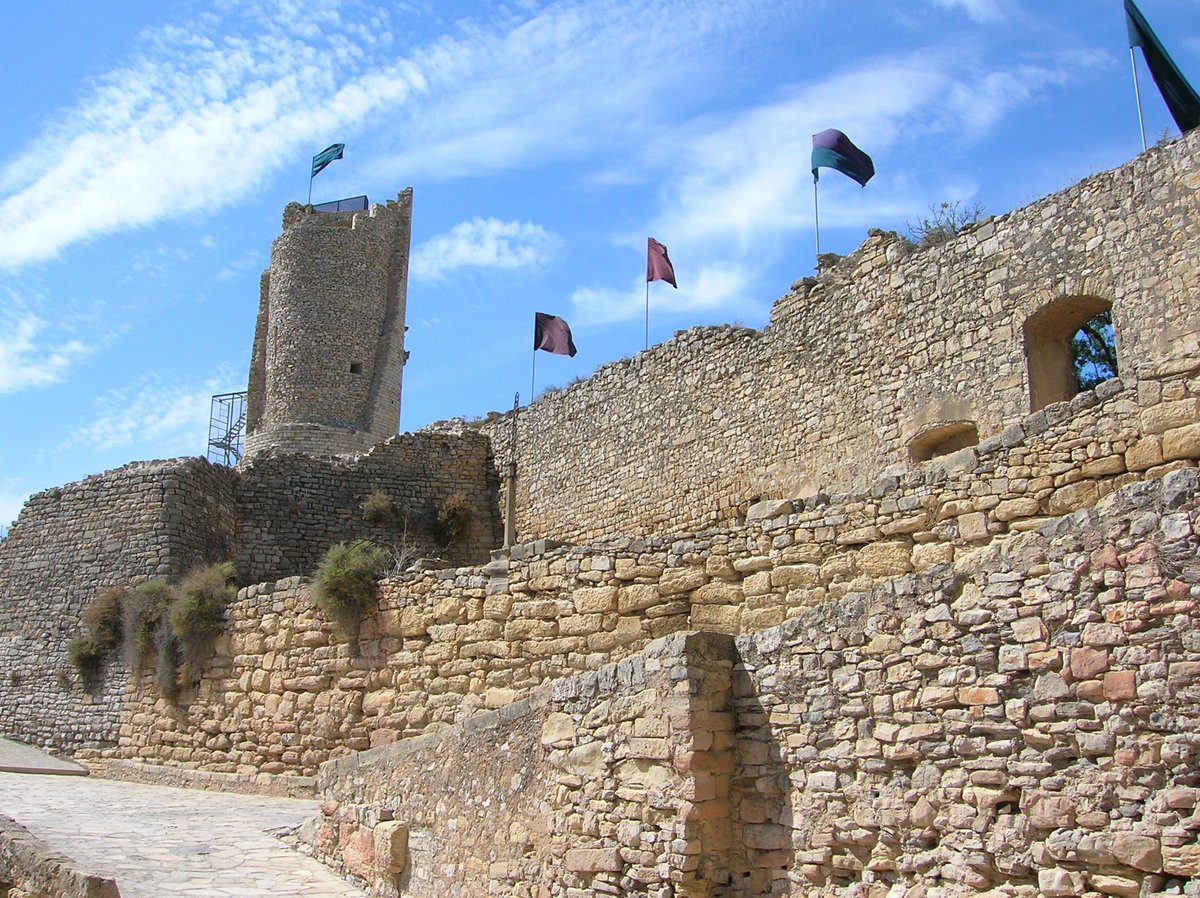
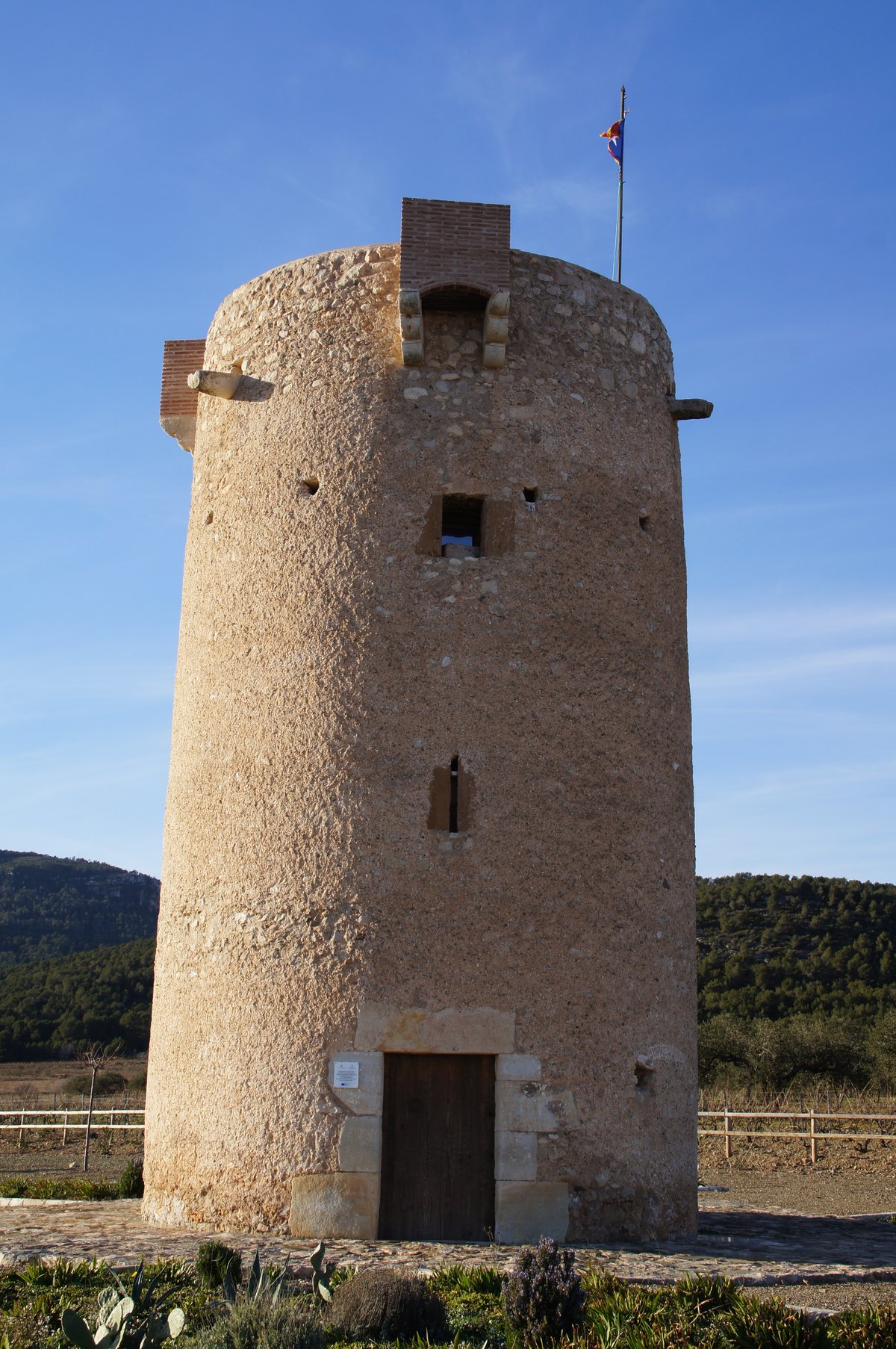
A cylindrical tower stands alone on a ridge south of Conesa. With an interior diameter of 190 cm and walls 175 cm thick, it is all that remains of the Castell de Torlanda. The site was a strategic watchpoint, built during a period when these fortifications served as the frontier.
Records show the site was known as Segura as early as 1038. In 1076, it was listed as a limit of the border of the comtat of Barcelona. By 1178, it appeared in a donation by Bernat de Piles and Saurina and Berenguer Company as the 'castrum de Turlanda'. In 1379, the lordship passed to the monastery of Santes Creus through an exchange with King Pere III for Sarral i Cabra del Camp, and the monastery maintained ownership until the 19th-century disamortization.
Based on its characteristics, it is assumed that the tower was built in the 11th century. In modern times, the tower was enclosed within a home to serve as a cupola. Today, the surrounding medieval houses have been abandoned, leaving the tower as a solitary landmark overlooking the valley and the plains below.
Sources: Wikipedia, OpenStreetMap, Wikidata, Wikimedia Commons
Written by Nik Frost
Discuss this with the author and others
No comments yet. Be the first to start the conversation.