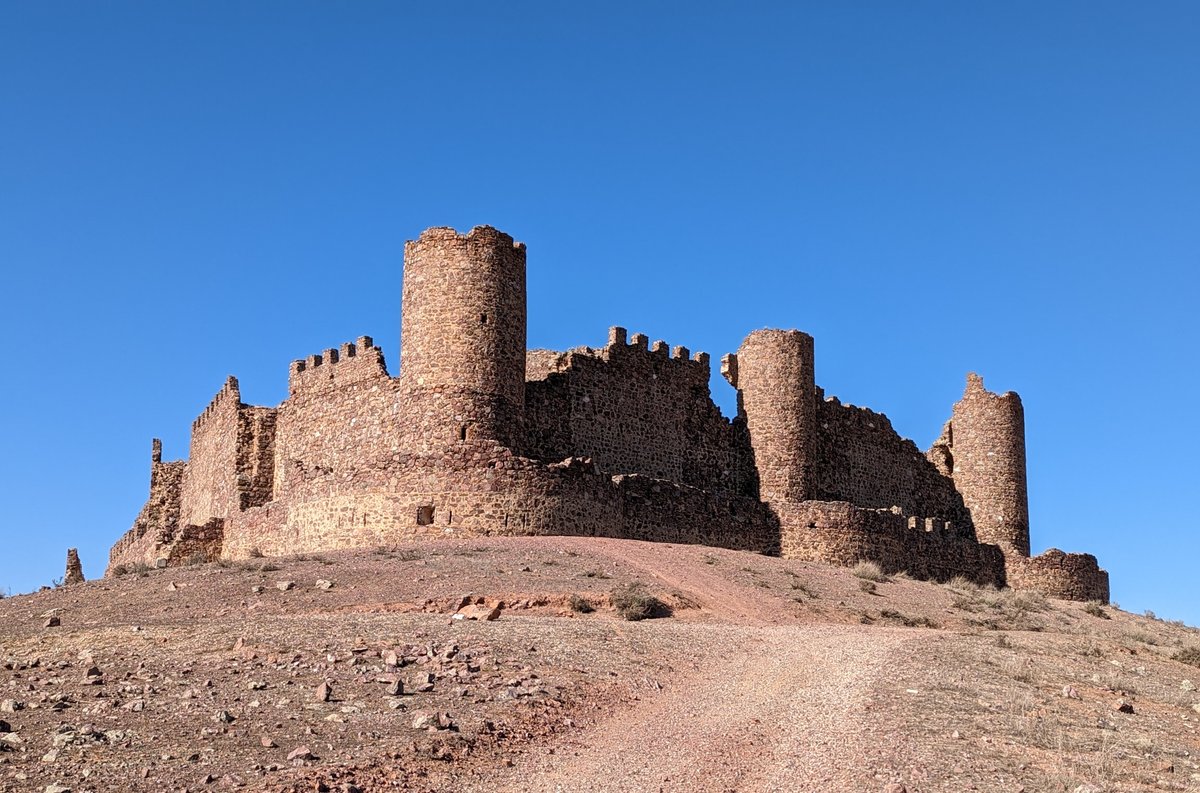

The Castle of Almonacid, situated in Almonacid de Toledo, is an ancient structure dating back to 848. Once a strategically important fortress, it served as a point of surveillance for an ancient road to La Mancha. In the 11th century, the castle became the property of Alfonso VI of León as part of his wife Zaida’s dote. It was donated to the Catedral de Santa María de Toledo, where it was remodeled under the mandate of the archbishop of Toledo Pedro Tenorio.
The castle served as a prison for Alfonso Enríquez, count of Gijón and Noreña, who was the bastard son of Enrique II of Castilla and was imprisoned by his brother Juan I of Castilla. Later, it served as a refuge for the troops of General Venegas in the fight against the French in the battle of Almonacid, although it was eventually conquered by French troops. In 1839, the local council allowed residents to take bricks from the fortress to sell, which led to significant deterioration of the structure.
Today, the walls of the castle are high and battlements, protected by an exterior barrier and a walkway. In the interior, only the keep remains, situated in the center of the large enclosure. The tower has three floors with brick vaults. There are remains of two cisterns, a silo, and some rooms. The castle is also notable for its triple embrasures. The architect Don Pedro Gumiel wrote about the castle in the 16th century.
Sources: Wikipedia, OpenStreetMap, Wikidata, Wikimedia Commons

Written by Nik Frost
Discuss this with the author and others
No comments yet. Be the first to start the conversation.