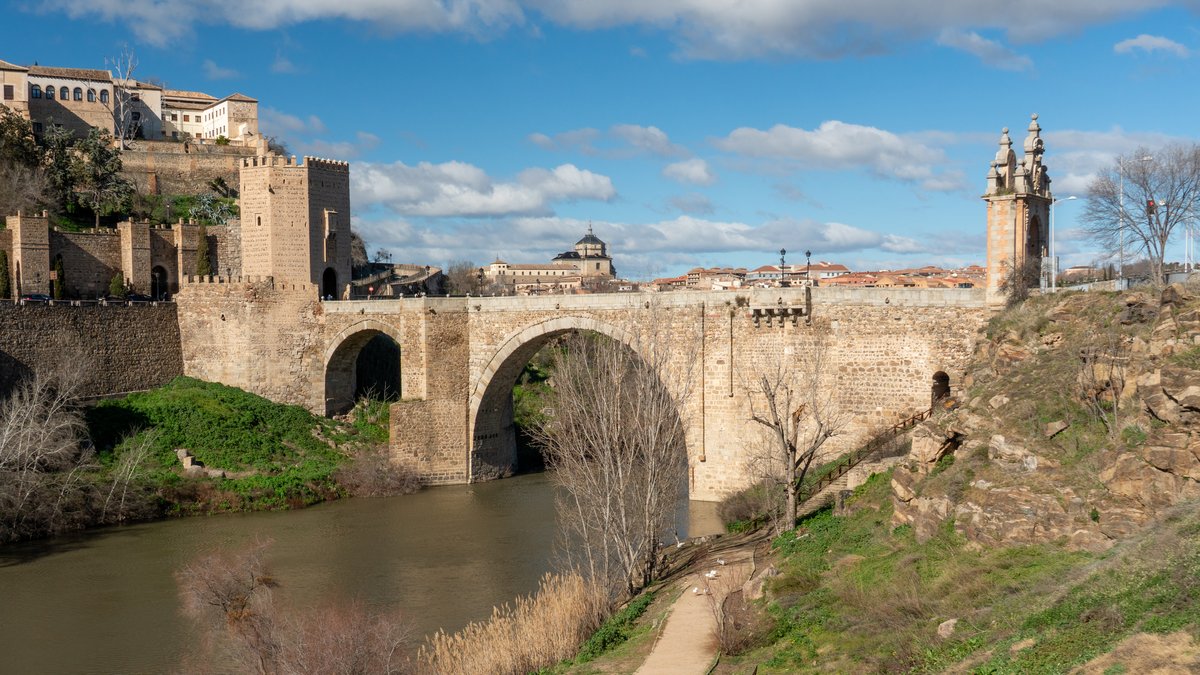

The Puente de Alcántara, a Roman arch bridge in Toledo, Spain, stretches gracefully over the River Tagus. Its name, Alcántara, is of Arabic origin, meaning 'arch', a testament to the blend of cultures that shaped it. Roman soldiers built it after founding the city. In the Middle Ages, it served as one of the few entrances for pilgrims, its grand arches acting as a beacon of hope.
Evidence suggests that it was built during the founding of Toletum, the Roman city. It has borne the brunt of the passage of time and the elements. The 10th century brought damage, leading to a disappearance of one of its arches – according to the reference material, it was reduced to a gate with a horseshoe arch. During Alfonso X of Castile’s reign, it suffered serious damage due to flooding and was rebuilt. The western tower, a distinctive feature of the bridge, is a result of this rebuilding phase, adorned under the reign of the Catholic Monarchs, with their emblems gracing its walls.
Sources: Wikipedia, OpenStreetMap, Wikidata, Wikimedia Commons
Written by Nik Frost
Discuss this with the author and others
No comments yet. Be the first to start the conversation.