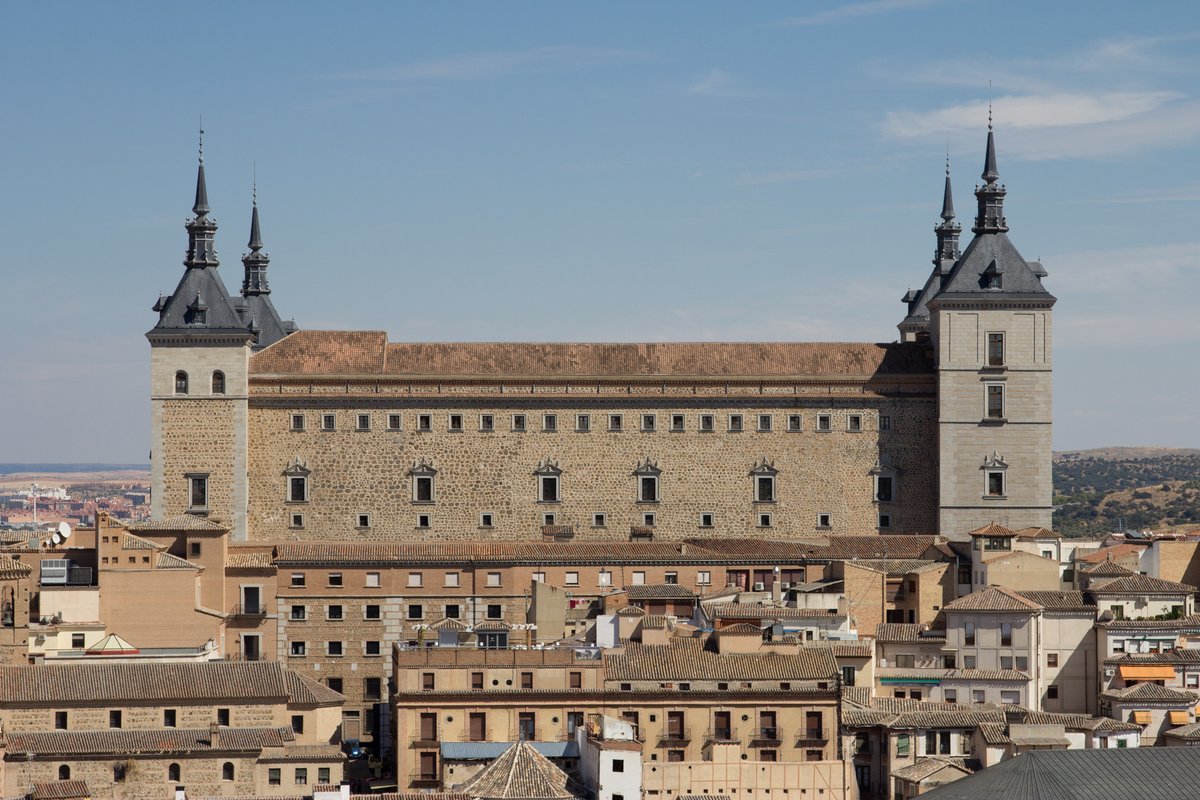

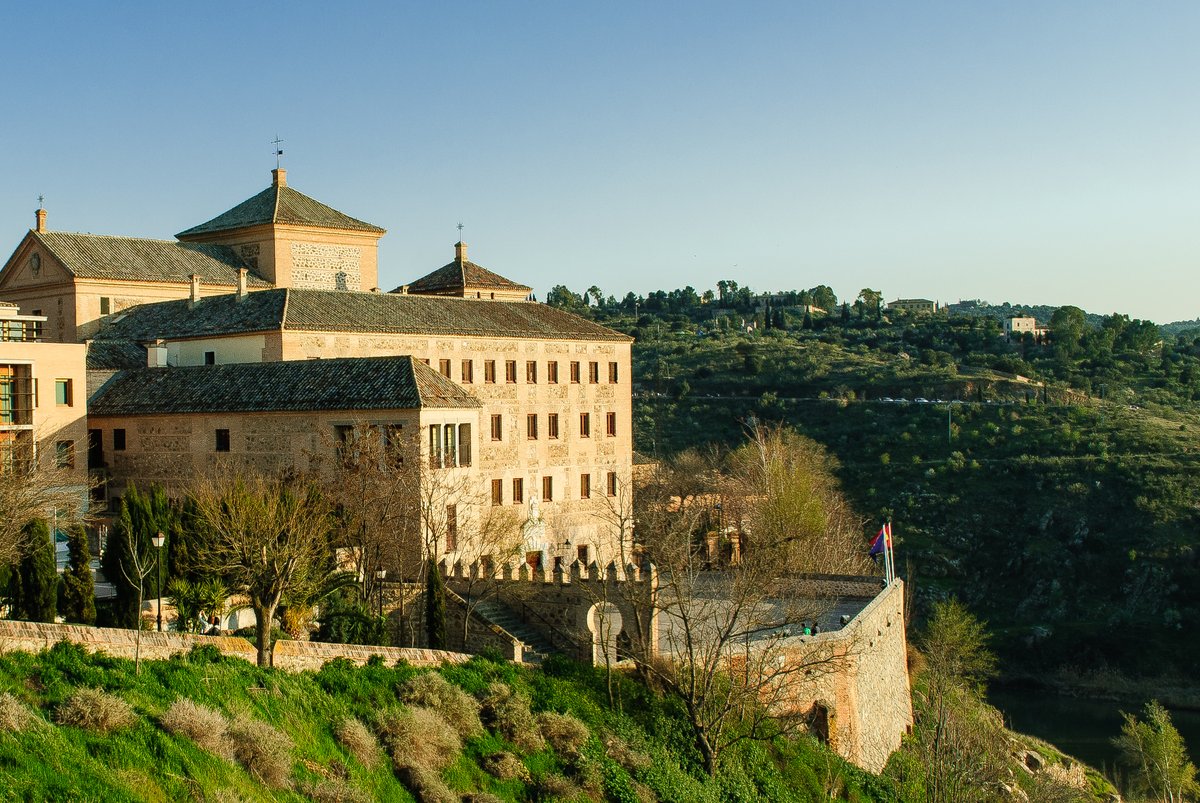
Situated at the peak of Toledo, Spain, the Alcázar of Toledo is a stone fortification. Once used as a Roman palace in the 3rd century, it was turned into a fortress in the 10th century during the reign of Cordoba Caliph Abd ar-Rahman III. Restored in the 1540s by Charles I and his son Philip II of Spain, the building served as a strategic stronghold throughout the centuries.
During the Spanish Civil War, the Alcázar became a central piece of Spanish Nationalist lore. Colonel José Moscardó Ituarte held the building against overwhelming Spanish Republican forces during the siege. The incident centered on the story of Moscardó's son, Luis, who was taken hostage. After Moscardó told his son to die like a hero, reports indicate the boy was killed, though other historians suggest he was killed a month later in reprisal for an air raid.
The structure became a symbol for Spanish Nationalism and inspired the naming of the far-right newspaper El Alcázar. By the end of the siege, the building was severely damaged and was rebuilt between 1939 and 1957. It now houses the Mancha Regional Library and the Museum of the Army, the latter having previously been housed in the Salón de Reinos in Madrid.
Sources: Wikipedia, OpenStreetMap, Wikidata, Wikimedia Commons

Written by Nik Frost
Discuss this with the author and others
No comments yet. Be the first to start the conversation.