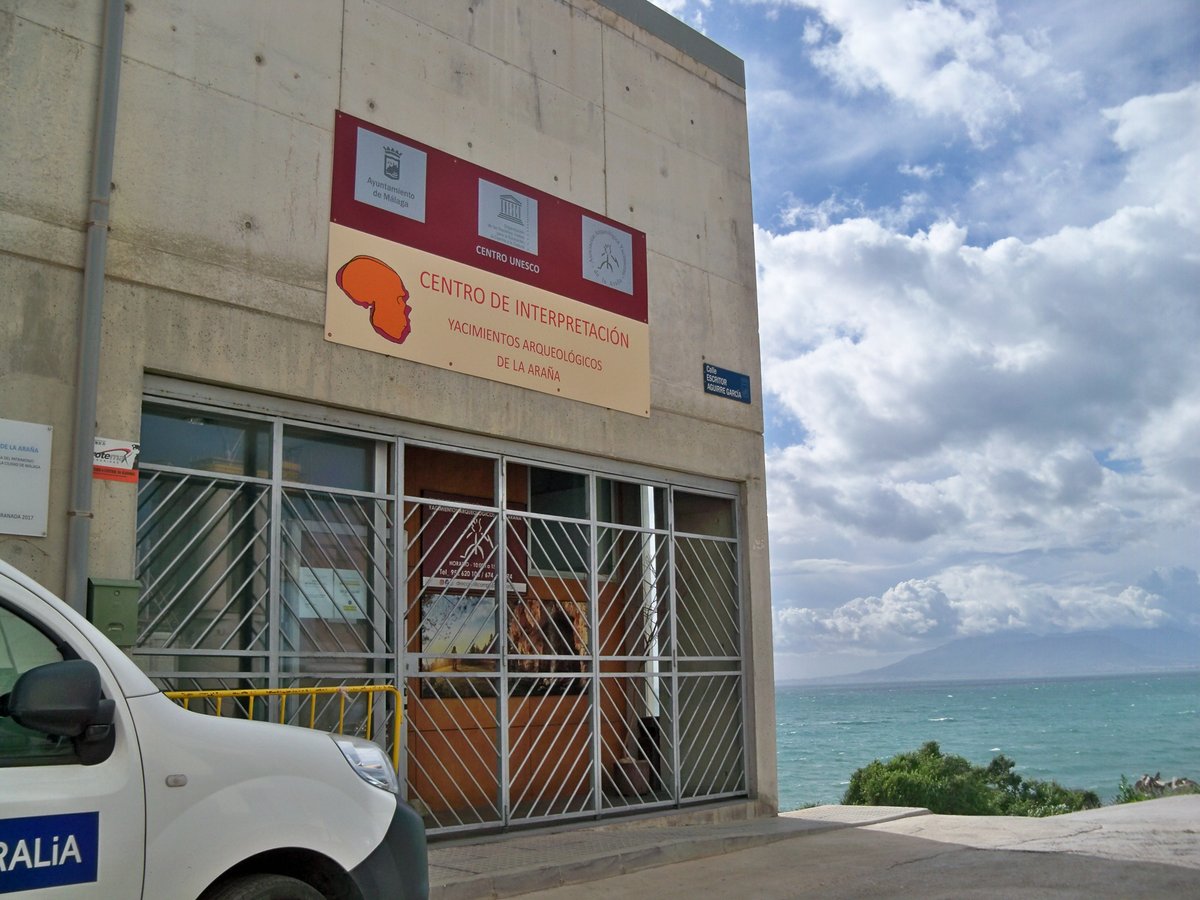

The Prehistoric Caves of Malaga Bay, located in the southeastern coast of Spain, is one of the most important sites of prehistoric archaeology, housing a vast concentration of caves that span over 300,000 years of human history. Situated between Benalmádena to the west and Rincón de la Victoria to the east, this complex of caves is a time capsule of our ancestors' lives, from the pre-Neanderthals to the Neolithic period.
The archaeological site is divided into two main phases. The first phase, dedicated to the Paleolithic Middle and Neanderthals, includes caves 1, 2, and 3, as well as the Cueva Navarro IV archaeological complex. The second phase, still under construction, will focus on the Paleolithic Superior and will include caves 4 and 5, as well as the Calcolithic and Neolithic sites in caves 6 and 7.
Many of the caves in the Araña Complex, including Cueva Navarro IV, have yielded significant archaeological findings. The Cueva Navarro IV complex, located in the El Palo district of Torremolinos, is formed by the Navarro IV cave and a series of related caves. The carbonate materials in this complex form a type of karstic aquifer, and materials from the Pleistocene Superior to the Holocene Antique have been found in the paleokarst relleno, along with both marine and continental materials in the mixed deposits.
Other notable caves include Cueva del Toro or Calamorro (Benalmádena), which contains paleolithic rock paintings and Edad del Cobre inhumations, as well as the Bajondillo (Torremolinos) tajos' chronology that spans a sequence from the Paleolithic Middle to the Neolithic.
The Nerja cave and Cueva del Humo can be directly related to the sites in the bay, while Cueva de la Virgen has yielded Solutrean lithic materials with flat-faced and fin-like points, as well as Neolithic Ancient pottery with impressed decoration. Industrial lithic and bone materials have also been found in Cueva de la Virgen during the Calcolithic period.
The Prehistoric Caves of Malaga Bay are a testament to the storied history of our species, offering a unique opportunity to journey back in time and connect with our past.
Sources: Wikipedia, OpenStreetMap, Wikidata, Wikimedia Commons
Written by Nicolo Ciampini
Discuss this with the author and others
No comments yet. Be the first to start the conversation.