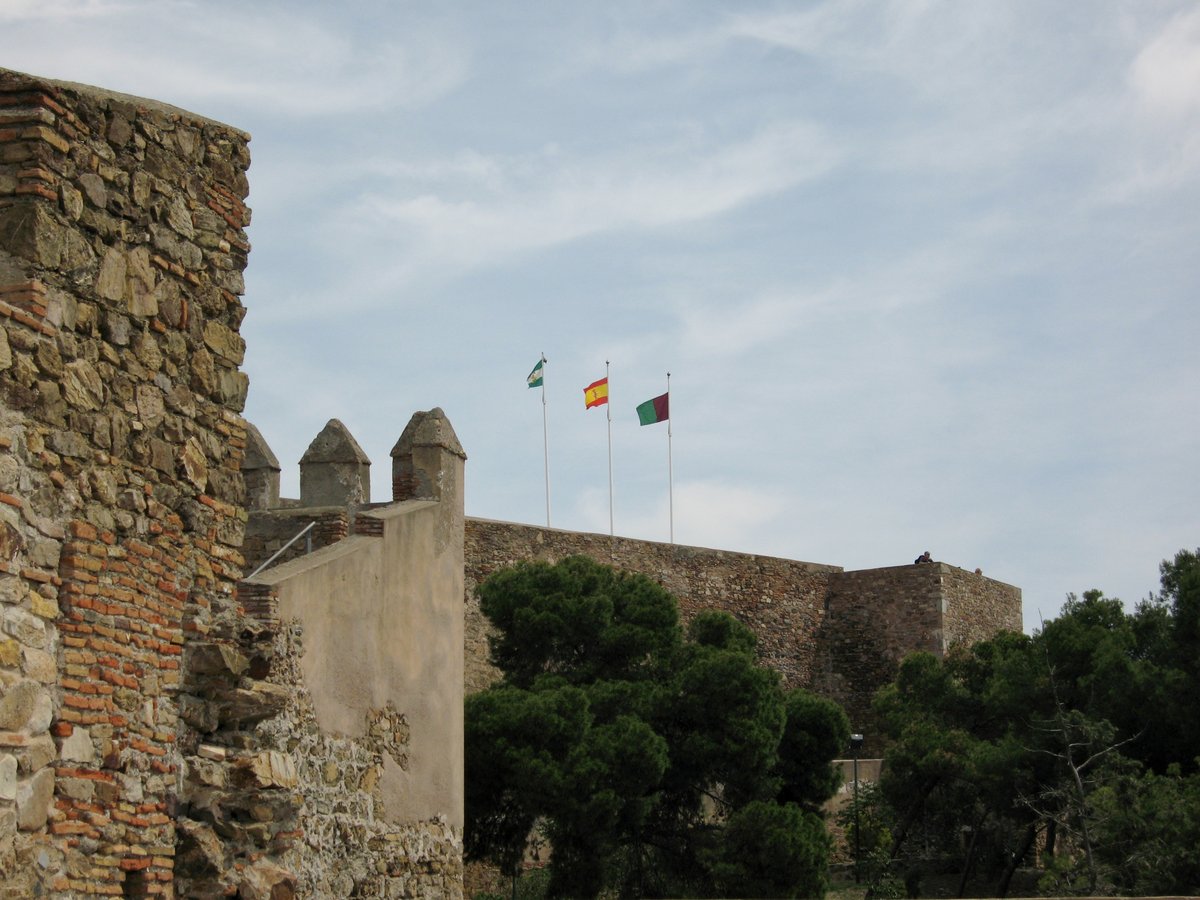

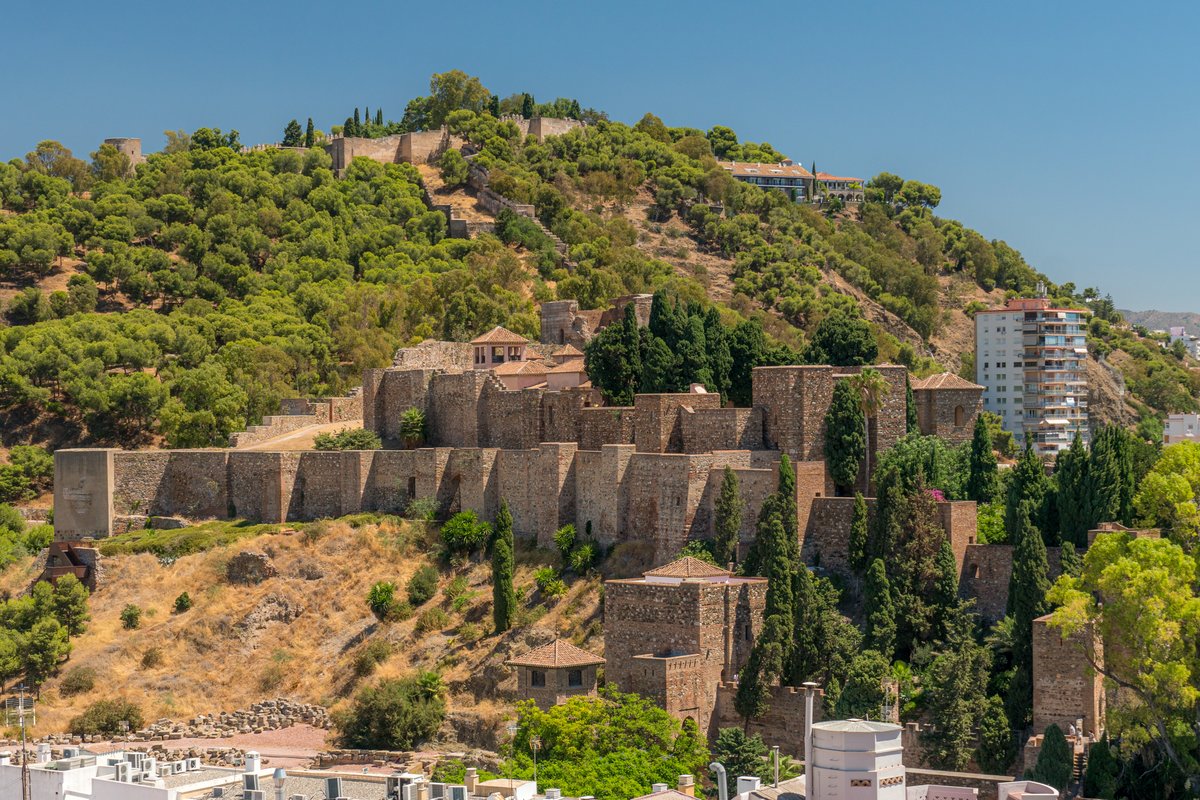
The name Gibralfaro originates from the word for lighthouse. Long before the Romans arrived, Abderramán III transformed the ruins into a fortress. In 1340, the king Yusuf I expanded and converted the site into an alcázar. These layers of history show how the site evolved over centuries.
By the late 15th century, the castle served as a strategic shield for the nearby Alcazaba. It features two distinct lines of walls and eight towers. The zigzagging walls, known as corachas, maintain the connection between the castle and the Alcazaba to protect against the widespread use of artillery on the hilltop. In 1487, a siege took place, after which Fernando the Catholic took it as a residence.
Inside the upper courtyard, the Torre Mayor stands 17 meters tall. It houses a Phoenician well and ancient baths. Nearby, the Pozo de Airón is carved directly into the bedrock at a depth of 40 meters. You can explore the interpretation center in the old powder magazine, which displays military uniforms from the 16th through the 20th centuries.
The castle remains open to the public today. On clear days, the view from the keep reaches across the strait to the Rif mountains in Africa.
Sources: Wikipedia, OpenStreetMap, Wikidata, Wikimedia Commons



Written by Nik Frost
Discuss this with the author and others
No comments yet. Be the first to start the conversation.