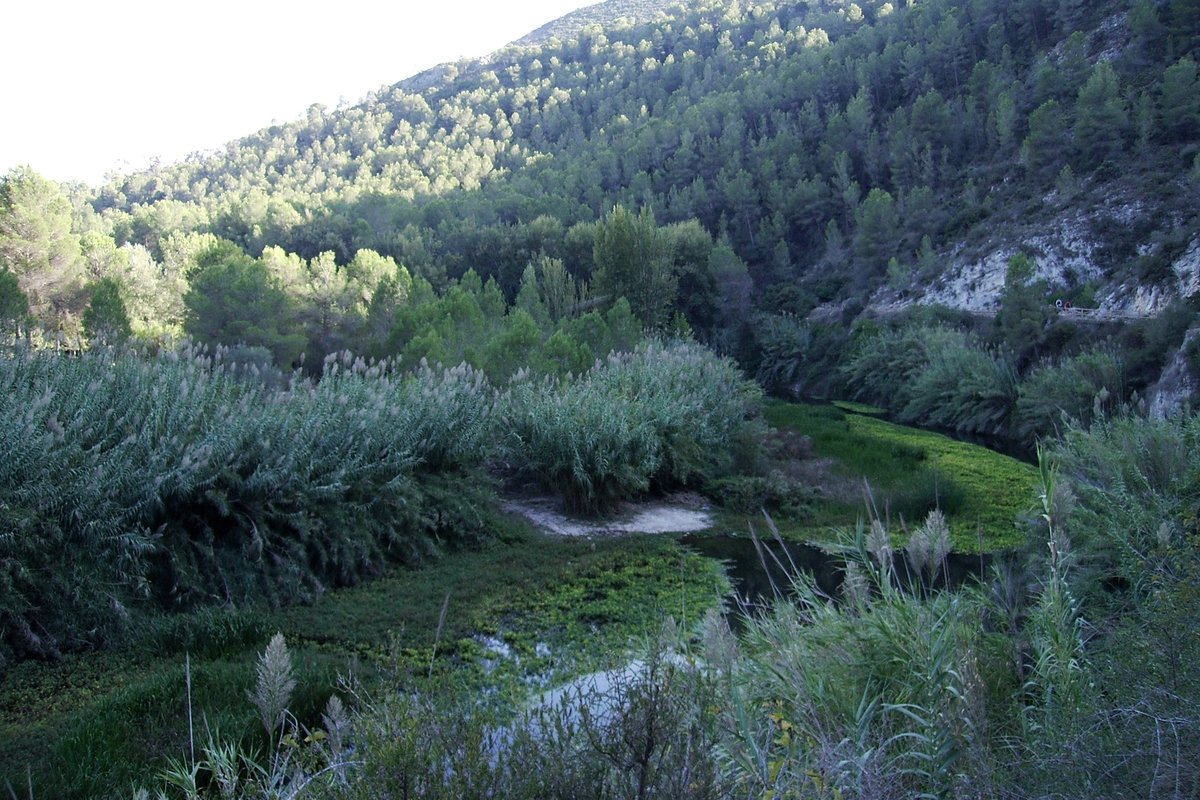

Cova Negra is a cave in Valencia, Spain, situated amidst the picturesque landscapes of the Albaida river valley. The cave's entrance forms a shadowy fissure in the limestone walls, leading to a 57-hectare area designated as a Cultural Heritage Site. Within this area, archaeological discoveries suggest that Neanderthals used the site but did not breed there. Discovered by the priest G. Viñes in 1933, the site is accessible to the public today.
Birds were abundant around the cave, and the dietary remains of Neanderthals indicate a fondness for birds, with 18 bird species discovered, including many doves and choughs. A study conducted in 2019 provided the first ESR / U-Th chronology for the Cova Negra site, indicating that Neanderthals resided in the site during MIS 8–6, ranging from 273 ± 26 ka to 146 ± 34 ka, suggesting human habitation towards the end of the Middle Pleistocene.
Sources: Wikipedia, OpenStreetMap, Wikidata, Wikimedia Commons
Written by Nicolo Ciampini
Discuss this with the author and others
No comments yet. Be the first to start the conversation.