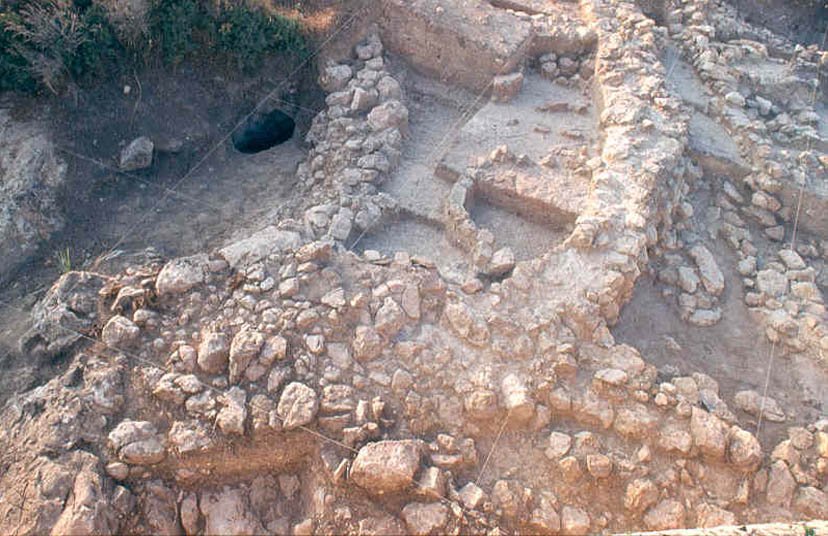

The Muntanya Assolada, a Bronze Age settlement located on the right bank of the Xúquer river in Spain, has been the subject of archaeological excavations since 1978. It is built on the top of a spur of the Corbera mountain range, dominating the river plain from a height of 227 meters above sea level. The site covers an area of over 700 square meters and includes various structures, such as a central street and rectangular departments on both sides, a wall of two meters wide that preserves almost three meters of height, and terracing of the slopes to expand its surface.
Excavated remains show a wide chronological sequence between the Early Bronze and the Late Bronze. The Muntanya Assolada village had decorative motifs of pottery, globular and tall carena. The lithic industry of Muntaya Assolada was very archaic. Copper metallurgy was present in Muntaya Assolada. The typology of the vessels of the Muntanya Assolada corresponds to what is usual in the Valencian Bronze Age villages.
Sources: Wikipedia, OpenStreetMap, Wikidata, Wikimedia Commons
Written by Nik Frost
Discuss this with the author and others
No comments yet. Be the first to start the conversation.