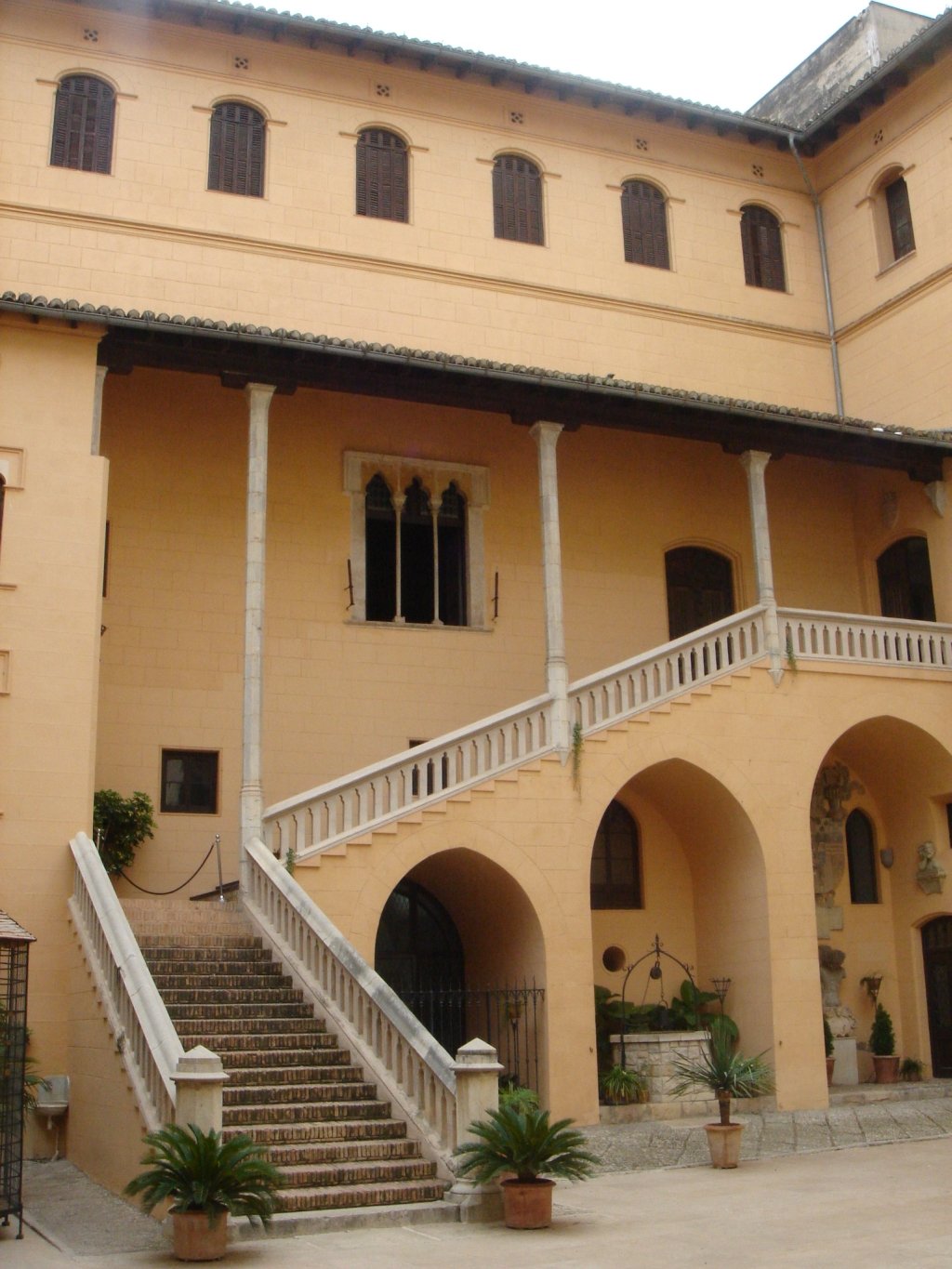

The Ducal Palace of the Borja stands as a testament to both defense and status, built as a civil Gothic urban castle. Its structure remains anchored to the old city defenses by sharing a perimeter wall. You are invited to observe the two distinct gates that mark its history, representing both Gothic and Renaissance styles.
Beginning in the 14th century, this site served as the residence for the Royal Dukes of Gandía. The Borja family took possession in 1485, marking a shift that would eventually lead to the site becoming a place of religious importance. It became the birthplace of Saint Francis Borja and was later restored as a sanctuary by the Society of Jesus.
We encourage you to explore the oldest 15th-century sections of the building first. You can examine the robust, rounded arch of the main entrance and the original Gothic hallways. These paths lead to a central parade ground and an exterior staircase that rises toward more ornate spaces, including the Baroque Golden Gallery and the Crown Hall.\n The palace now functions as a museum for your exploration. As you walk through the various halls, you can witness the deliberate transition from austere Gothic military architecture to the opulence of the Baroque style.
Sources: Wikipedia, OpenStreetMap, Wikidata, Wikimedia Commons

Written by Nik Frost
Discuss this with the author and others
No comments yet. Be the first to start the conversation.