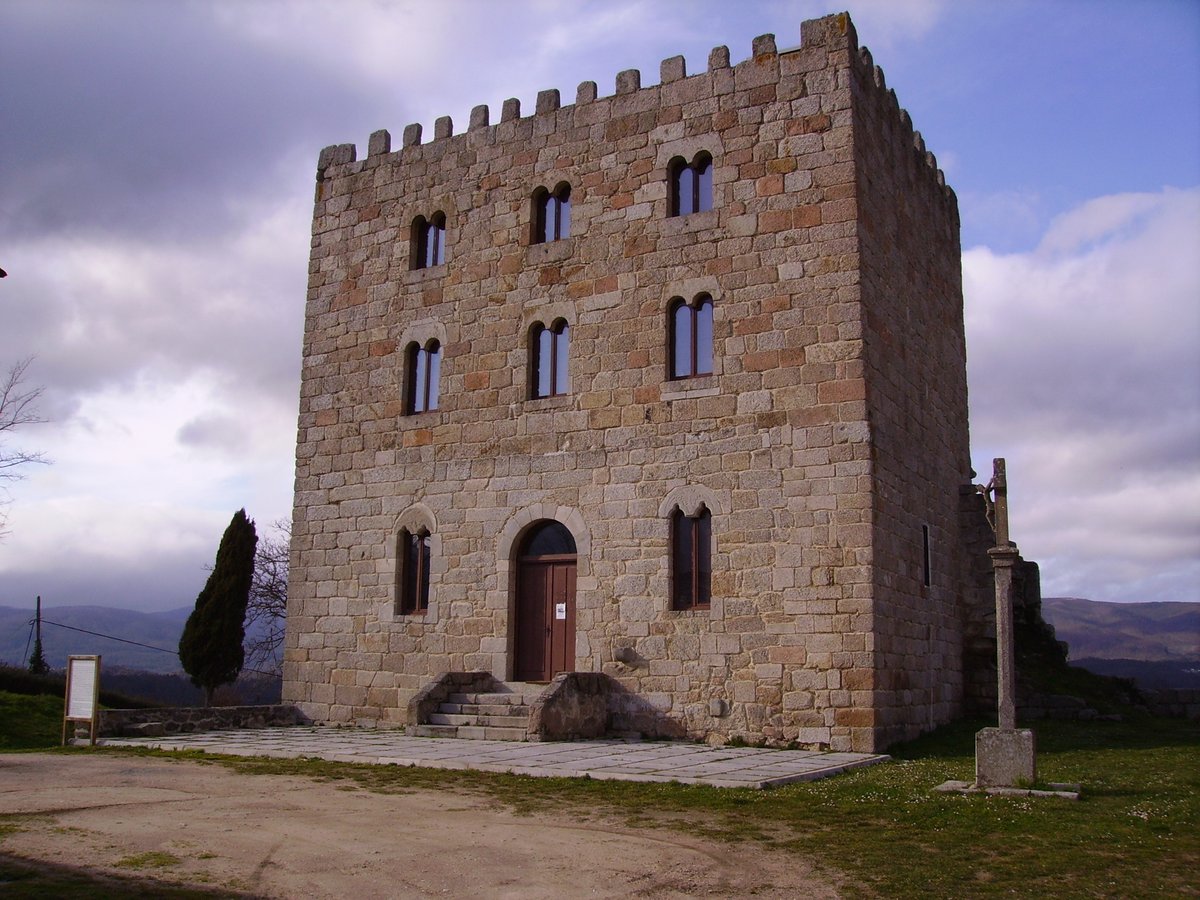

Castrodouro Castle, located in the parish of O Castro de Ouro within the municipality of Alfoz in the province of Lugo, Galicia, Spain, occupies an elevated hilltop position, a characteristic of ancient castro settlements, offering strategic oversight and panoramic views of the undulating Galician terrain. The site, originally a Romanized castro settlement dating to the 1st century AD, served as the foundation for the castle, providing the elevated, strategic location that later influenced its defensive positioning.
By the 9th century, a monastery was established on the site by a family originating from the Castilian Meseta, under the jurisdiction of the Diocese of Mondoñedo. This transition marked the transition from pagan or early Christian use to formalized religious and fortified structures supported by the Asturian monarchy. The early ownership of Castrodouro Castle is associated with local Galician nobility and ecclesiastical authorities, with the diocese eventually fortifying the structure and granting the title of villa and surrounding alfoz to Castro de Ouro in 1220, under King Alfonso IX of León.
The castle, which once belonged to the noble Pardo de Cela family, fell into disuse and decay in the 17th century, but was later acquired by the Municipality of Alfoz and restored. Today, Castrodouro Castle serves as a tourist attraction, drawing visitors to explore nearby historical sites, such as the UNESCO-listed Roman walls of Lugo and coastal enclaves such as Viveiro, thereby supporting local crafts, gastronomy, and cultural festivals that highlight the region's heritage.
Sources: Wikipedia, OpenStreetMap, Wikidata, Wikimedia Commons
Written by Nicolo Ciampini
Discuss this with the author and others
No comments yet. Be the first to start the conversation.