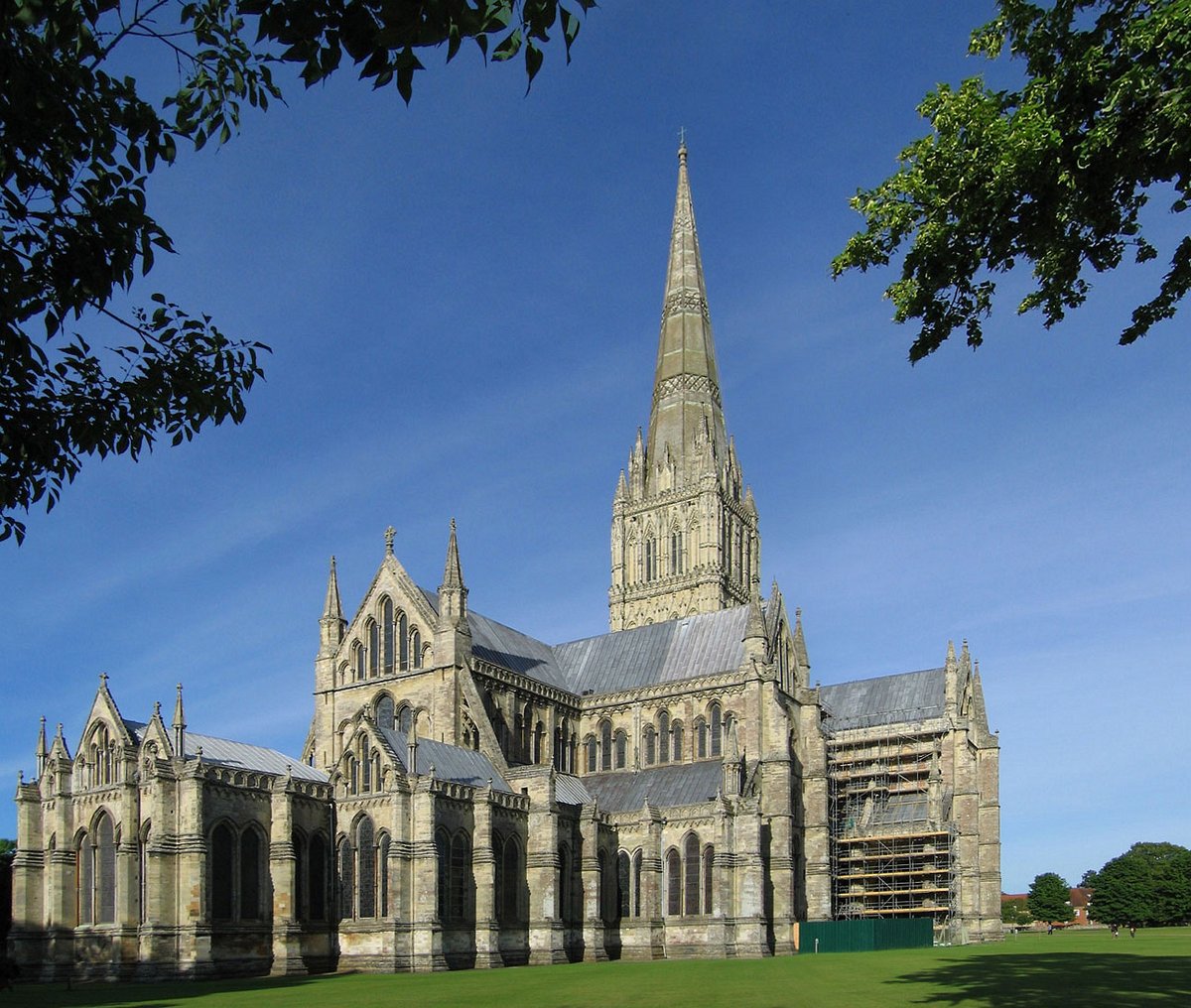

Why is it so perfectly consistent? Most medieval cathedrals look like a messy architectural argument spanning centuries - but Salisbury was mostly hammered out in a frantic 38-year burst between 1220 and 1258. It is a masterclass in Early English Gothic, using lancet windows that haven't been divided by tracery. Is it a miracle of planning or just a very focused work ethic? Probably a bit of both.
The site choice is where things get weird. The original cathedral was at Old Sarum, a spot the clergy and military apparently couldn't stand sharing. Legend says a bishop shot an arrow to pick the new spot; it hit a deer, and that was the destination. Because the water table was so high, they had to build on foundations only 4 feet deep. Bold move, considering the massive masonry spire that sits on top.
By 1330, the spire reached 404 feet. At that time, it was only the third tallest in the country. It didn't become the champion until the 16th century, when the spires at Lincoln and Old St Paul's suffered structural failures and collapsed. Salisbury just stayed standing.
Today, the scaffolding that shrouded the building for 37 years finally came down in 2023. You can still see the slight deformation in the central pillars, which Christopher Wren had to try and fix in the 17th century because the spire was heavy enough to make the stone buckle. It's a heavy crown to wear.
Sources: Wikipedia, OpenStreetMap, Wikidata, Wikimedia Commons


Written by Nicolo Ciampini
Discuss this with the author and others
No comments yet. Be the first to start the conversation.