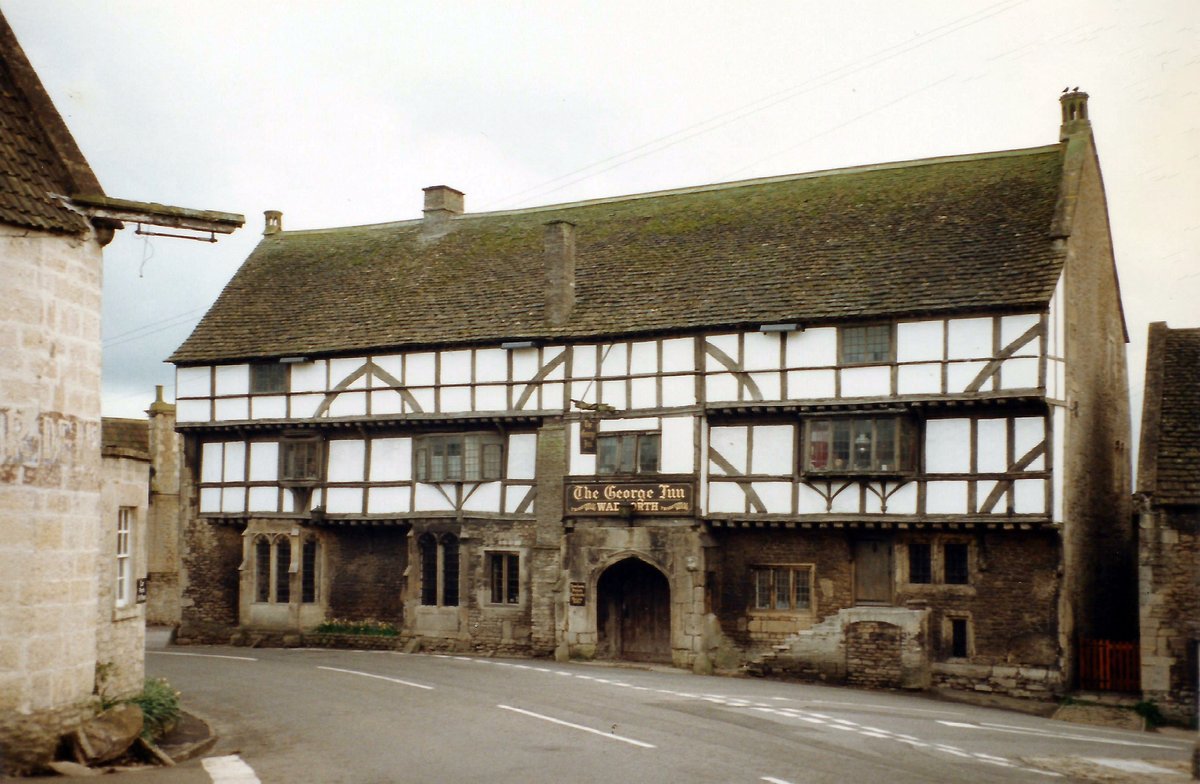

The George Inn started its life with a very different purpose. In the 14th or 15th century, it served as a wool store for Hinton Priory. It was a utilitarian building meant to house heavy sacks of wool traded at local fairs - which ran for centuries until 1902.
The structure has lived many lives. In the 15th century, timber-framed upper floors were added to accommodate travelers on the coaching route to the South West. Even the famous diarist Samuel Pepys stopped here on his way to Bath in 1668. It was also the headquarters for the Monmouth Rebellion in 1685. Talk about a moody weekend - the Inn was later used as a courtroom for the Bloody Assizes, where 12 executions took place on the village common.
It is a Grade I listed building now, and the timber-framing still shows off its age. During a major restoration in 1998, dendrochronology revealed that the roof timbers were replaced around 1431. It has been a moody enough backdrop for films like The Remains of the Day and Tom Jones, too.
Today, it is still a functioning pub and hotel. You can walk into the galleried courtyard and see the layers of history for yourself, provided you don't mind the weight of a few centuries hanging over the rafters.
Sources: Wikipedia, OpenStreetMap, Wikidata, Wikimedia Commons
Written by Nicolo Ciampini
Discuss this with the author and others
No comments yet. Be the first to start the conversation.