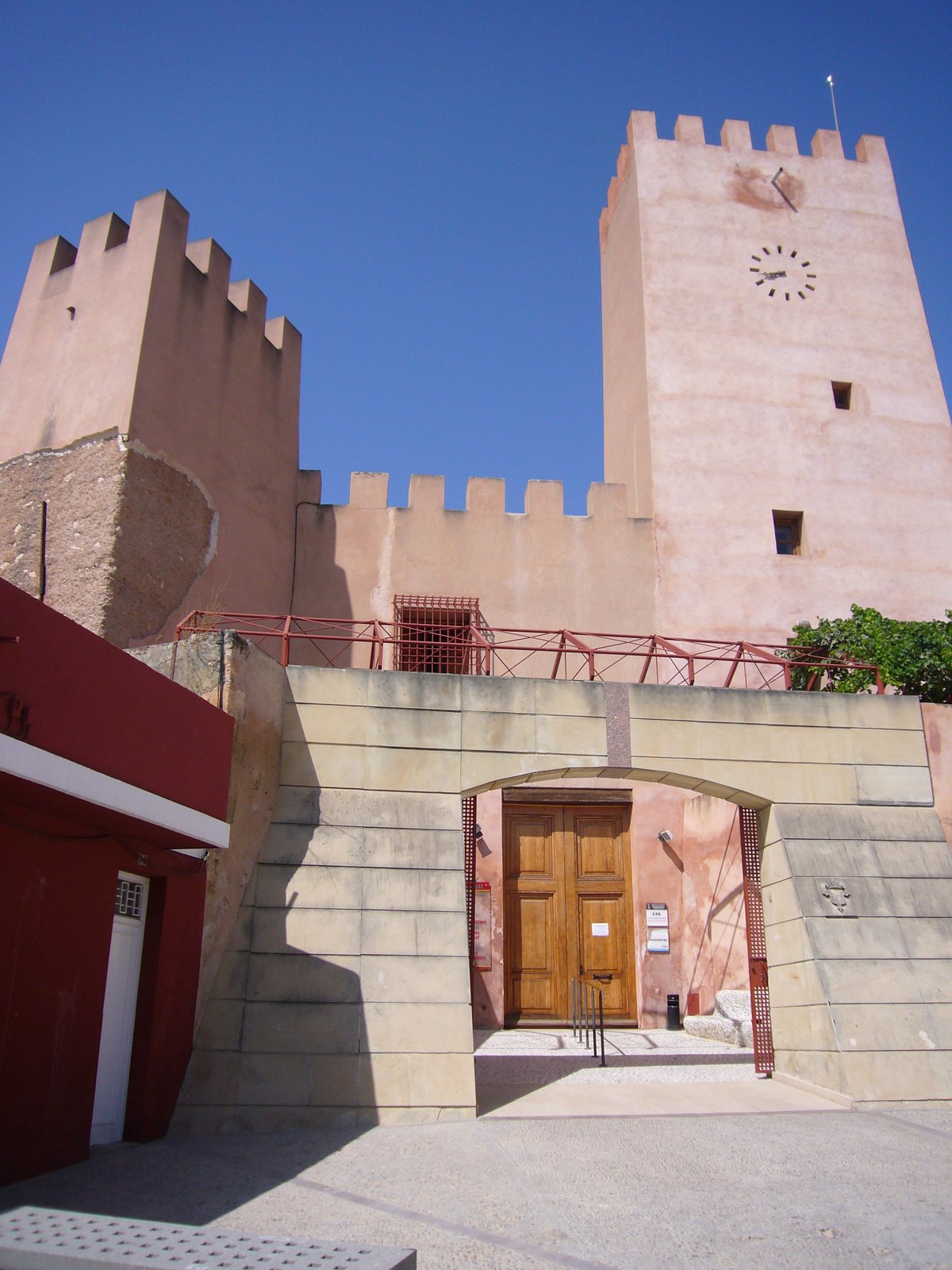

Bétera Castle of the Boil, also known as Castle of Bétera or Casa-Castell dels Boil, is nestled in the heart of the town of the same name, in the Camp de Túria, Spain. Access is via the Plaça del Castell. The defensive castle, predating the Islamic era but used by the conquistors, protected Muslim settlements that populated its surroundings during the peaceful conquest of the region by King Jaime I during the Spanish Reconquista. It is in acceptable condition and owned by the City Council of Bétera, housing departments such as courts, the municipal library, the plenary room, and others. It is designated as a Cultural Asset of Historical-Artistic Interest.
**History**
Bétera, along with Paterna and Bofilla, surrendered to King Jaime I in 1238 during the Spanish Reconquista, its origin in Islamic times, when these settlements obfuscated by the Islamic conquest fall into our records. King Jaume I donated the castle to the Order of Calatrava in 1237 in the person of Fr. Lupo Martín, Commandeur d'Alcanyís, forming a fiefdom to which other villages were added.
In 1329 it was vinculated to the Barony of Bétera. In 1364 Pere el Cerimoniós ordered the castle and walls to be destroyed due to the support of the town to the unionists' troops, although the castle and walls were rebuilt later. In the year 1386, for a specific time, it was ceded to the Boil family, which later became the permanent owners in 1437, receiving the donation for perpetuity of all rights of empire and jurisdiction criminal, ownership of the domain and property passing to the standard, as a fiefdom of the denomination of Bétera, endowed in a certain amount that paid the owners, by virtue of a special agreement. Eventually it passed to the family of the Marqués de Dosaigües.
Its strategic importance turned it into a battelfield. During the War of Succession it was attacked by the borbónic troops of the Count of the Towers. It was also the scene of the attack of the forces of General Suchet to those of O'Donnell during the Napoleonic Wars. Band of carlistas would also stage numerous actions in this territory.
In 1888 the owner of the castle, the marqués de Dosaigües, in General María del Rosario Rabassa de Perelló Palafox, he donated it to the Junta de Forests and Territorial Senyoriu of Bétera, with the condition that it was destined for social uses, becoming a college, orphanage, and during the 20th century it was inhabited by nuns who maintained a school for children, suffering numerous reforms and losing some of its structures. Finally it was donated in 1983 to the City Council, who promoted it to Monument Historico-Artistic and began to work on its rehabilitation and consolidation, with the conclusion that the building presents an excellent appearance today but modified due to the various reforms and transformations that it has undergone over the course of its history. It was restored between 1984 and 1989, but without preserving its original appearance.
Sources: Wikipedia, OpenStreetMap, Wikidata, Wikimedia Commons
Written by Nik Frost
Discuss this with the author and others
No comments yet. Be the first to start the conversation.