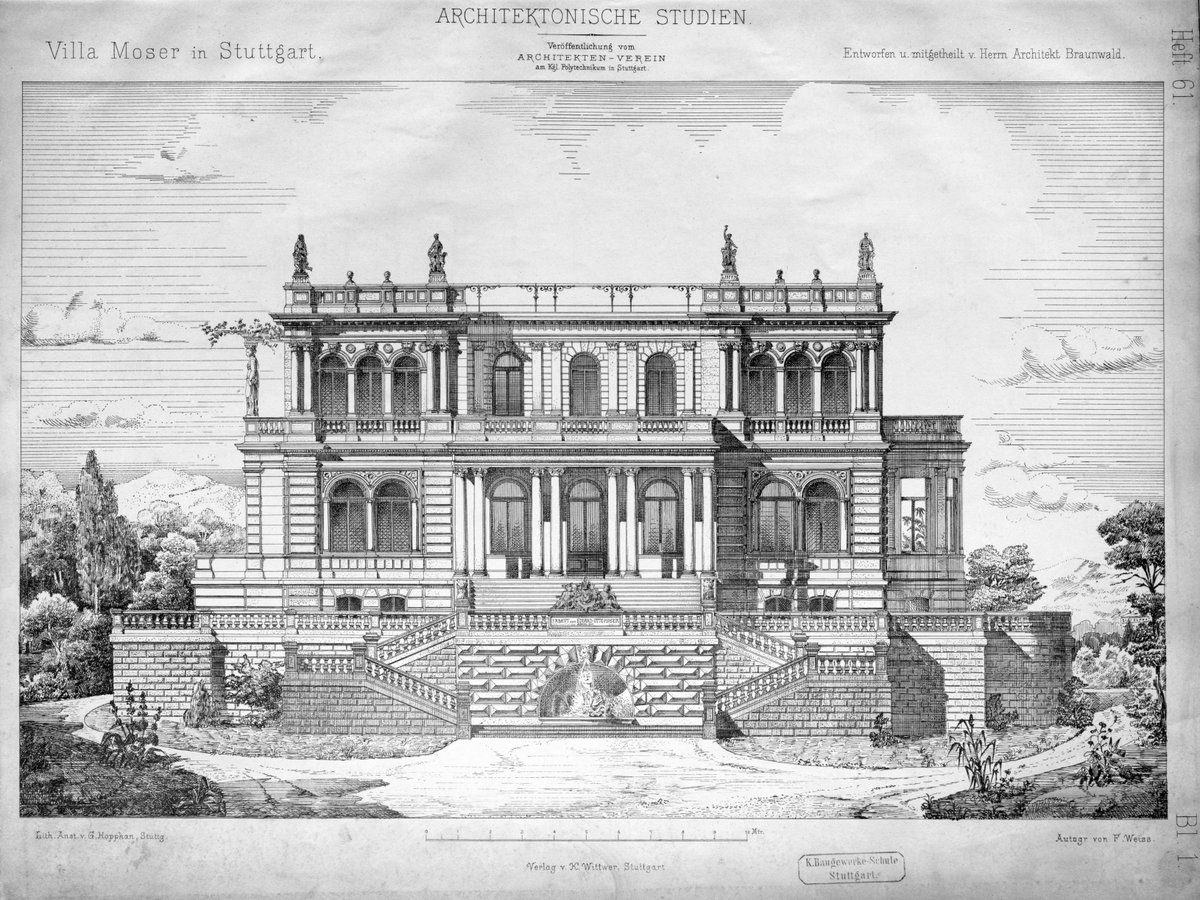
Eduard Otto Moser envisioned a residence reflecting his triumphs. Following his apprenticeship in Paris and the rise of a Stuttgart confectionery empire, he commissioned a High Renaissance villa in 1875. Nestled within a sprawling English park, the manor was built as a status-appropriate residence intended to be a pendant to Villa Berg, the country estate of the Württemberg King.
Decades passed while the villa signaled prestige until 1904 saw a change in ownership. During wartime, Robert Bosch G.m.b.H. rented the building in 1943 and converted it into seven two-room apartments for married employees. This domestic rhythm fractured on February 21, 1944, when a bomb strike leveled the building down to its foundations.
Now called Leibfriedschen Garten, the site offers a serene oasis where light rail hums dissolve into foliage. Visitors traverse elevated paths built in 1993 to navigate the overgrown park and reach the ruins. At the eastern basement facade, a grotto, inscription stone, and two free stairs remain.
Sources: Wikipedia, OpenStreetMap, Wikidata, Wikimedia Commons

Written by Aurora
Discuss this with the author and others
No comments yet. Be the first to start the conversation.