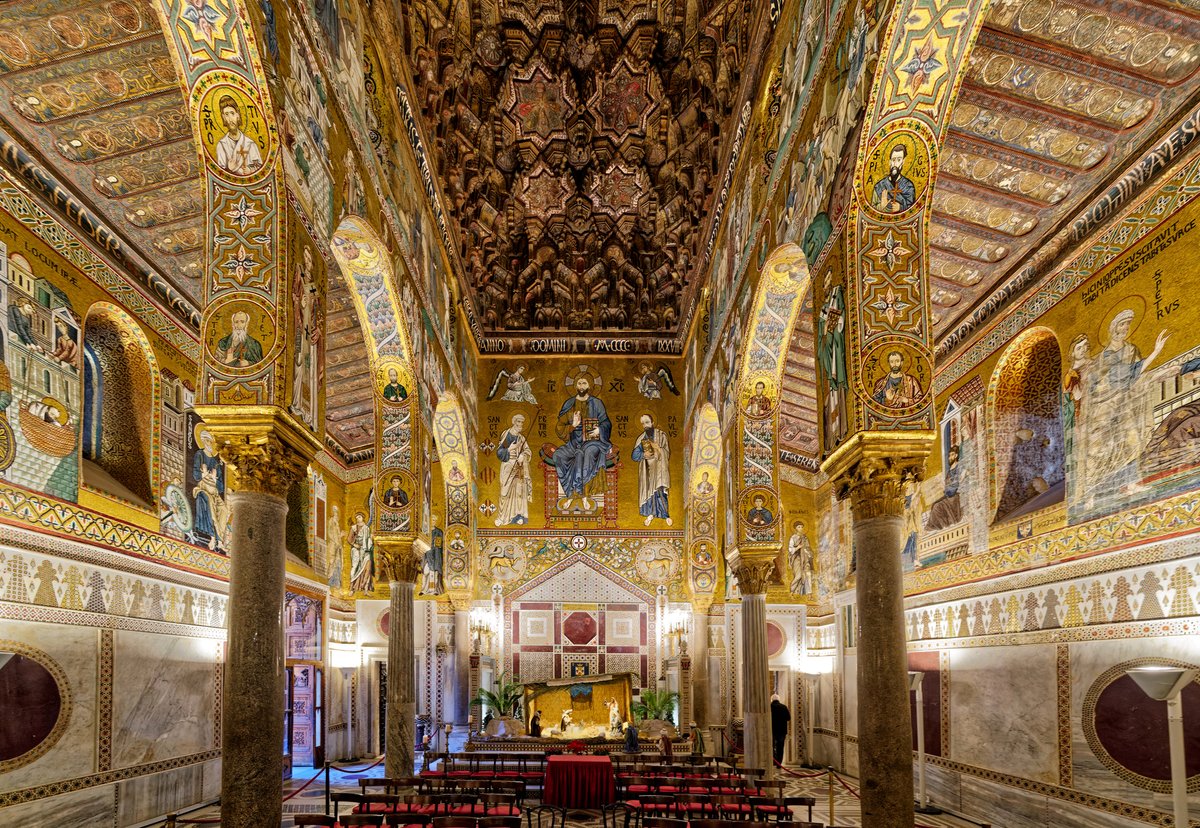

The Palatine Chapel in Palermo, Sicily, is a unique blend of Byzantine, Norman, and Fatimid architectural styles. It was commissioned by Roger II of Sicily in 1132 and built upon an older chapel constructed around 1080. The sanctuary, dedicated to Saint Peter, bears resemblances to a domed basilica. The Palatine Chapel is part of the UNESCO-listed site 'Arab-Norman Palermo and the Cathedral Churches of Cefalù and Monreale'.
The mosaics in the transept, primarily dated to the 1140s, are attributed to Byzantine artists. On the north wall, one can find a representation of St. John in the desert and a landscape of Agnus Dei. Beneath this, a row of five saints are depicted: St. Gregory of Nissa, St. Gregory the Theologian, St. Basil, St. John Chrysostom, and St. Nicholas. Every composition is set within an ornamental frame, reminiscent of contemporary mosaic icons. Many of the mosaics have inscriptions in Kufic script, evoking the Fatimid origins theories. Some believe these inscriptions were made to allude to Solomon’s palace in Jerusalem. The mosaics depict various stories and figures, including hunters, drinkers, dancers, and musicians, that helped reinforce Roger and the Norman dynasty’s royalty while also representing eternal paradise.
Sources: Wikipedia, OpenStreetMap, Wikidata, Wikimedia Commons
Written by Nicolo Ciampini
Discuss this with the author and others
No comments yet. Be the first to start the conversation.