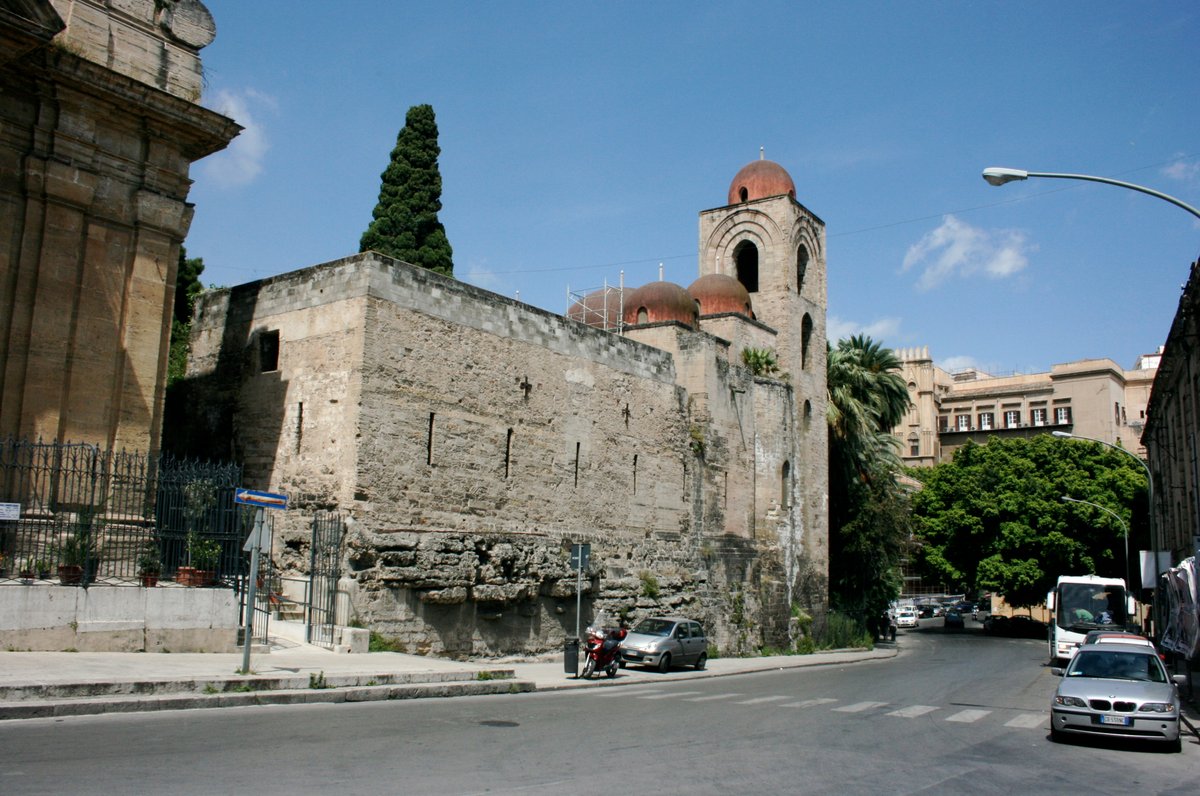

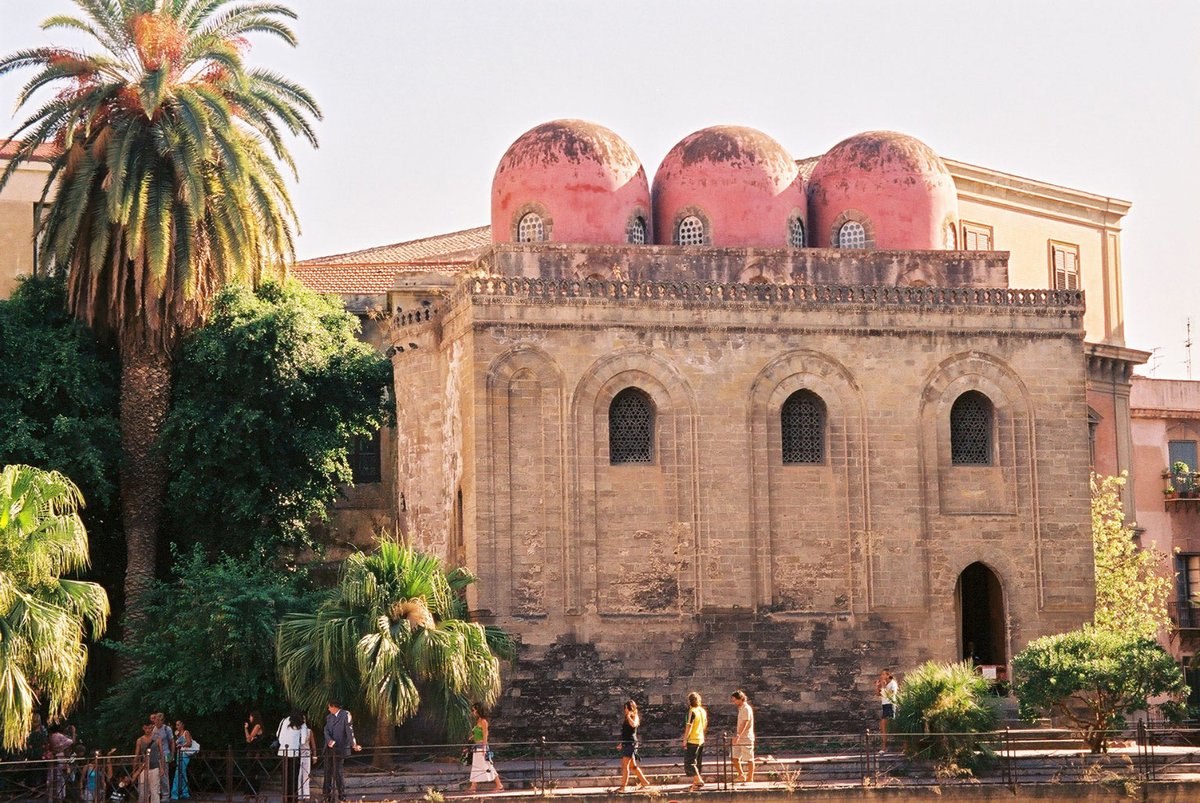
Why does this church look like it was stolen from Baghdad? That is the first thing you notice when standing before the red domes of San Giovanni degli Eremiti. It is a result of the Arab-Norman style, where Islamic aesthetics and Christian function merged into something uniquely Sicilian. Even though the interior is virtually devoid of decoration or furnishings, the building stands as a symbol of ancient Palermo.
The site has held a church and a Benedictine monastery since before the 6th century. While the Saracen conquerors may have closed or razed the monastery, it was restored by Roger II of Sicily around 1136. During this restoration, the site was dedicated to St John the Evangelist. The architecture shows a persistence of Arab influences, notably in the domes and the small double columns in the cloister ruins, which feature capitals decorated by vegetable motifs.
The famous red color of the domes is not original to the 12th-century construction. In the 19th century, Giuseppe Patricolo - director of the Royal office for the conservation of monuments of Sicily - found pieces of red plaster on the domes and decided to paint them all in that color. This restoration aimed for a medieval appearance, though it gave the building its current, striking look.
The cloister, enriched by a luxurious garden, remains the best-preserved part of the ancient monastery. It features ogival arches supported by double columns and includes an Arab cistern. The church itself follows a Latin Cross plan with a nave, two aisles, and three apses, with each of the square spans surmounted by a dome.
Sources: Wikipedia, OpenStreetMap, Wikidata, Wikimedia Commons
Written by Nicolo Ciampini
Discuss this with the author and others
No comments yet. Be the first to start the conversation.