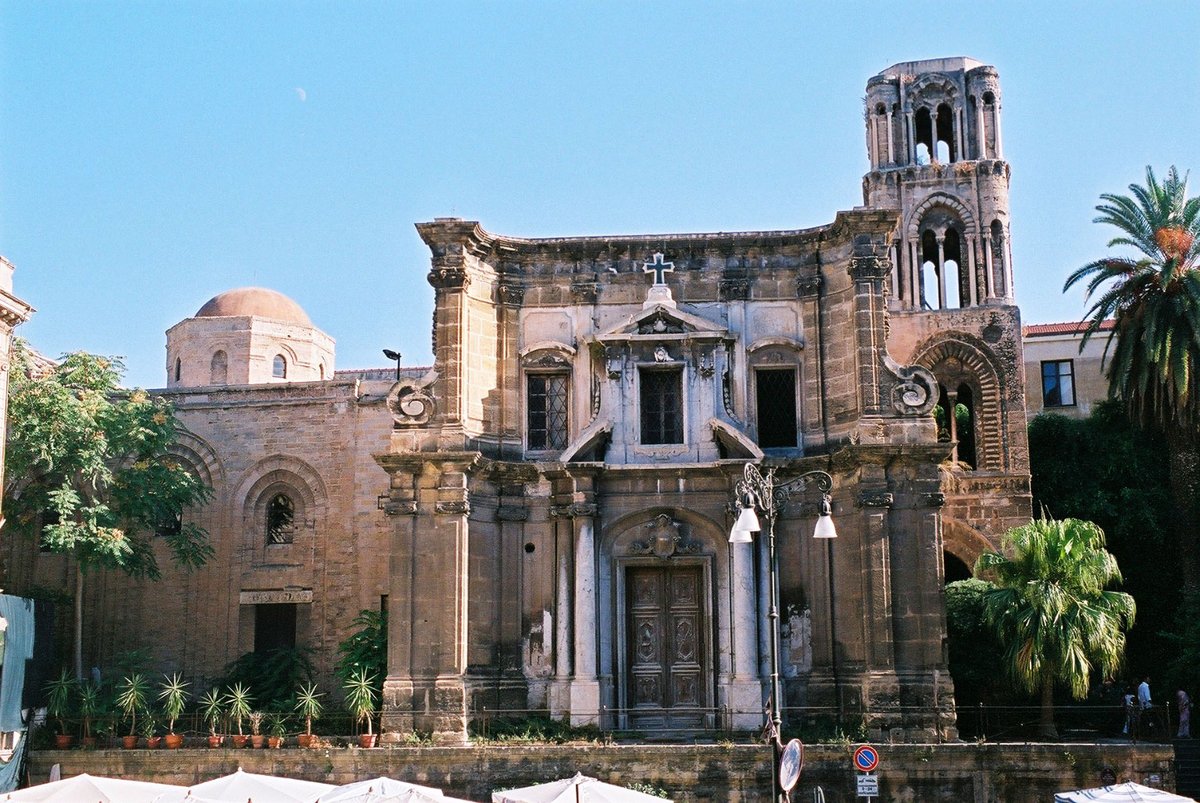

In the ancient city of Palermo, Italy, The Church of Santa Maria dell’Ammiraglio, known as Martorana, stands proudly. This historical edifice is more than a sanctuary; it's a living testament to the fusion of faiths and the cultural tides that have marked its past and resonate in the present. Conceived as an Eastern Orthodox monastery in 1143, the church's founder, George of Antioch, served as King Roger II of Sicily's primary minister. Fast-forward to 1282, and the church's sacristy rang with the sound of the Sicilian Vespers.
Over the centuries, it has undergone multiple transformations, including serving as a Jesuit college in the 16th century and now serving as the Parish of San Nicolò dei Greci. Architecturally, the church reflects the Arab-Norman style, featuring Arabic inscriptions in Kufic script and an inscription from Quran 128:An-Nahl. Other inscriptions boast a basmala, while the dome’s mosaic interior showcases a Christian inscription in Arabic. The church showcases a unique blend of customs, such as priests and congregation speaking Albanian, the Arbëreshë celebration on 6 January (Theophany or the Blessing of the waters), and the profound oriental rituals that prevail during Easter.
Sources: Wikipedia, OpenStreetMap, Wikidata, Wikimedia Commons
Written by Nicolo Ciampini
Discuss this with the author and others
No comments yet. Be the first to start the conversation.