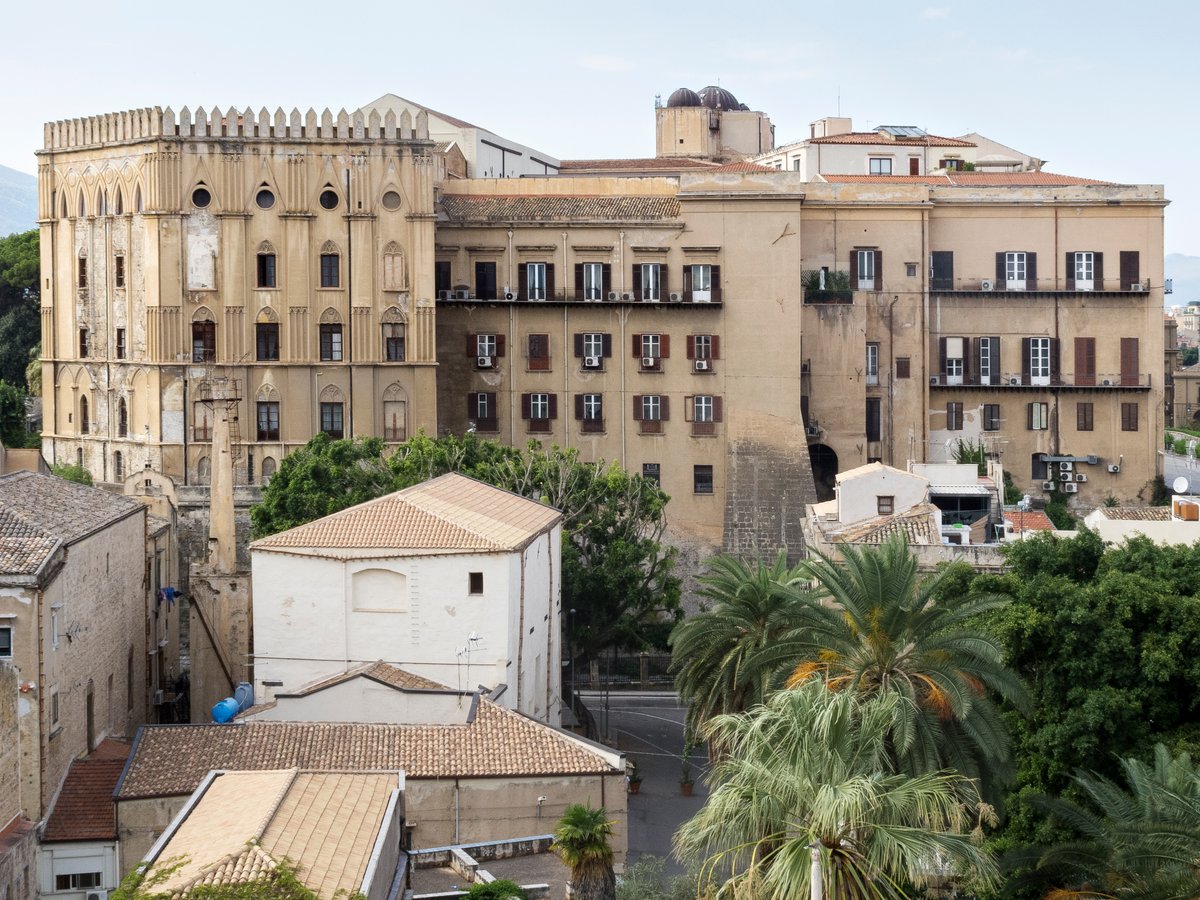

The Palazzo dei Normanni is the oldest royal residence in Europe. The palace was built on the highest point of the city, above a Punic structure discovered in 1984 beneath the Duke of Montalto Halls.
Following the Norman conquest in 1072, the Normans built a new building consisting of a castle, with the function of royal residence and administrative hub. The core was marked by four towers and included facilities such as workshops and textile laboratories - nobles officinae or tiraz. It served as the seat of successive Norman courts, including those of Roger II, William I - known as "the Mean" - and William II - known as "the Good" - who oversaw a confluence of diverse cultures.
Frederick II continued this legacy, playing a pivotal role in its administration and fostering cultural life, notably supporting the Sicilian School of poetry. After a period of decline, the palace was revitalized under the Spanish viceroys in the late 16th century. This phase saw the addition of new architectural elements with both representative and military functions, including the Fountain Courtyard in 1584 and the Maqueda Courtyard in 1600.
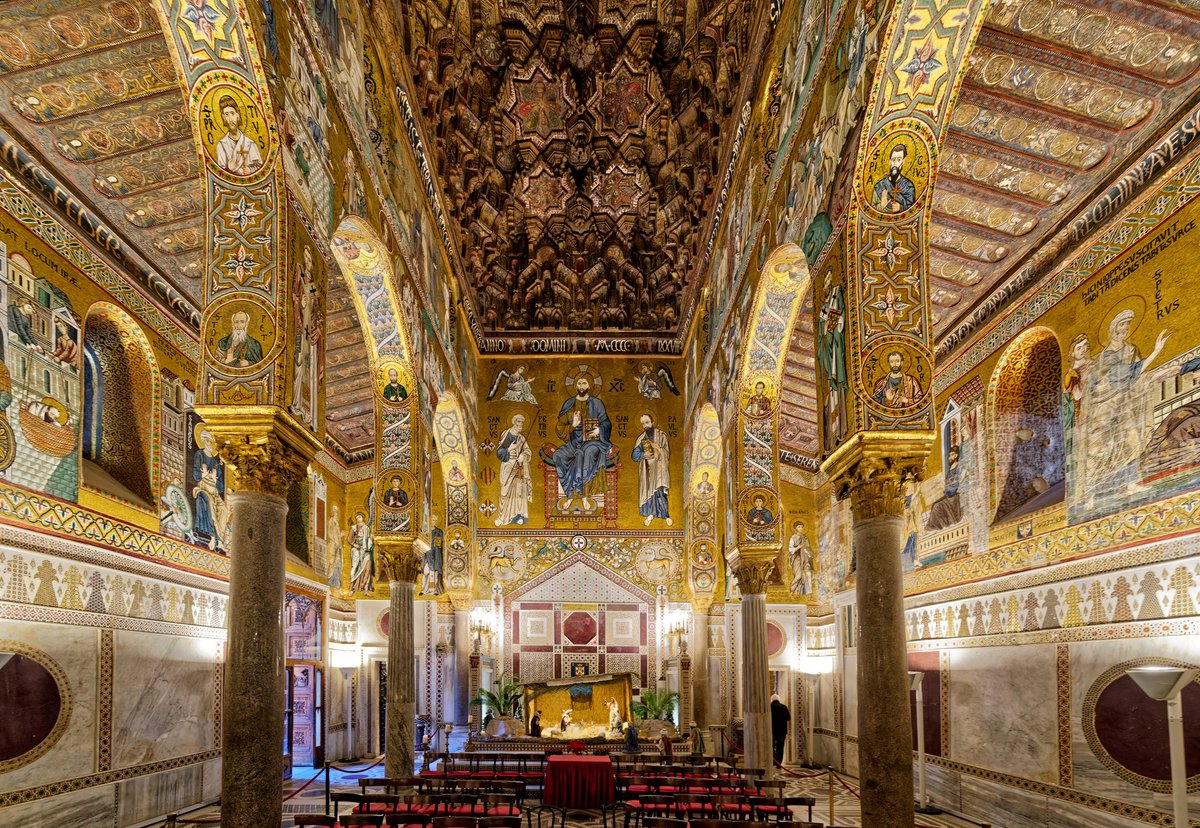
Today, the palace serves as the seat of the Sicilian Regional Assembly. It contains the Cappella Palatina, the best example of the Norman-Arab-Byzantine style that prevailed in 12th-century Sicily. The chapel features mosaics, a wooden roof that is elaborately fretted and painted, and marble incrustation of the lower part of the walls and the floor.
Sources: Wikipedia, OpenStreetMap, Wikidata, Wikimedia Commons
Written by Nicolo Ciampini
Discuss this with the author and others
No comments yet. Be the first to start the conversation.