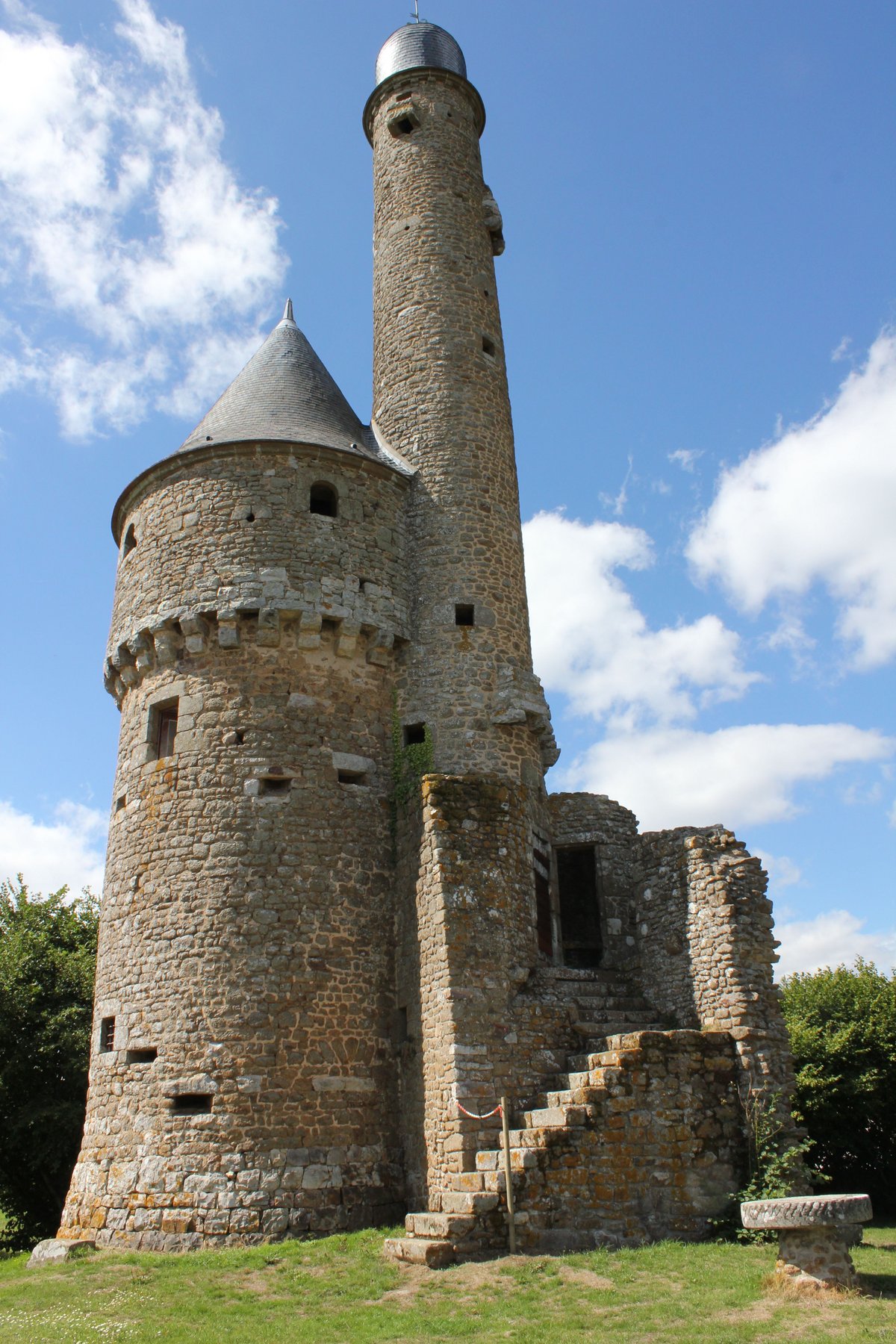

In the heart of rural Normandy lies a striking relic of the past, a monument that has stood the test of time and still tugs at the heartstrings of those who see it – La tour de Bonvouloir. This phantom tower is one of the last remaining elements of the 15th-century château de Bonvouloir, a grand structure that has long since been reduced to rubble, yet this tower silently stands tall and unyielding, a symbol of the era it represents. To understand why this tower stands alone, we must first dive into the history of the fief of Bonvouloir, created by René, Duke of Alençon, for his counsellor and Master of the House Guyon Essirard in 1485.
The tower and the château were not merely the symbolic center of power; they were also the practical heart of the home. The château contained the grand halls and the ornate furnishings where the lord and his family would entertain their guests, while the tower served as a watchpost and a symbol of protection. It was here that the lord could keep a watchful eye over his lands, ready to defend them from any who sought to seize them. The aristocracy of the time held a unique relationship with the land, a connection that endured long after the feudal system had faded.
The tower of Bonvouloir is no exception, with the lush, verdant landscape surrounding it a constant reminder of the power and wealth that once flowed from this land. The forests of Andaine provided a rich source of timber, game, and valuable resources to the fief of Bonvouloir. The Revolution largely destroyed the château, as well as most of the domain. Yet, the tower stands tall, a testament to the grandeur of the power and wealth that once resided within its walls.
Today, the tower stands as a silent observer of the passage of time, a monument to the countless men and women who once lived, worked, and prayed within its walls. It stands as a symbol of the past, a living link to a time that seems worlds away from our own. It stands as a reminder that the passage of time does not erase the memories of those who came before, and that history is still a living, breathing entity, one that we must cherish and preserve for future generations.
Sources: Wikipedia, OpenStreetMap, Wikidata, Wikimedia Commons
Written by Nicolo Ciampini
Discuss this with the author and others
No comments yet. Be the first to start the conversation.