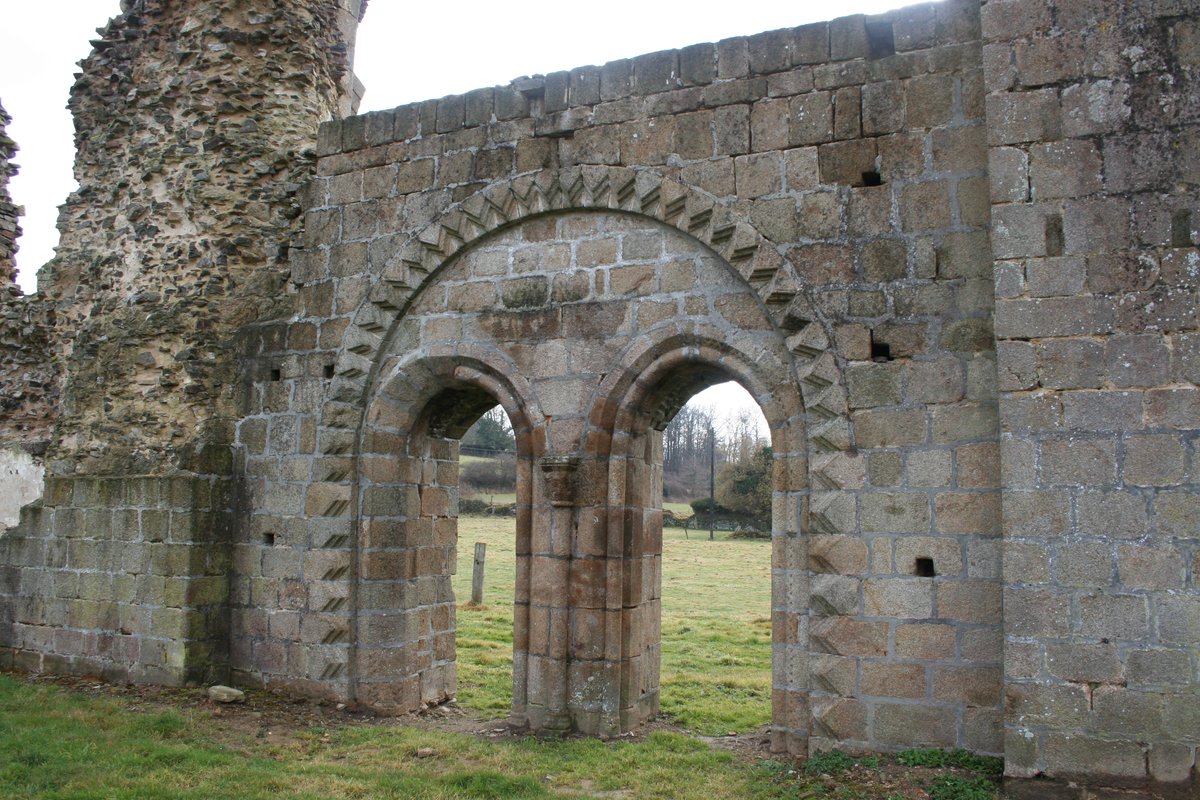

The Savigny Abbey, located in the Manche region of northern France, was founded early in the 12th century. Initially, it was the central house of the Congregation of Savigny, who were Benedictines; by 1150 it was Cistercian. Situated on the confines of Normandy and Brittany, the abbey was home to as many as 120 monks. Aimo of Landecob was a noted member. The abbey was the mother of the Benedictine reform in Normandy and within thirty years it had 33 subordinate houses, including Vaux-de-Cernay Abbey.
In 1119, Pope Celestine II took it under his immediate protection, and strongly commended it to the neighbouring nobles. Robert fitz Martin and his wife, Maud, granted to Savigny Abbey land at Vengeons. Under Geoffroy, successor to Vitalis, Henry I of England established and generously endowed 29 monasteries of this Congregation in his dominions. Bernard of Clairvault also held them in high esteem, and it was at his request that their monks, in the times of the antipope Anacletus, declared in favour of Pope Innocent II.
Sources: Wikipedia, OpenStreetMap, Wikidata, Wikimedia Commons
Written by Nicolo Ciampini
Discuss this with the author and others
No comments yet. Be the first to start the conversation.