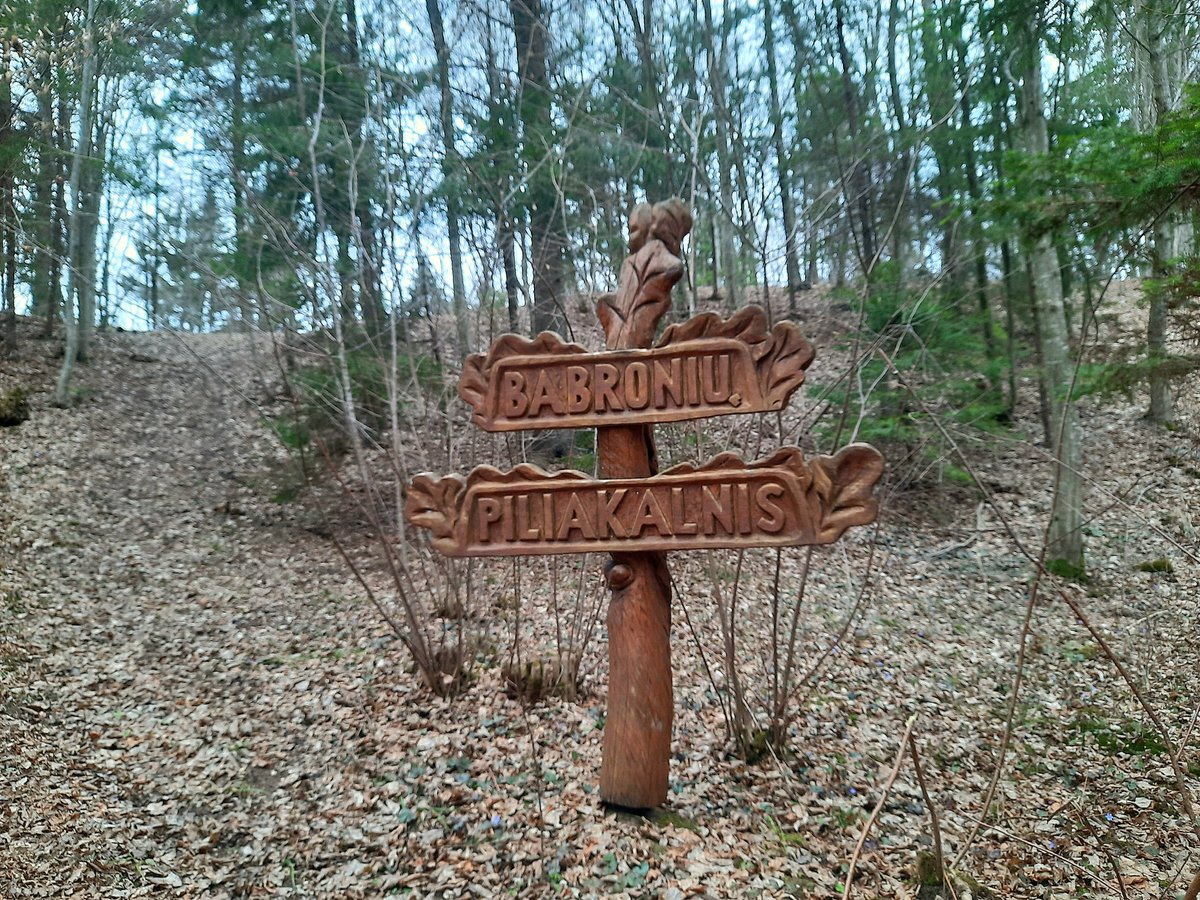
Babronyse Hill Fort, built by the Greeks around the late 1st millennium BCE, sits in the confluence of the Verkne and Narups rivers. The trapezoidal-shaped fort, guarded by three ramps and three terraces, surrounds a deep earth-boring pit, the deepest in Lithuania. This pit, initially a kiln, was filled with river sand to prevent its collapse. On August 26, 2018, a team of archaeologists and students drilling into the pit uncovered underlying conservation mortar, containing bits of pole axes, shields, and cup connectors.
The archaeological find, though valuable, is only a part of the story. The fort and the pit offer a glimpse into a forgotten Lithuanian past, a city beyond the frontier, a river valley filled with workshops, jewelers, weapons-makers, and a society that inscribed its myths in the sacred text, the Aeneid. On March 1, 2019, the discovery sparked excitement, with social media buzzing with interpretations from the director of archaeology and scholars.
The exact purpose of the pit remains uncertain, but its existence sheds light on the rich cultural history of the region.
Sources: Wikipedia, OpenStreetMap, Wikidata, Wikimedia Commons
Written by Nicolo Ciampini
Discuss this with the author and others
No comments yet. Be the first to start the conversation.