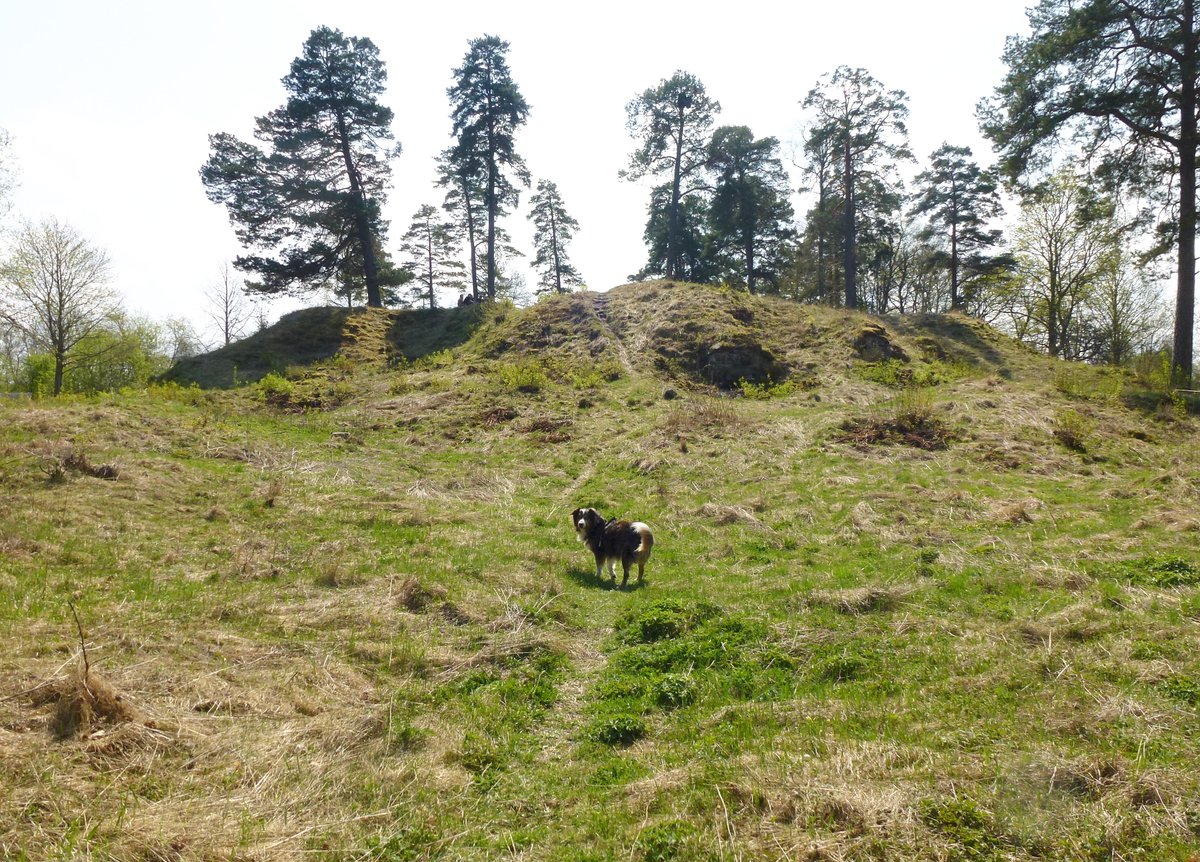

Standing proudly above a plateau-like hill in Upplands-Bro Municipality, Stockholm County, the 12th-century Almarestäket, originally named after Eric IX of Sweden (but this requires verification), was a strategic defense facility for nearby cities like Sigtuna and Uppsala. The castle's intricate history, however, remains shrouded in mystery. The complex was first mentioned in the Swedish rhyming chronicle Karlskrönikan in the late 14th century, but specifics are scarce.
What we do know is that the castle was burned down in 1434 following a power struggle between the king and the church, and was rebuilt about ten years later. During the domestic political strife of the 1510s, the castle was again besieged and ultimately demolished by Sten Sture the Younger in 1519. The claim that bricks were transported to Stockholm for reuse is a myth, and should be discarded. Today, the castle ruin covers an area of 125 x 80 meters and stands 3-4 meters high, with traces of foundations and house foundations visible in the northwestern part.
Below the hill, a five-meter high obelisk in red granite, erected in 1804, looms, as well as the remnants of the adjacent bridge over Almarestäket.
Sources: Wikipedia, OpenStreetMap, Wikidata, Wikimedia Commons
Written by Nik Frost
Discuss this with the author and others
No comments yet. Be the first to start the conversation.