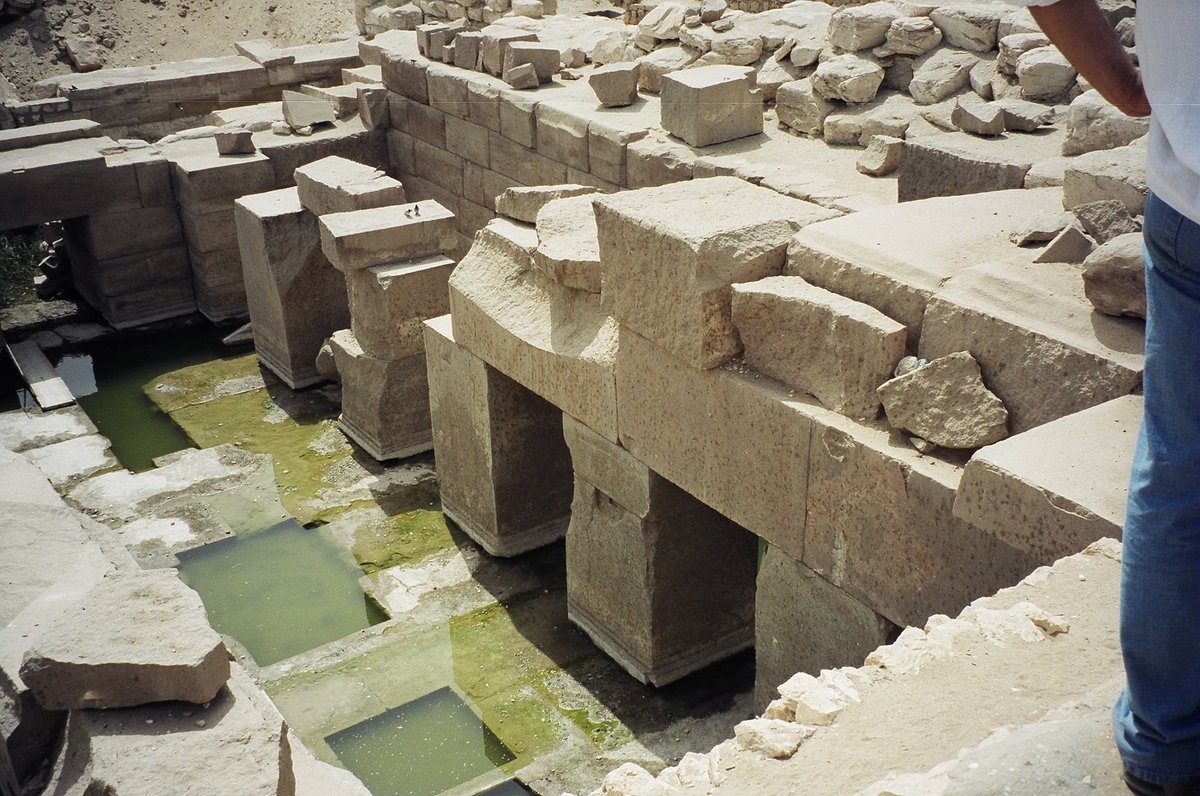

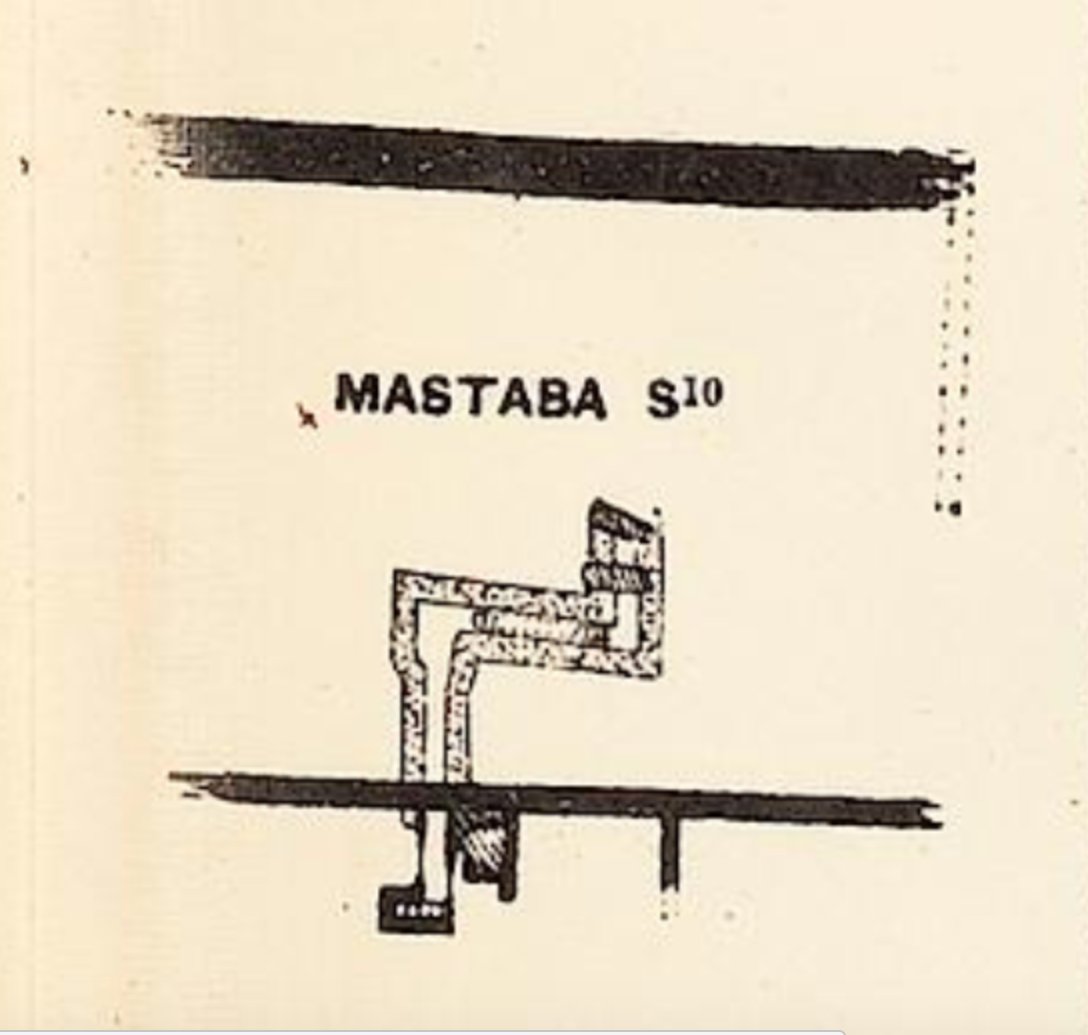
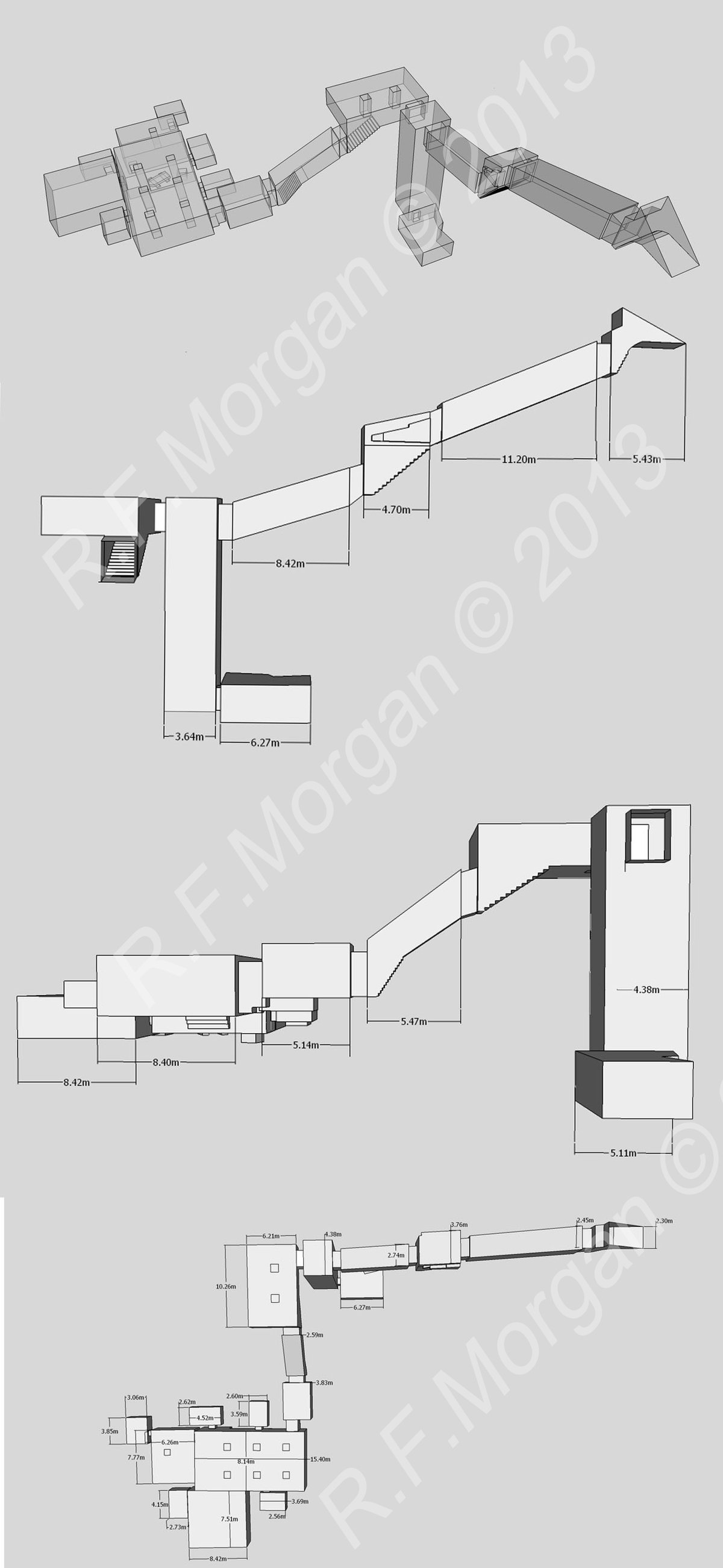
Deep within the heart of Abydos, Egypt, lies the Osireion, a sanctuary believed to be the cenotaph of Seti I. Located to the rear of the Temple of Seti I, it dates from the 13th century BC. The complex may have been built to resemble the tombs in the Valley of the Kings. An entrance tunnel runs along a north-south axis behind the central hall; it is 69 metres long and stone lined.
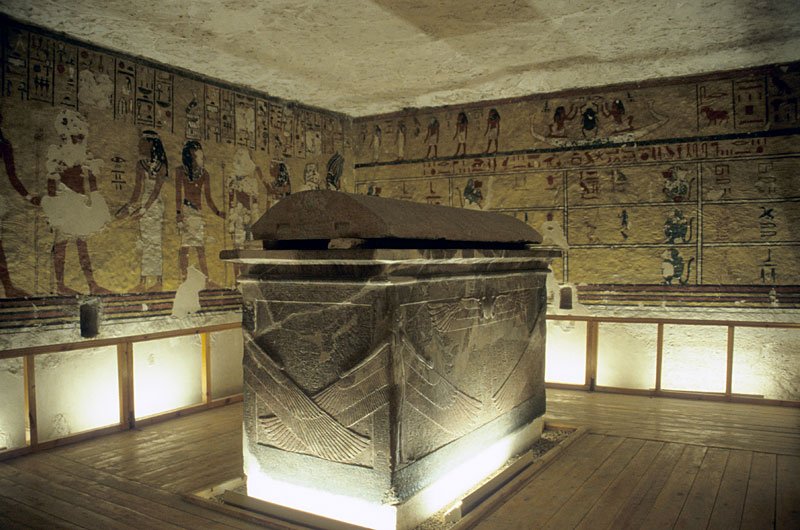
The central hall is constructed with very large stone blocks, featuring a limestone interior with sandstone facing. While most of the roof has been lost, it would have been formed of large granite beams. In the center of the hall is a stone-paved 'island' surrounded by a channel of water at least 10.4 metres deep, which connects to an underground water source. Behind the wall opposite the entrance is a sarcophagus chamber.
Strabo visited the site in the first century BCE and described it as a royal building built of solid stone with a fountain at a great depth. Modern excavators named the subterranean water basin "Strabo's Well". The site was rediscovered by archaeologists Flinders Petrie and Margaret Murray during excavations in 1902–1903. Graffiti from the 21st to 22nd Dynasties suggests the site may have served as the "Birth House of Isis."
Sources: Wikipedia, OpenStreetMap, Wikidata, Wikimedia Commons
Written by Mutabor
Discuss this with the author and others
No comments yet. Be the first to start the conversation.