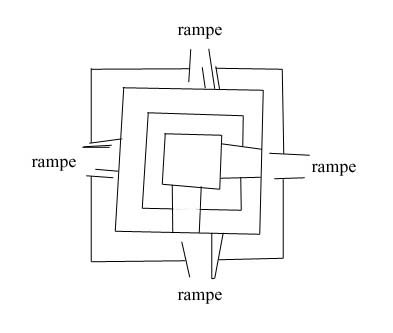

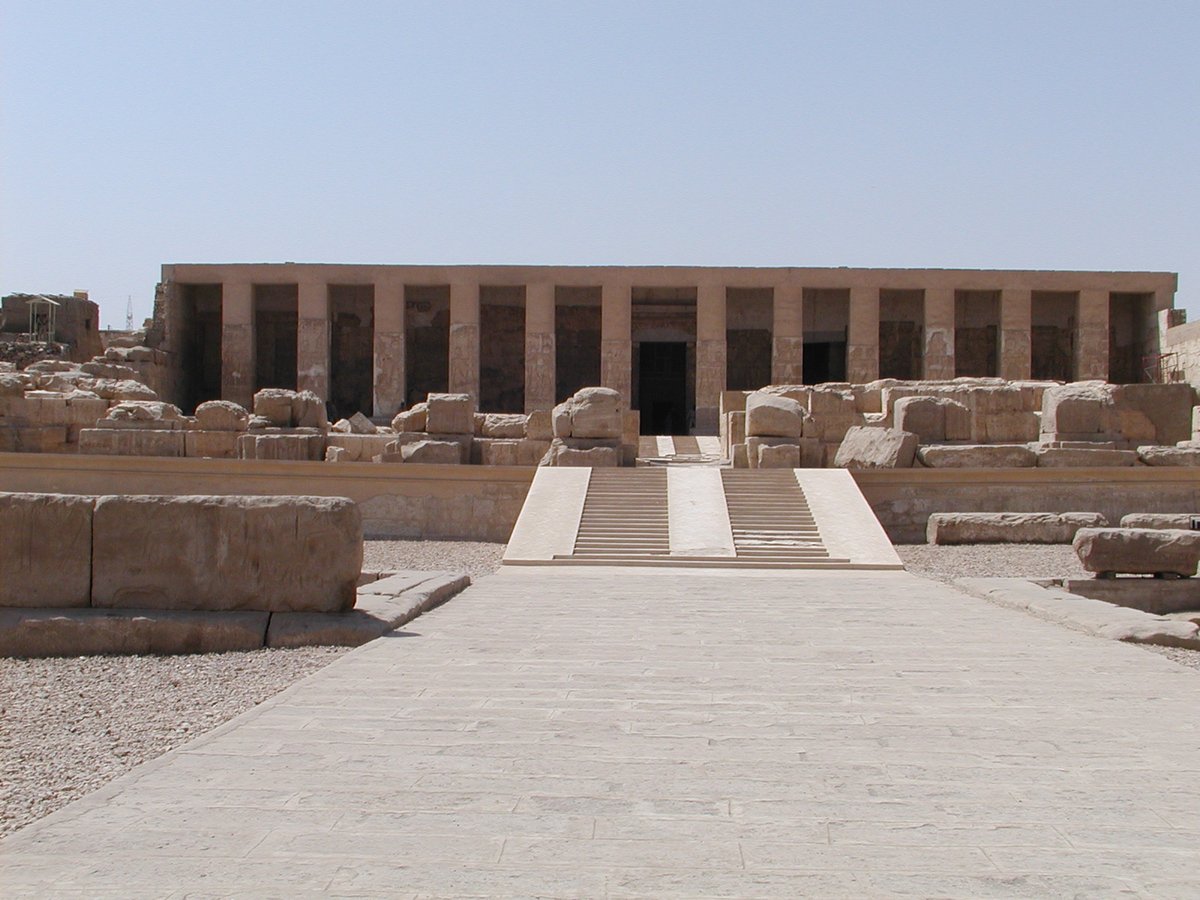
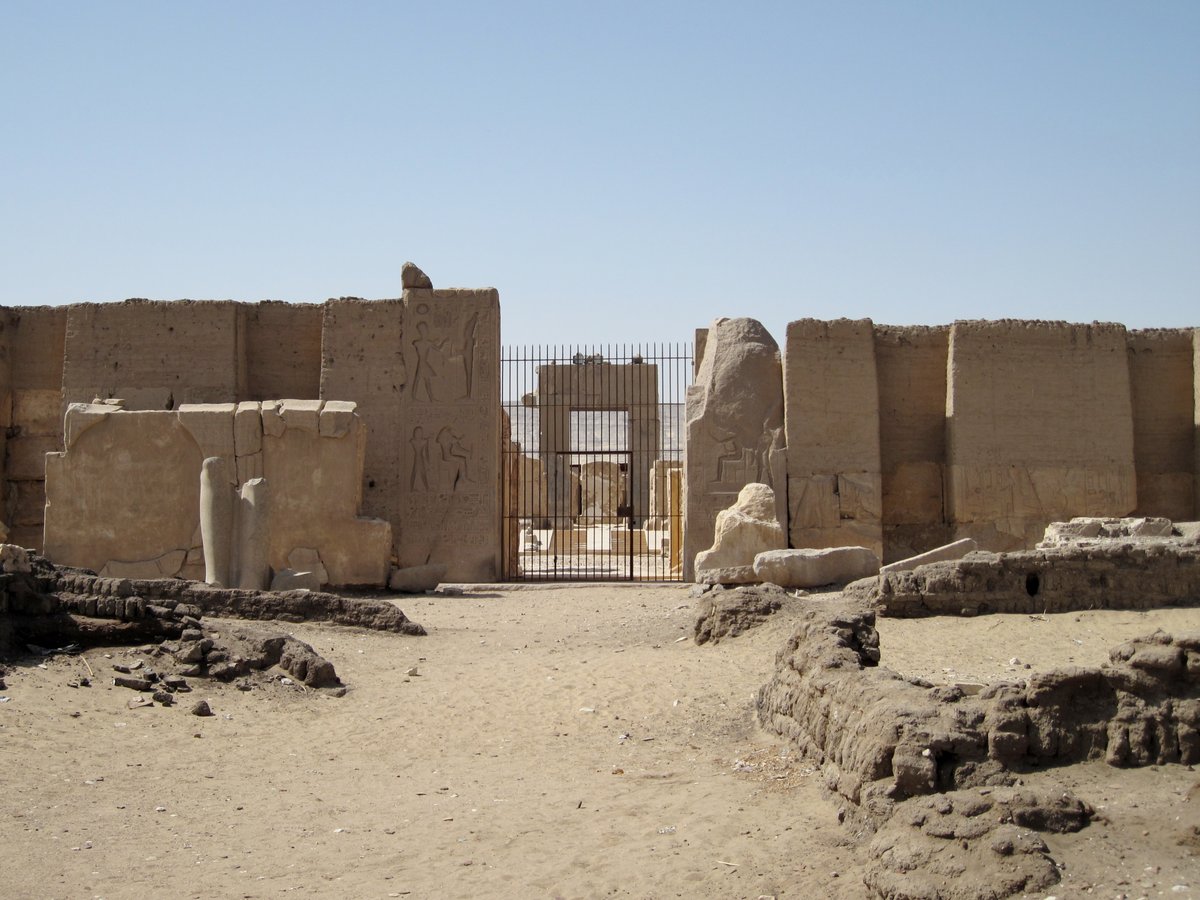
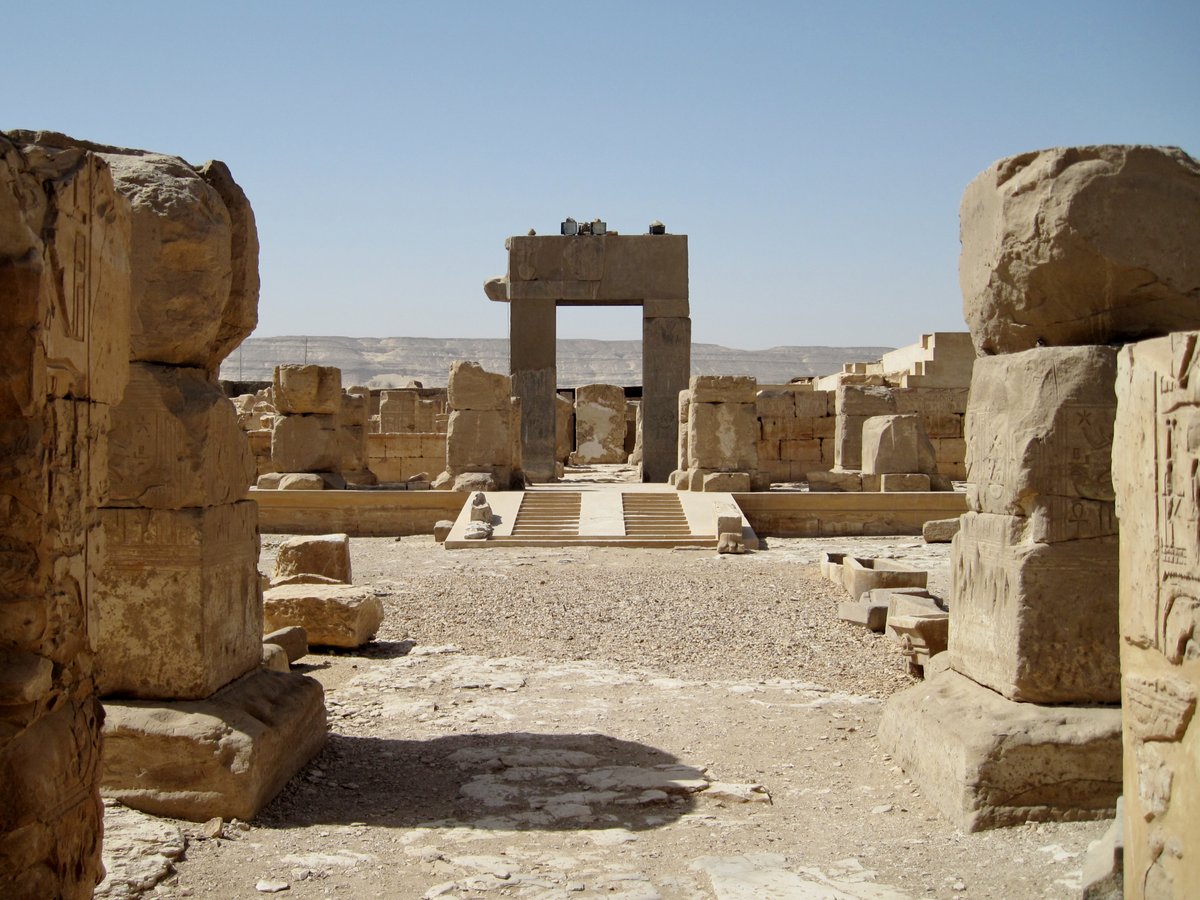
The Pyramid of Sinki is a small, layered step pyramid located approximately 5.5 km southeast of the Temple of Seti I in Abydos, one of the oldest cities of ancient Egypt. Built on a sand surface, which was common for several step pyramids in the region, the structure is attributed to Pharaoh Huni and dates back to the Third Dynasty, around 2686 BC. It is made of limestone and aligned with the Nile River, featuring mudbrick ramps and 16 preserved courses of masonry in layer two at its western corner.
Archaeological research by Nabil Swelim indicates that the pyramid was not fully finished. While the first two layers were successfully completed, neither a pavement nor an outer facing were constructed. When manual lifting of building materials was no longer possible, four ramps were erected on each side, as well as others in the middle. These ramps started from the desert surface and leaned onto the core of the pyramid, but construction stopped at this point.
While the exact reason for abandonment is not completely known, it is likely that the short reign of the pharaoh who commissioned it led to the project being left unfinished. The pyramid was largely forgotten until it was rediscovered in 1977 by Nabil Swelim. Excavations beginning in 1980 revealed the pyramid as a three-layer structure built in a pit with faulty square orientations, and studies as recent as 2018 have explored megalithic blocks beneath the site.
Sources: Wikipedia, OpenStreetMap, Wikidata, Wikimedia Commons
Written by Mutabor
Discuss this with the author and others
No comments yet. Be the first to start the conversation.