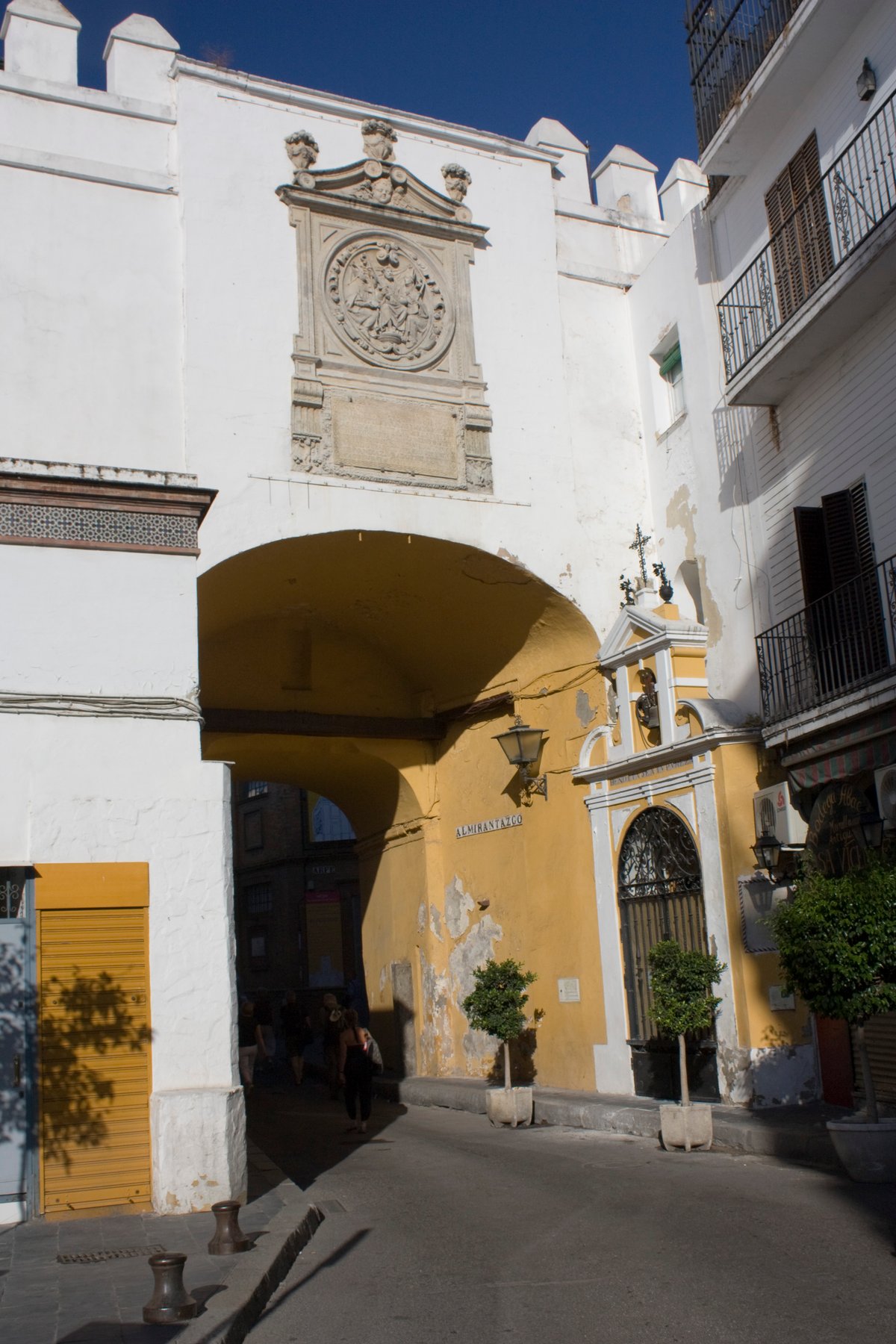

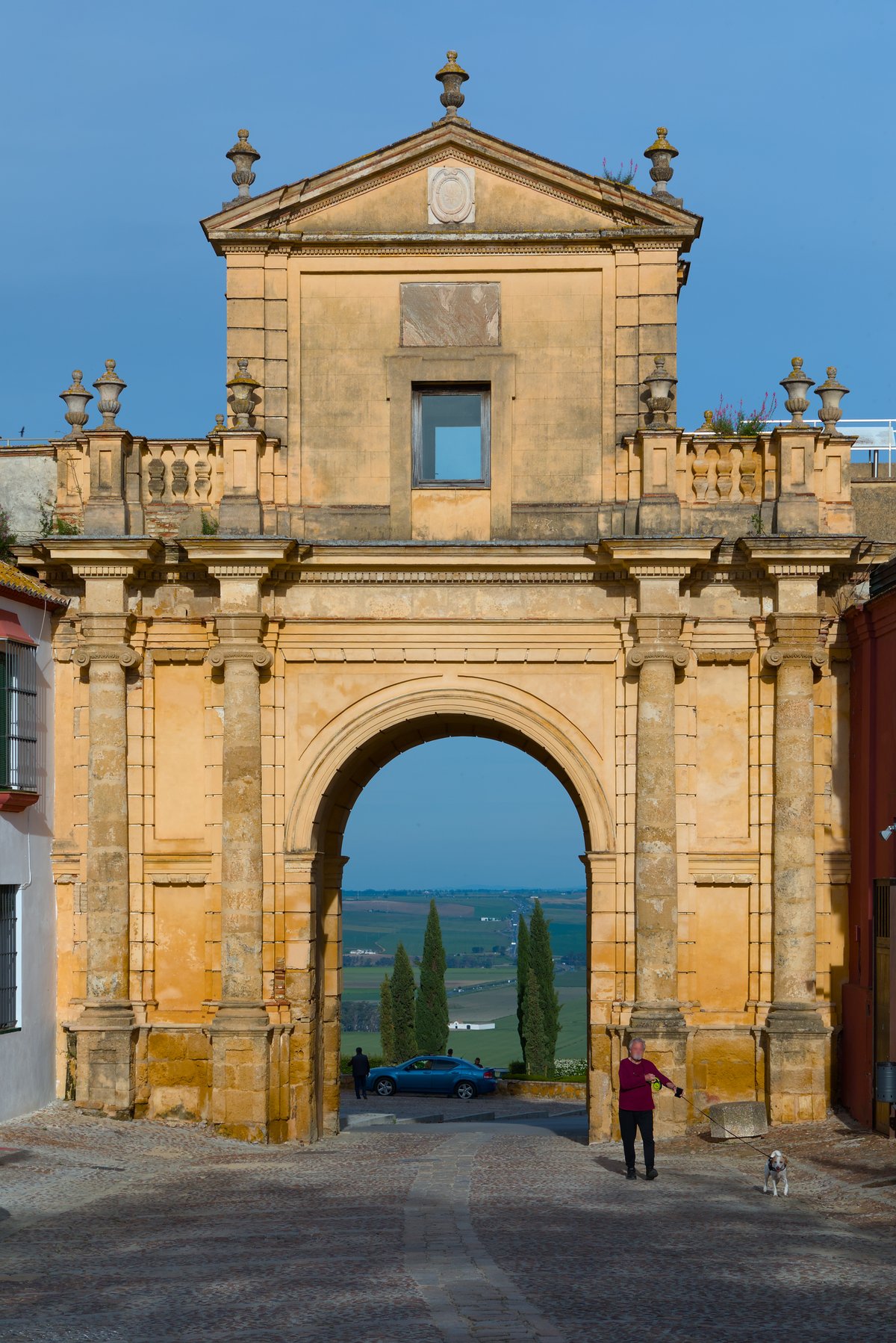
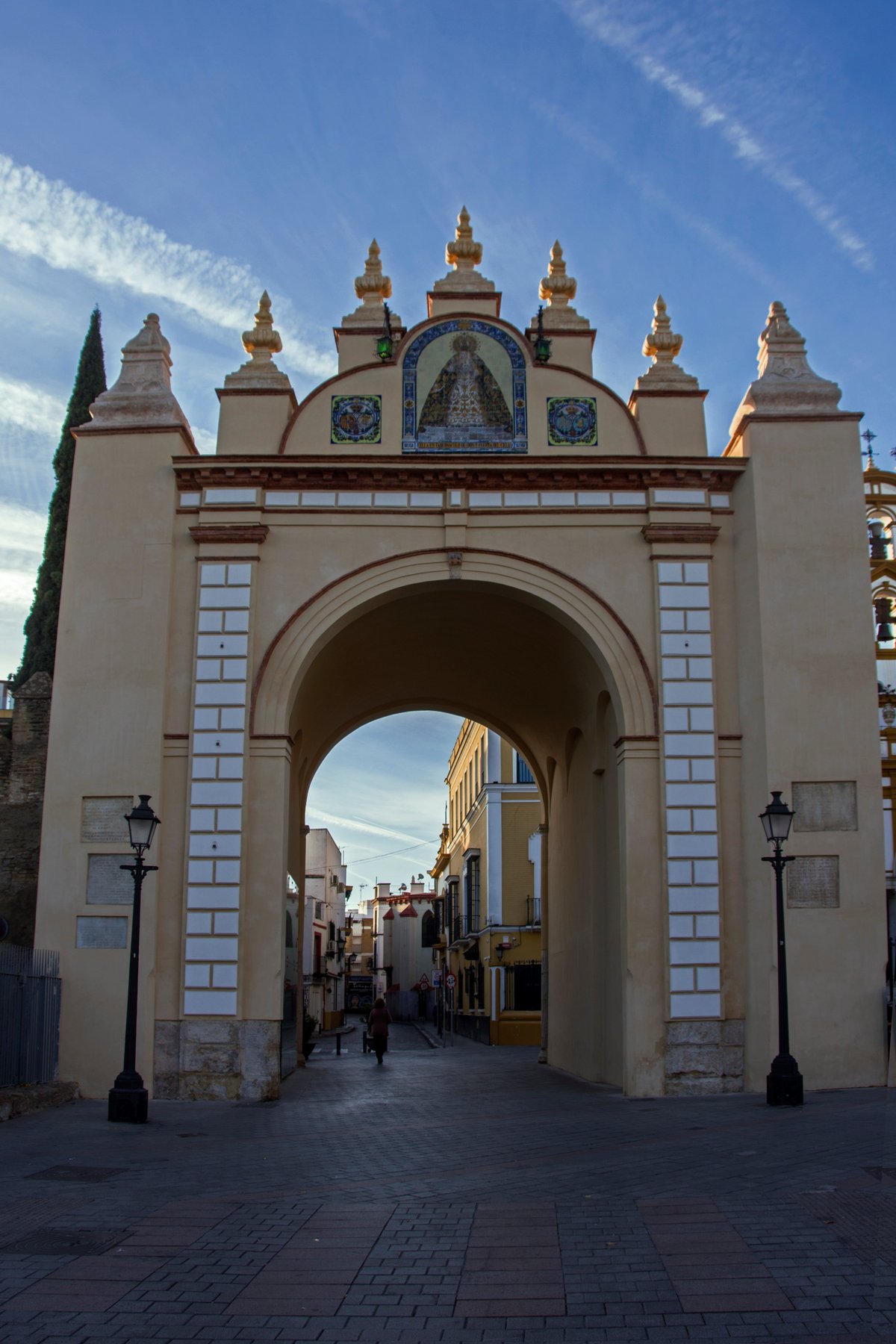
The Postigo del Aceite, known in Muslim times as Bab al-Qatay, is one of only three preserved gates of the walls of Seville. While it was later known as the gate of the oil, the granary, or the olive, it served a different function in the 12th century as the gate of boats, where the Almohads moved materials for the construction of ships next to the Royal Dockyards.
Most of the medieval walls were demolished by the City Council of Seville in the 19th century to make room for new urbanization. Today, only the Puerta de la Macarena and the Postigo del Aceite remain complete, while the Puerta de Córdoba and the postigo del Carbón have only little remains preserved. The arch was renovated in 1572 - 1573 by the architect Benvenuto Tortello, who left behind a carved stone representation of Saint Ferdinand with the bishops Isidore and Leander.
Architectural features of the arch include rails where planks were once placed to stop constant flooding from the river. Due to the narrowness of its architectural environment, it is one of the favorite points for the Confraternities of Holy Week to pass through. The site also holds a somber local memory: in 1999, a costalero named Juan Carlos Montes died inside the arch during a procession on Holy Monday. It stands today in the barrio del Arenal next to the Correos building.
Sources: Wikipedia, OpenStreetMap, Wikidata, Wikimedia Commons
Written by Nicolo Ciampini
Discuss this with the author and others
No comments yet. Be the first to start the conversation.