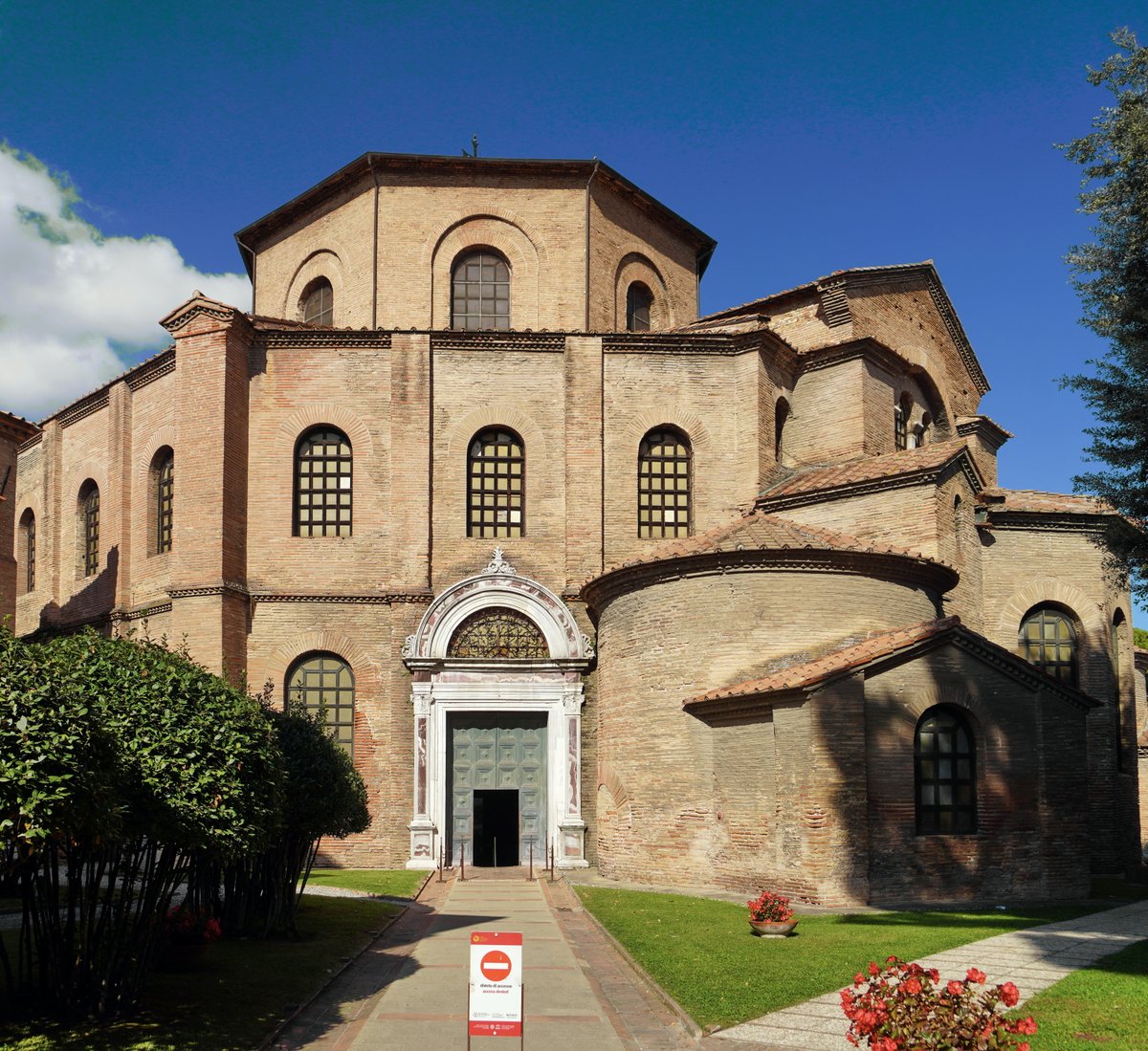

The Basilica of San Vitale is a spectacular example of early Byzantine art and architecture, located in the city of Ravenna, Italy. The basilica, built between 526 and 547 under the orders of Bishop Ecclesius of Ravenna and completed by Bishop Maximian, is adorned with intricate mosaics that have captivated scholars for centuries. These mosaics, executed in the so-called jewelled style, are among the most valuable and studied works in Byzantine art. The basilica is enlisted in the UNESCO World Heritage List, along with seven more structures in Ravenna, Italy.
In the sixth century, Ravenna was under the rule of the Ostrogoths when the basilica was constructed. The construction was sponsored by Julius Argentarius, a local banker and architect, who also financed the construction of the Basilica of Sant'Apollinare in Classe. The cost of the basilica was 26,000 solidi, equivalent to 16.38 kg (36.11 lbs) of gold. A donor portrait of Julius may appear among the courtiers in the Justinian mosaic.
The central vault of the basilica used a western technique of hollow tubes, which was the first recorded structural use of terracotta forms, later evolving into modern structural clay tile.
The ambulatory and gallery were vaulted only later in the Middle Ages. Baroque frescoes on the dome were painted between 1778 and 1782 by Serafino Barozzi, Ubaldo Gandolfi, and Jacopo Guarana.
The mosaics in the basilica are executed in the Hellenistic-Roman tradition, characterized by lively and imaginative depictions, rich colours, and a vivid depiction of the landscape, plants, and birds. The basilica has four bells, and the tenor bell dates back to the 16th century.
The church is famous for its wealth of Byzantine mosaics, and its design may reflect the design of the Byzantine Imperial Palace Audience Chamber. The mosaics in the basilica are of extreme importance in Byzantine art. The Justinian mosaic, completed in 547, shows Justinian as the leader of both church and state. The apse mosaic in the Basilica of San Vitale centres on a youthful depiction of Jesus Christ. Saint Vitale is depicted receiving the martyr's crown from Jesus Christ in the apse mosaic.
Sources: Wikipedia, OpenStreetMap, Wikidata, Wikimedia Commons
Written by Nicolo Ciampini
Discuss this with the author and others
No comments yet. Be the first to start the conversation.