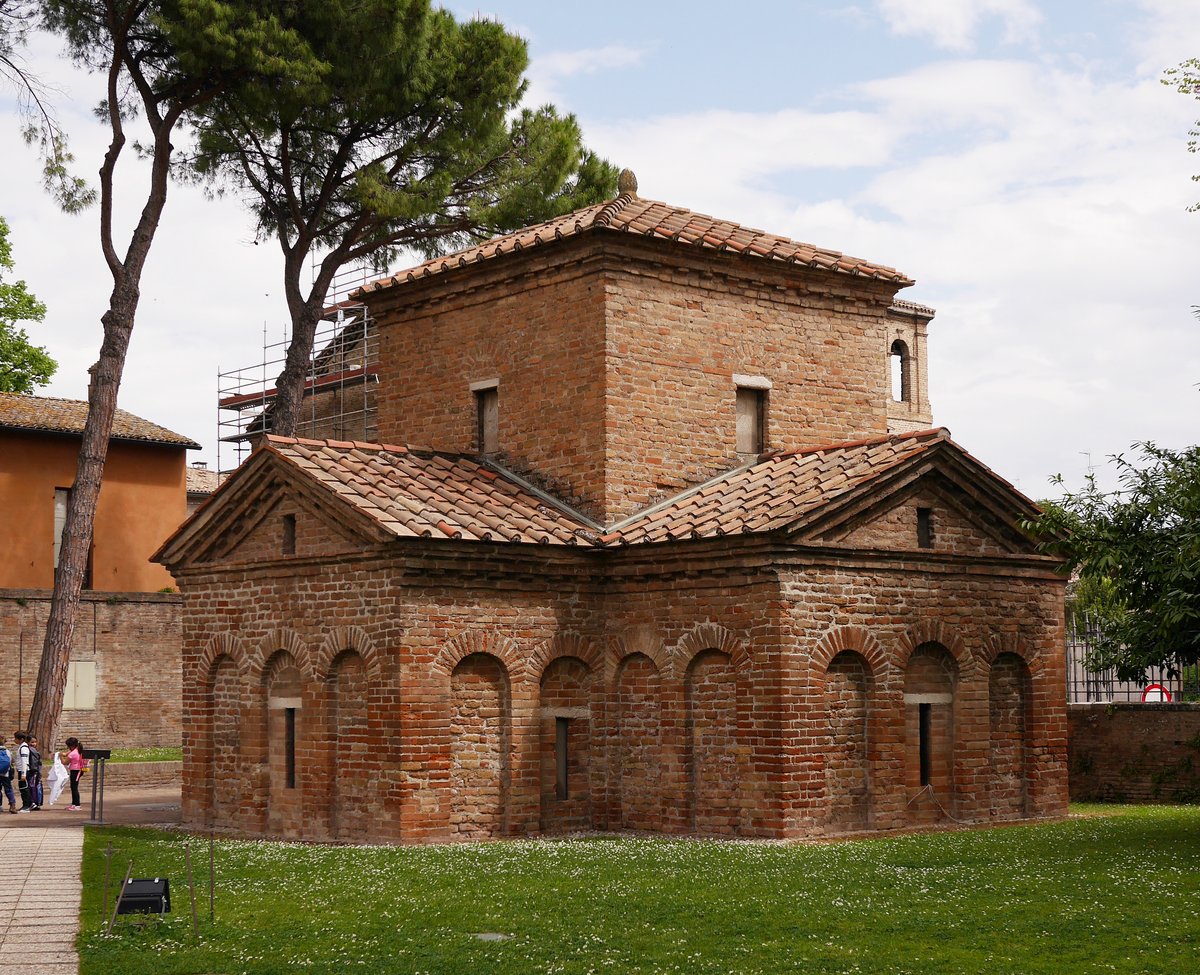

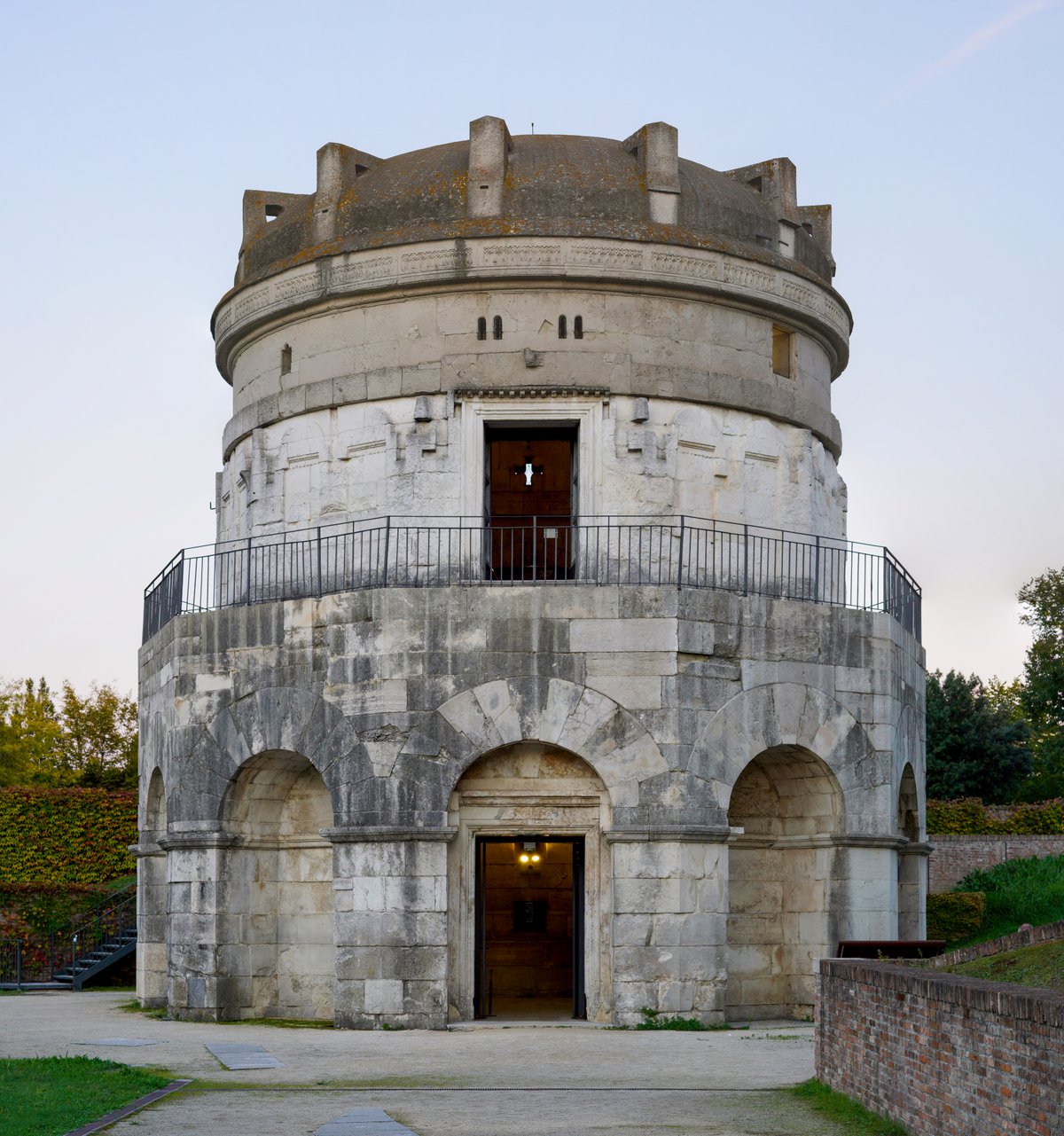
The Mausoleum of Galla Placidia is a Late Antique building in Ravenna, Italy, built between 425 and 450. It was added to the World Heritage List in 1996. The structure is a cruciform chapel or oratory that originally adjoined the narthex of the Church of the Holy Cross, which served as the church for the imperial palace.
Aelia Galla Placidia was the daughter of Theodosius I and Galla. Raised by Serena, wife of Stilicho, she received an advanced education and became a powerful political figure. She ruled as regent for her son, Valentinian III, for twelve years starting in 425. She remained powerful until she died in 450 and was an active patron of religious institutions, building churches at Ravenna, Rome, and Jerusalem.
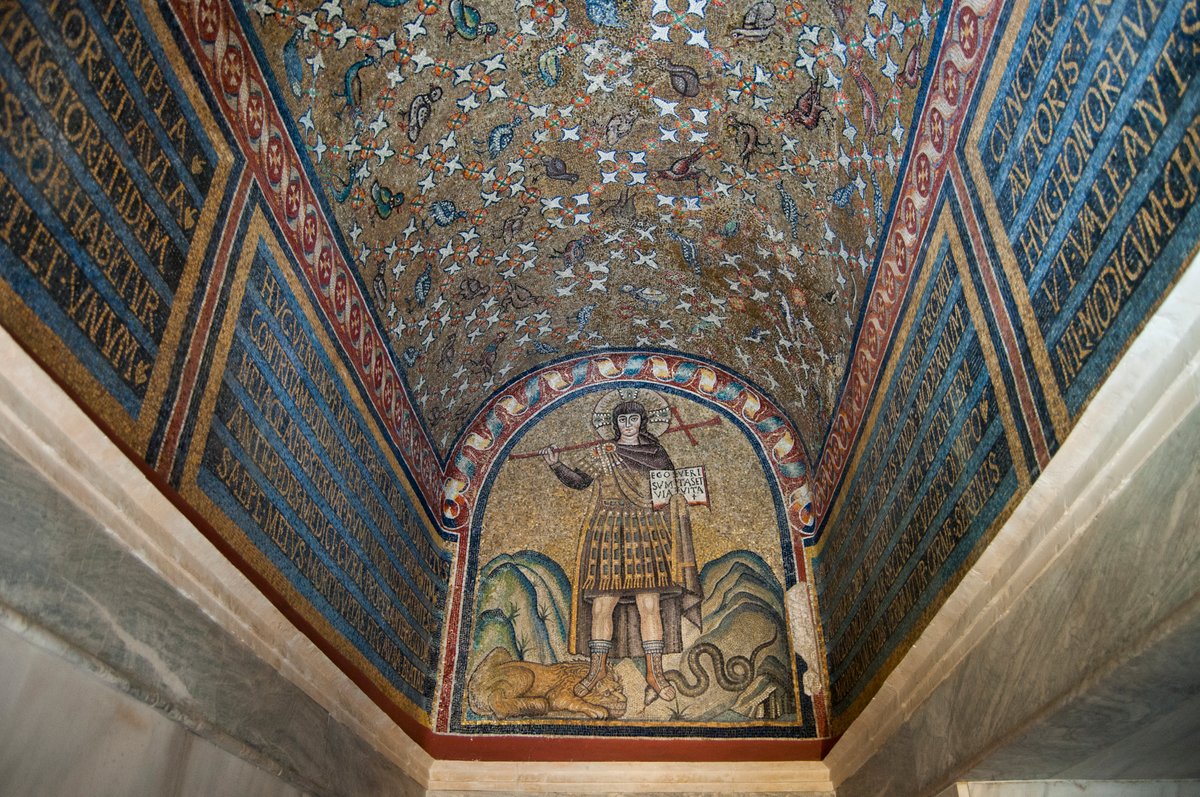
One such project was a basilica in Ravenna dedicated to Saint John the Evangelist, built after 425 to commemorate her deliverance from a threatening storm at sea. The interior of her mausoleum is covered with rich mosaics, including two famous lunettes. One features the Good Shepherd in imperial garb, wearing purple and gold and bearing a cruciform staff to symbolize combined earthly and heavenly domains.
Sources: Wikipedia, OpenStreetMap, Wikidata, Wikimedia Commons
Written by Nicolo Ciampini
Discuss this with the author and others
No comments yet. Be the first to start the conversation.