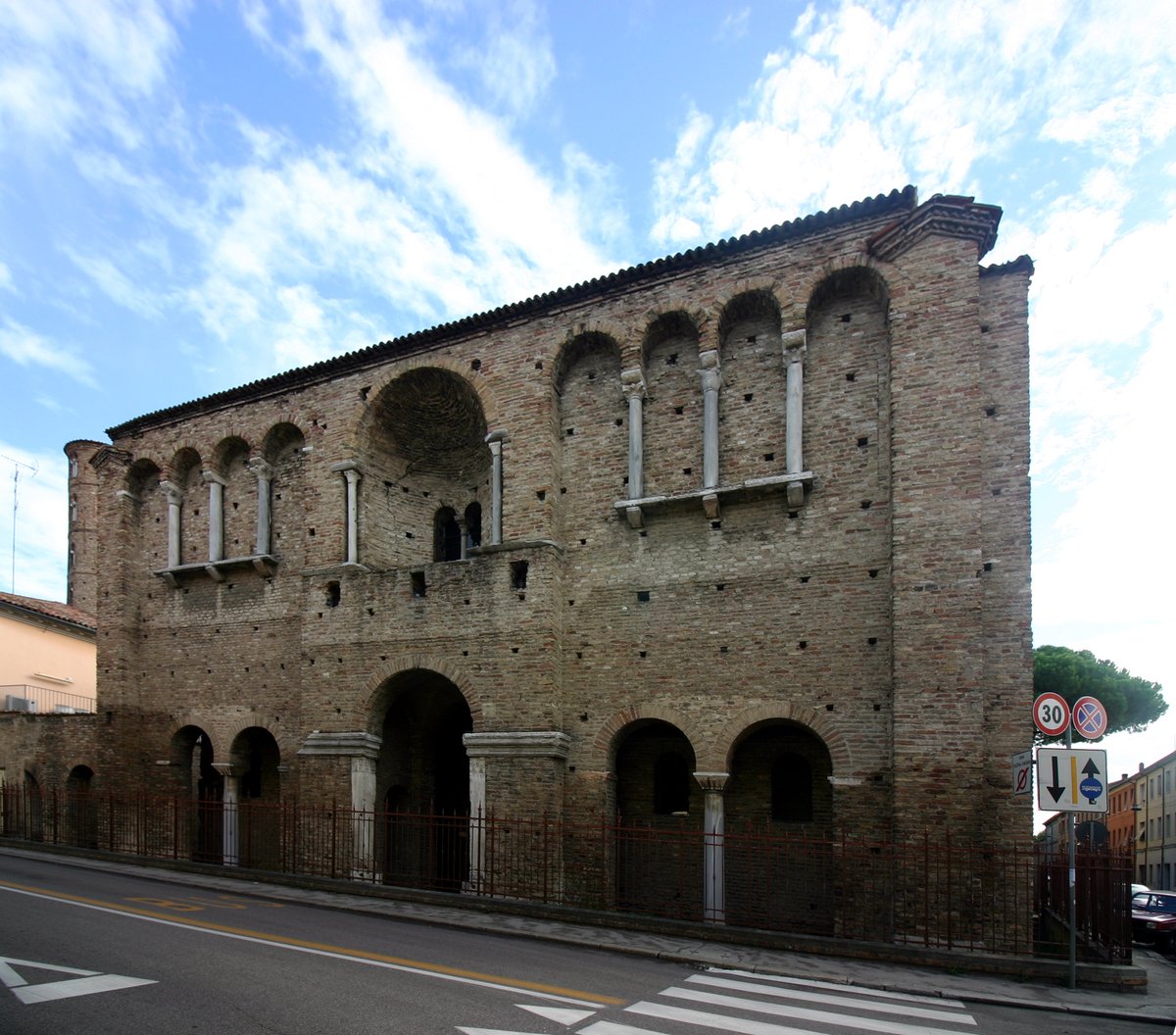

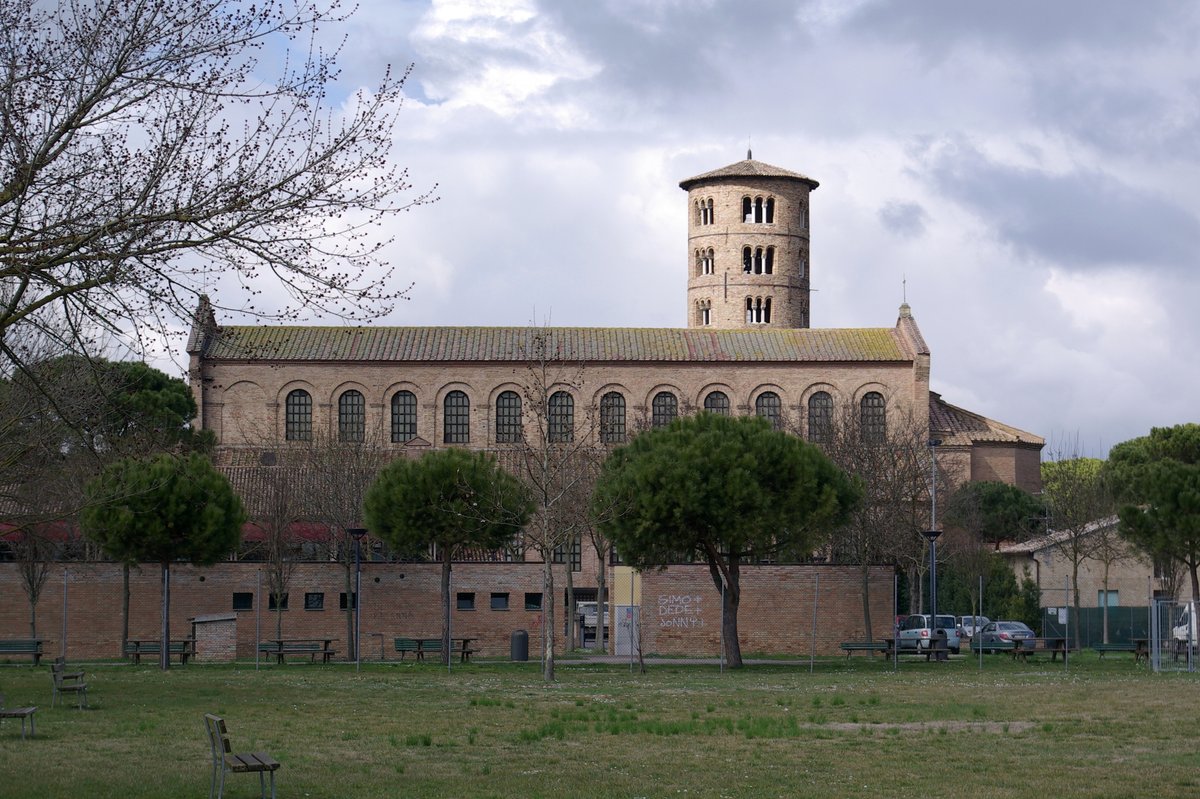
The so-called Palazzo di Teodorico is a wall ruin situated in Ravenna along Via di Roma, near the Basilica of Sant'Apollinare Nuovo. Since December 2019, it has been managed by the Direzione regionale Musei. While it is called the Palazzo di Teodorico by tradition, the facade is actually what remains of a series of constructions from different periods.
In the early 20th century, some scholars believed the structure dated back to the 7th-8th centuries. However, in 1921, Giuseppe Gerola proposed that it was actually the remains of the church of San Salvatore ad Calchi, which was destroyed in the early 16th century. This hypothesis was developed further by Paolo Verzone and remains the prevailing theory today.
The structure was likely built in the mid-8th century. The massive facade forms a large portion of the front of a place of worship and some walls level with the street. Other parts of the building include two circular stairs that allowed access to a matroneo, as documented by excavations in the early 1900s.
Between 1897 and 1907, the structure ceased to have a residential function and underwent a restoration under Corrado Ricci. During this time, one of the two staircases was reconstructed and two columns were inserted into the bifore windows. Archeologist don Mario Mazzotti conducted further investigations in the 1950s to better understand the building's history, though he did not reach definitive conclusions.
Sources: Wikipedia, OpenStreetMap, Wikidata, Wikimedia Commons
Written by Nicolo Ciampini
Discuss this with the author and others
No comments yet. Be the first to start the conversation.