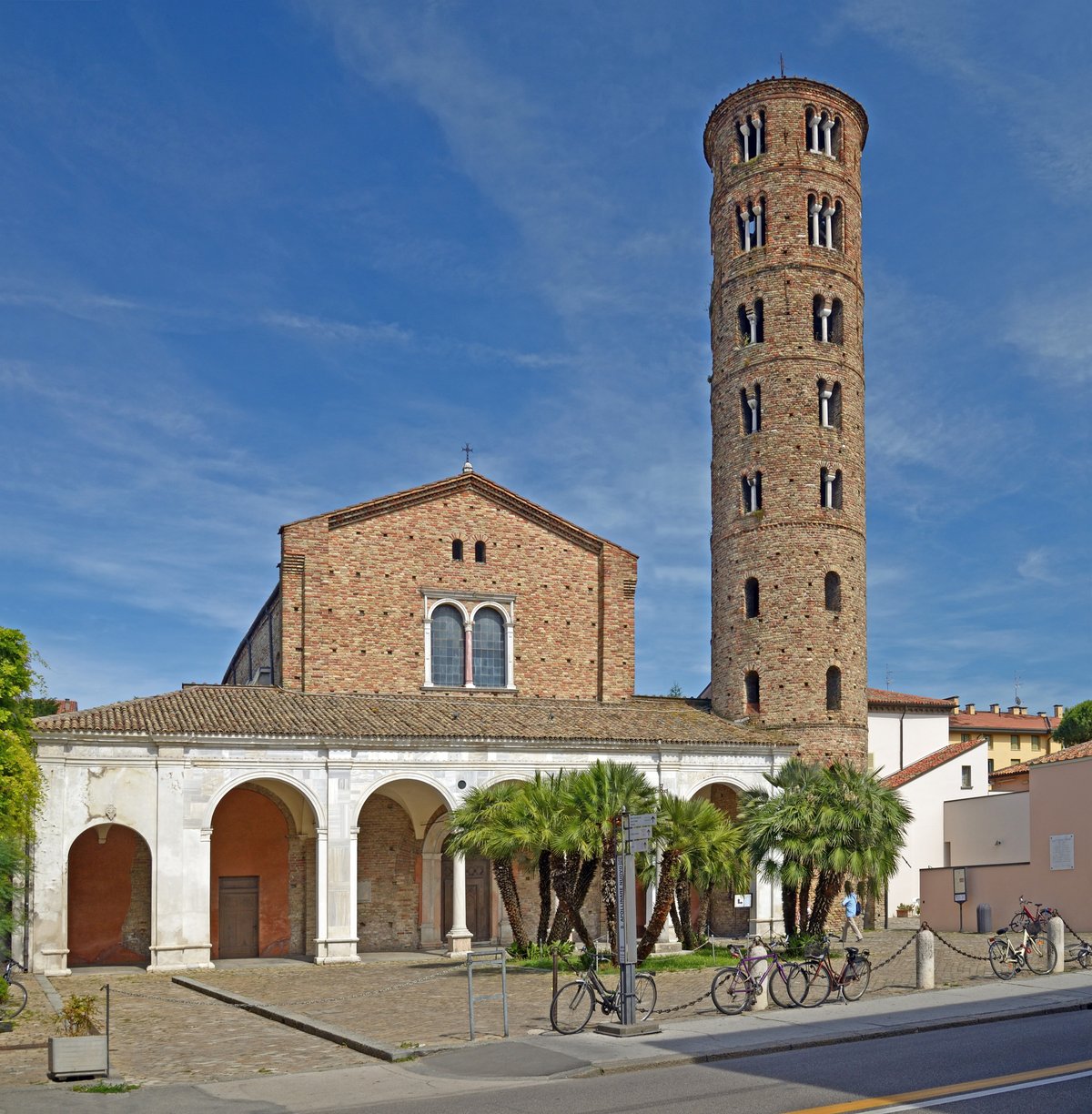

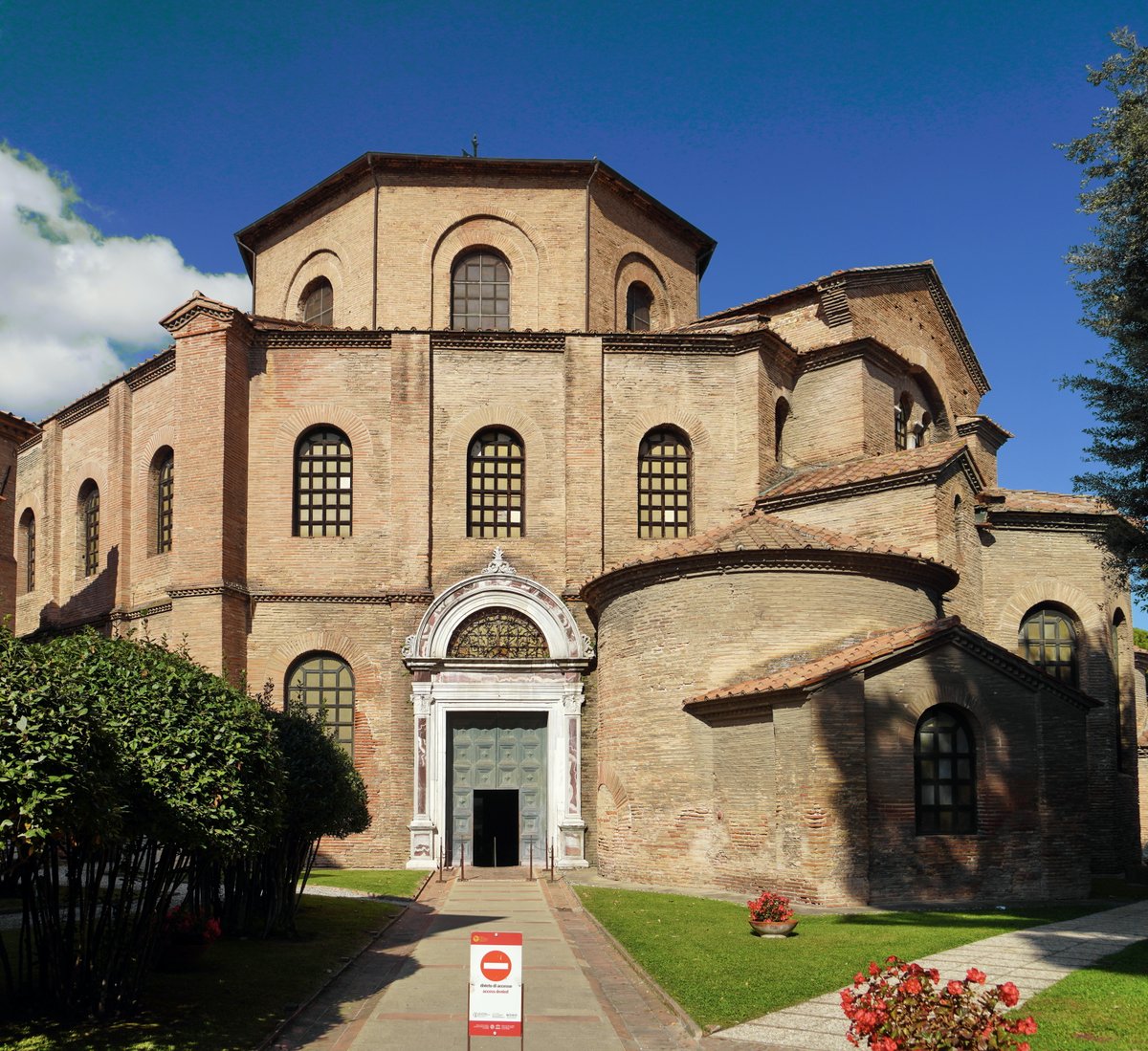
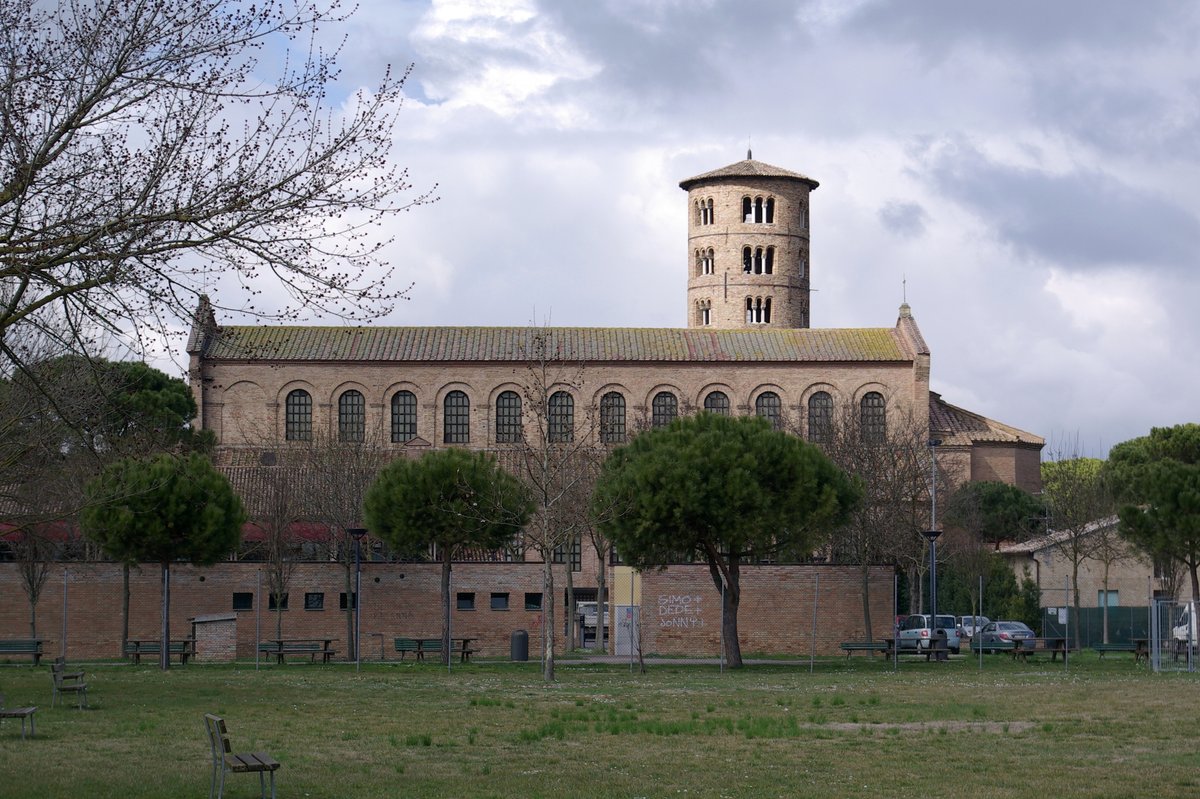
Legend says Pope Gregory the Great ordered that the mosaics in the basilica be blackened, as their golden glory distracted worshipers from their prayers. The building was originally erected by the Ostrogothic king Theodoric the Great as his palace chapel during the first quarter of the 6th century. It served as an Arian church, dedicated in 504 AD to Christ the Redeemer, before being reconsecrated in 561 AD by the Byzantine emperor Justinian I.
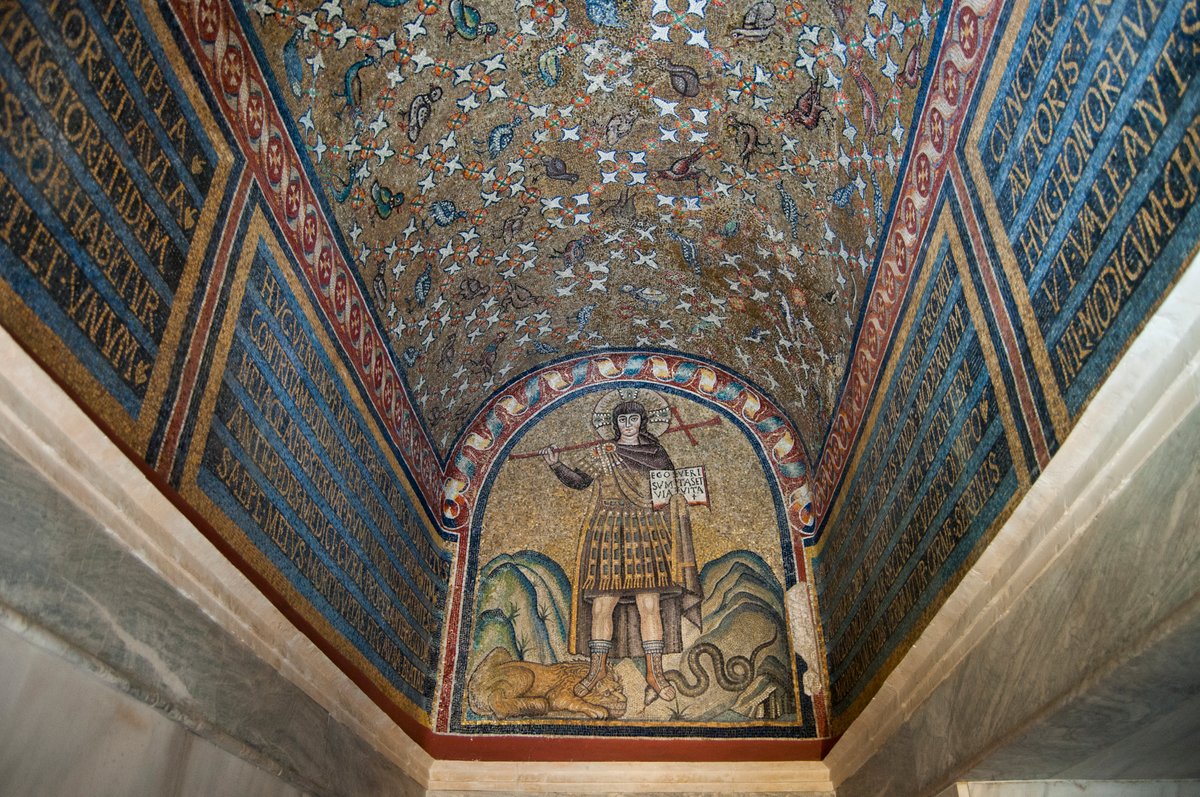
Justinian I rededicated the church to Saint Martin of Tours, a foe of Arianism, under the new name Sanctus Martinus in Coelo Aureo. While the apse and atrium underwent modernization in the 6th century, the mosaics of the lateral walls remain preserved. On the left wall, Jesus is depicted as a young, beardless man dressed as a Roman Emperor. On the right, he is depicted with a beard. For the Arians, this emphasized that Jesus grew older and became a man of sorrows, as spoken of by the prophet Isaiah.
Below these scenes are rows of saints, prophets, and evangelists executed in a Hellenistic-Roman tradition. Further down, Byzantine-style mosaics depict a procession of 22 Virgins and 26 Martyrs. One section of the church contains a rough mosaic with a portrait of the Emperor Justinian as an old man, though it may have originally depicted Theodoric. Some art historians claim one mosaic contains the first depiction of Satan in western art, showing a blue angel behind three goats.
The entrance is preceded by a marble portico built in the 16th century, while a round bell tower stands nearby dating from the 9th or 10th century. UNESCO experts noted that the basilica illustrates the fusion between western and eastern styles characteristic of the late 5th to early 6th century, marking it as one of the most important buildings of the period for European religious art.
Sources: Wikipedia, OpenStreetMap, Wikidata, Wikimedia Commons
Written by Nicolo Ciampini
Discuss this with the author and others
No comments yet. Be the first to start the conversation.