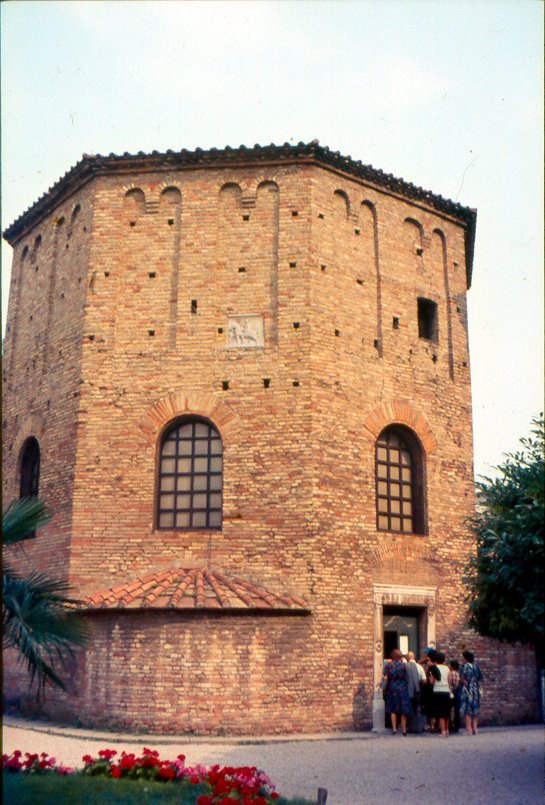

The Baptistery of Neon in Ravenna, Italy, carries a history that stretches back to the late 5th century. Constructed by Bishop Ursus and completed by Bishop Neon, it was built over an older Roman bath and christened the Orthodox Baptistery to differentiate it from the Arian Baptistery constructed later. The octagonal design of the building, with eight sides symbolizing the seven days of the week and the Day of the Resurrection and Eternal Life, was a common feature in Early Christian baptisteries.
The Baptistery's ceiling mosaic showcases a significant event in Christian history: John the Baptist baptizing Jesus. Zeus, personified as the Jordan, and a procession of the twelve apostles are also depicted in the mosaic. The Baptistery is regarded as the finest and most complete surviving example of an early Christian baptistery, retaining the fluidity in representation of the human figure derived from Greco-Roman art. Today, the Baptistery of Neon stands as a UNESCO World Heritage Site, attracting visitors who seek a glimpse into the sacred past.
Sources: Wikipedia, OpenStreetMap, Wikidata, Wikimedia Commons
Written by Nicolo Ciampini
Discuss this with the author and others
No comments yet. Be the first to start the conversation.