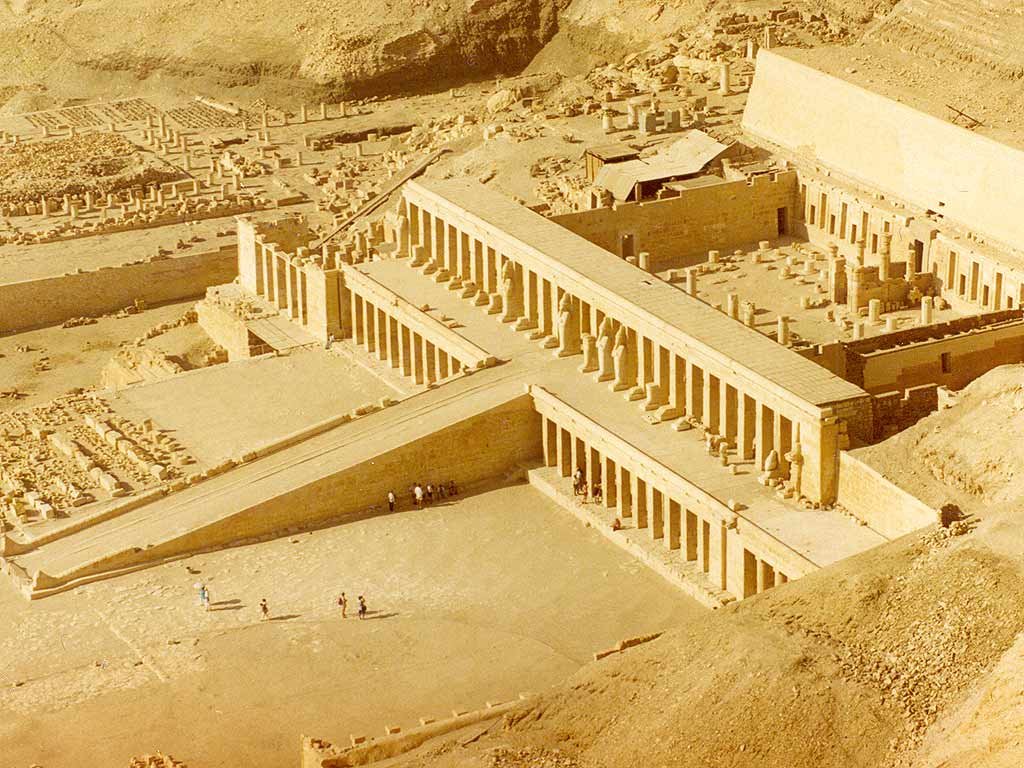

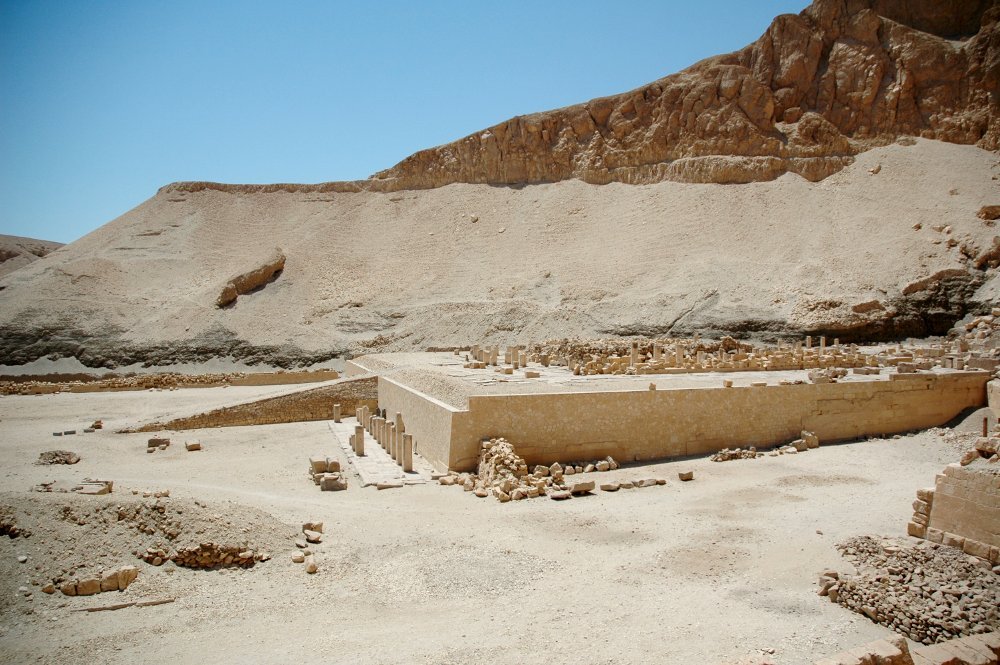
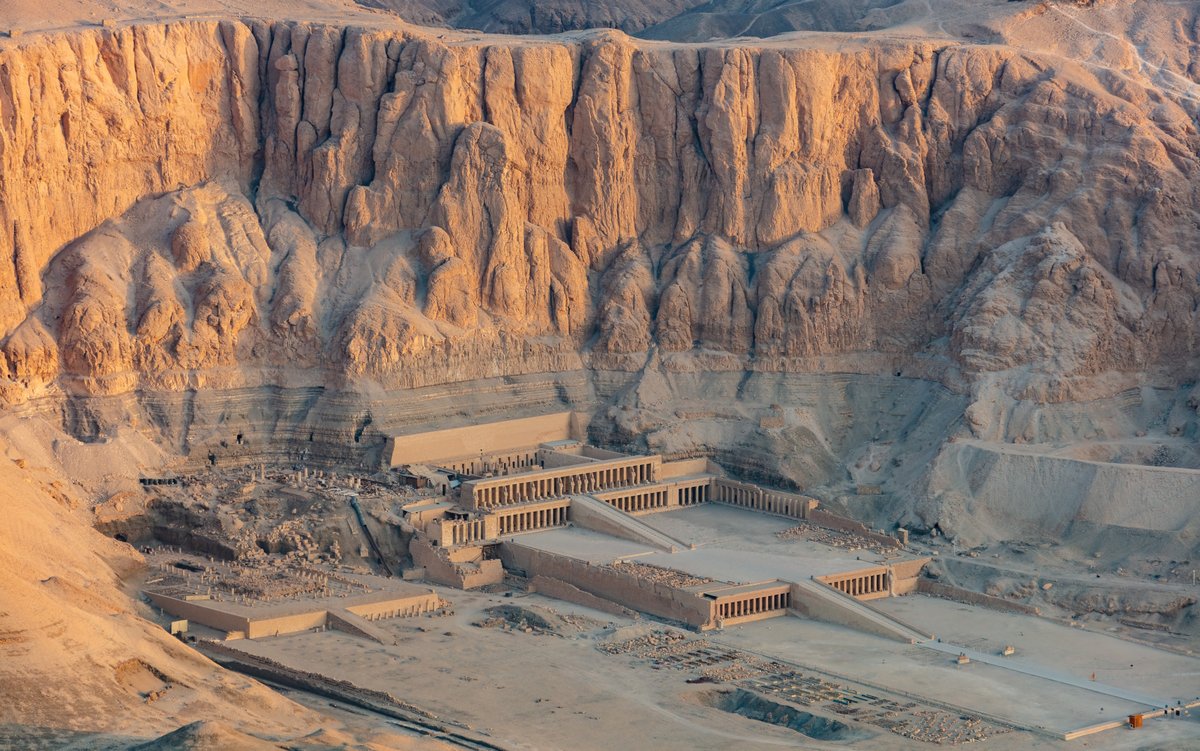
Located opposite the city of Luxor, the mortuary temple of Hatshepsut stands as a masterpiece of ancient architecture. Built during the Eighteenth Dynasty, its three massive terraces rise above the desert floor into the cliffs of Deir el-Bahari. The structure, which Hatshepsut called Djeser-Djeseru or the "Holy of Holies," was constructed between her seventh and twentieth regnal years. It was heavily influenced by the nearby Temple of Mentuhotep II, which had been built six centuries earlier, though the arrangement of its chambers remains wholly unique.
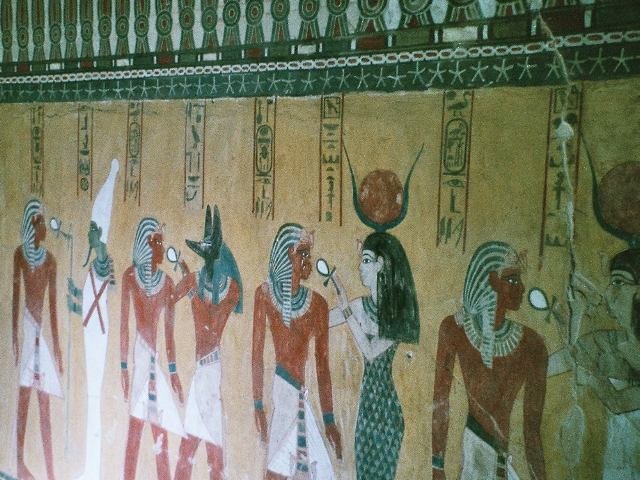
The temple serves a twin function, reflected in its axes. Its central east-west axis was designed to receive the barque of Amun-Re during the Beautiful Festival of the Valley, while its north-south axis represented the life cycle of the pharaoh from coronation to rebirth. On the middle terrace, shrines to Hathor and Anubis are separated from the main sanctuary. The porticoes fronting the terrace host notable reliefs depicting the divine birth of Hatshepsut and an expedition to the Land of Punt, details intended to establish her right to the throne as godly progeny.
The temple's state has suffered over centuries. Two decades after Hatshepsut's death, Thutmose III ordered the erasure or obliteration of references to her rule. The reasons for this proscription remain a mystery, though it may have been a dynastic dispute or a reaction to a female king. The site was defaced again during the Amarna Period when Akhenaten ordered the images of the gods to be erased. Later, an earthquake and the construction of a Coptic monastery left the structure weathered until modern restoration began.
In the 20th century, extensive excavations and conservation efforts were carried out by teams from the Egypt Exploration Fund, the Metropolitan Museum of Art, and the Egyptian Antiquities Service. Since 1961, the Polish Centre of Mediterranean Archaeology has conducted extensive consolidation and restoration work. These efforts preserved the limestone and sandstone faces of the terraces, allowing the temple to be opened to the public in March 2023.
Sources: Wikipedia, OpenStreetMap, Wikidata, Wikimedia Commons
Written by Mutabor
Discuss this with the author and others
No comments yet. Be the first to start the conversation.