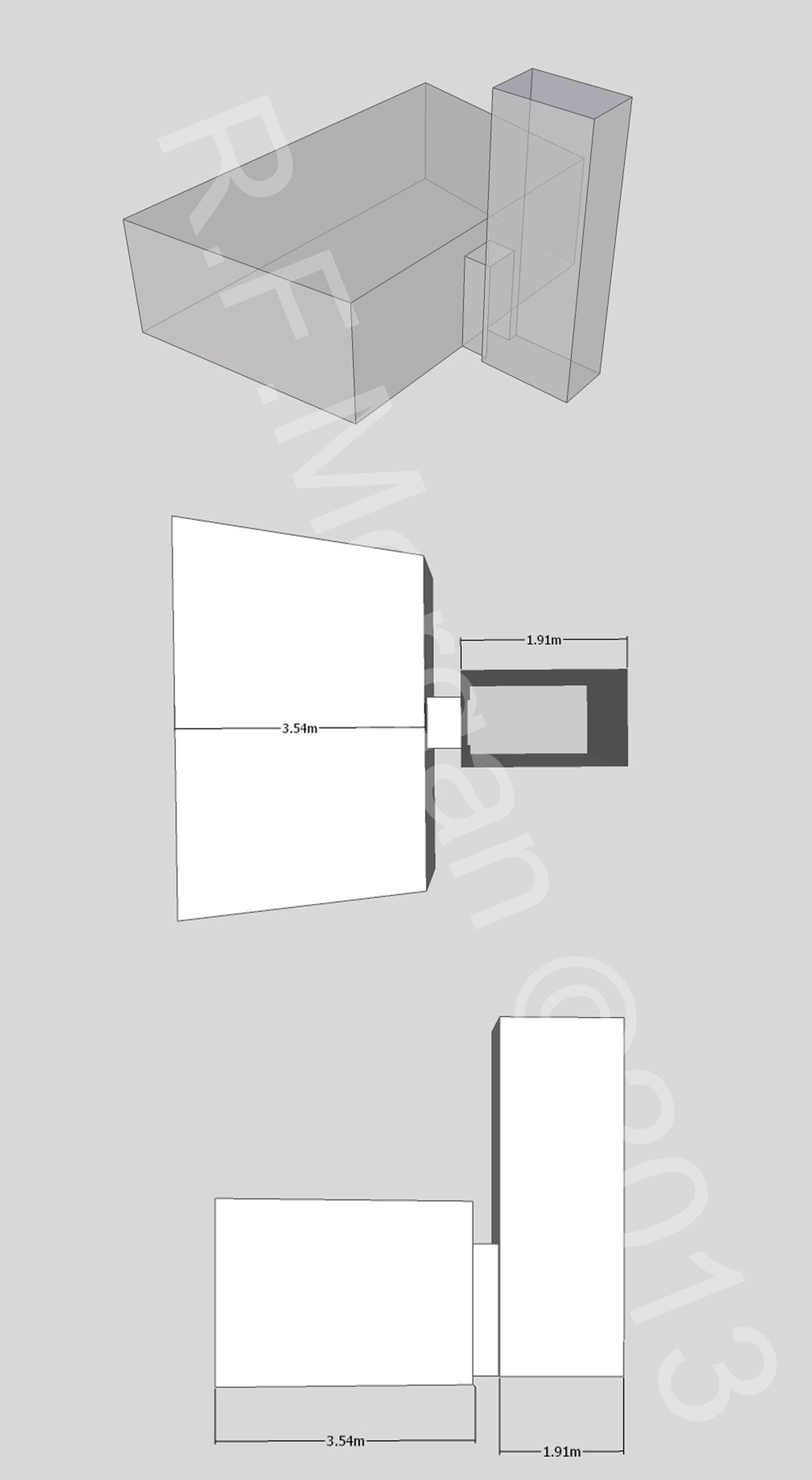

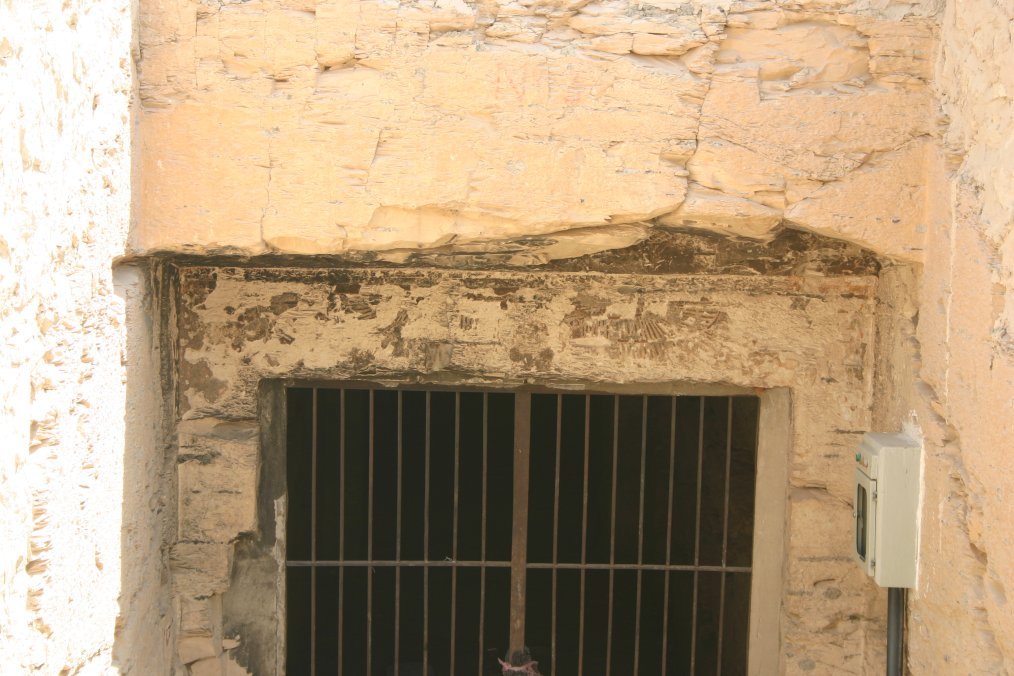
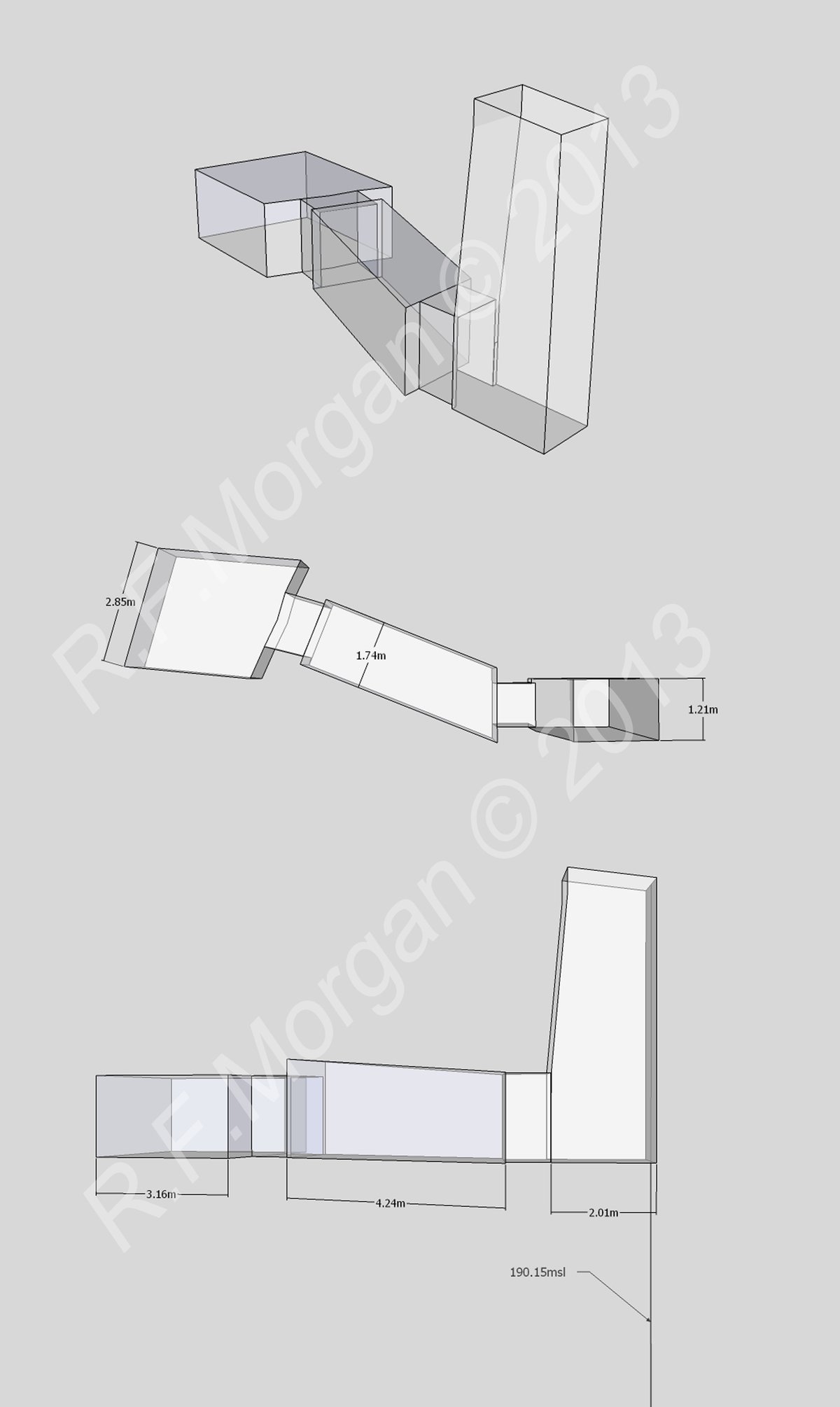
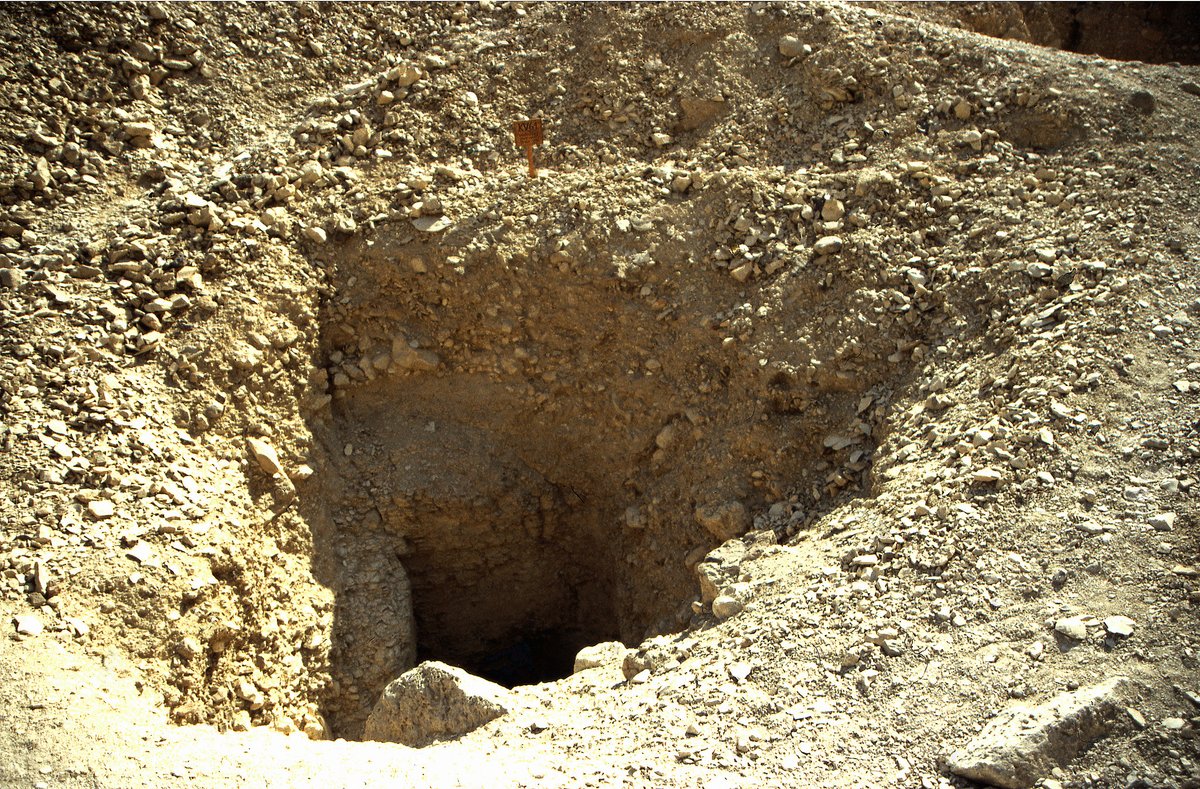
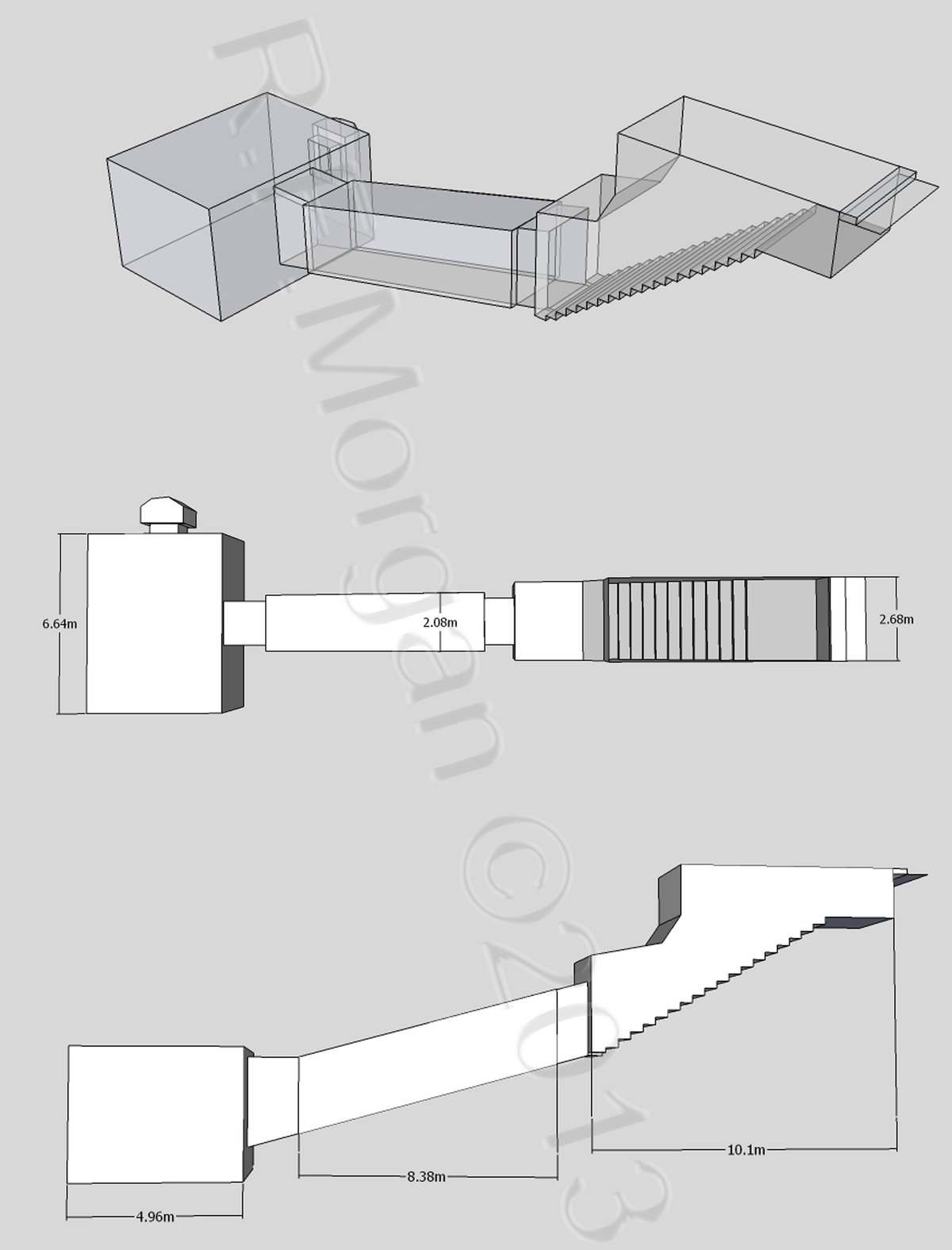
Situated near KV28 and next to KV45 in a small side wadi, KV44 is an ancient Egyptian tomb in the Valley of the Kings. It was opened by Howard Carter on 26 January 1901 after two days of excavation. The tomb consists of a shaft 5.5 metres deep ending in a single chamber. The doorway to the room was securely, if roughly, sealed, and the tomb had evidently stood open for some time in the past as several bee nests were seen on the ceiling.
The chamber was partly filled with water-washed earth. On top of this fill sat three wooden coffins placed beside each other against one wall and draped in floral wreaths. The first was a black-painted wooden coffin with yellow decoration and red text containing the mummy of Iuf'a. The second was also painted black with yellow designs but with inlaid eyes housing a cartonnage coffin containing a mummy identified as Keramama. The third was of rough wood but contained a beautifully decorated cartonnage coffin housing the mummy of Tentkeresherit. Carter noted that the room was a fifth full of debris amongst which were remains of earlier mummies without either coffins or funeral furniture.
In 1991, the tomb was re-investigated by the Pacific Lutheran University Valley of the Kings Project headed by Donald P. Ryan. Careful excavation of the fill recovered the remains of seven individuals; two were young women, and three were children, including one two-year-old. During 2005 explorations, it was found that water had penetrated several tombs under study, likely during the 1994 flood events. This led to the movement of all artefacts from KV44 and KV45, barring pottery and human remains, to KV21 for protection from further flooding.
Sources: Wikipedia, OpenStreetMap, Wikidata, Wikimedia Commons
Written by Mutabor
Discuss this with the author and others
No comments yet. Be the first to start the conversation.